

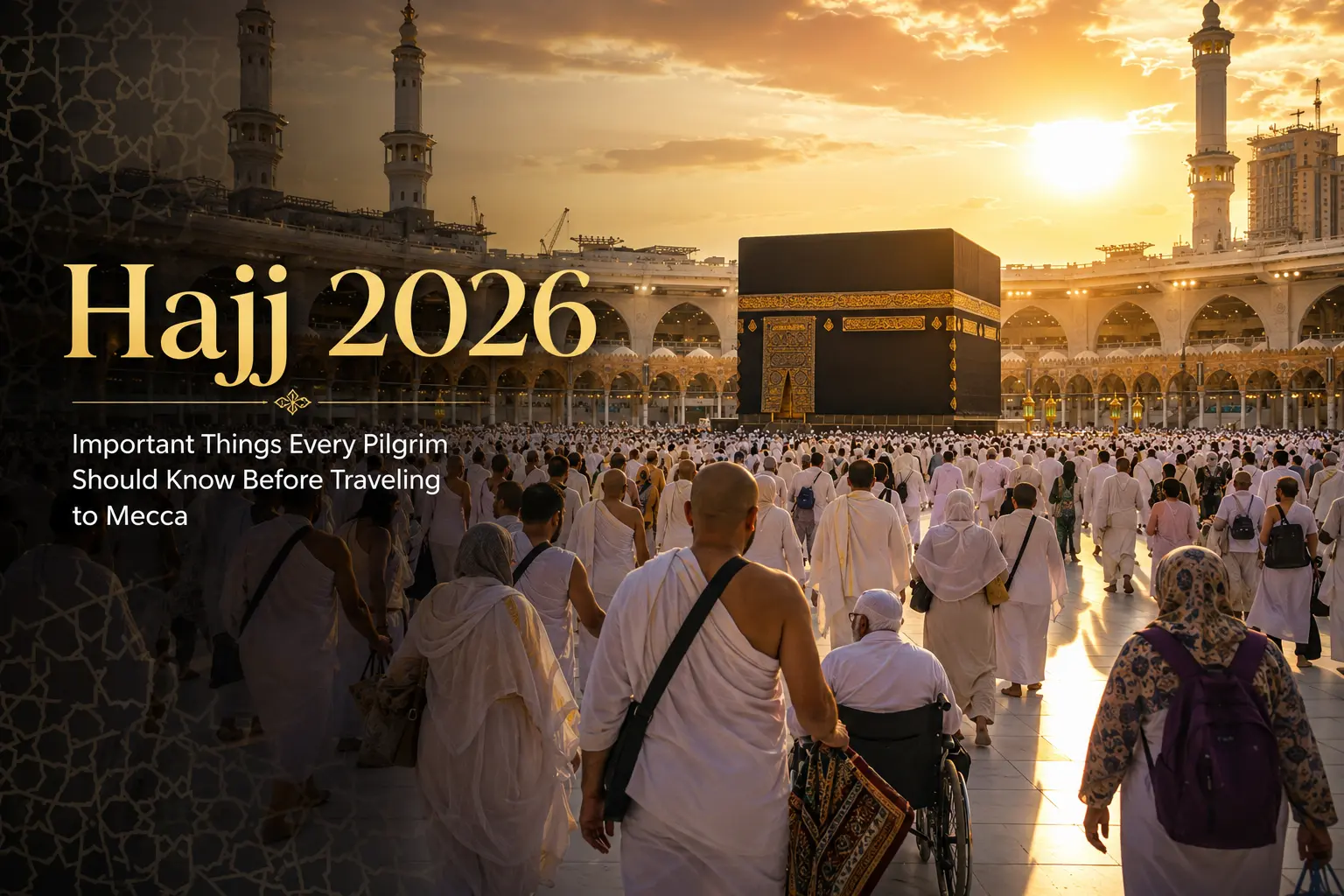
For Muslims around the world, Hajj is unlike anything else. It’s a journey that people spend years preparing for — financially, physically, and spiritually — and for many, it remains the most meaningful experience of their lives. As Hajj 2026 draws closer, preparation is now well underway for millions of pilgrims across the globe.
Saudi Arabia has been releasing key guidelines covering travel requirements, permit rules, and health protocols for the upcoming season. Authorities are also continuing to invest in crowd management systems and digital infrastructure to make the pilgrimage safer and more organized for everyone involved.
Understanding the Importance of Hajj in Islam
Hajj is one of the five pillars of Islam — a religious obligation that every Muslim who is physically and financially able is expected to fulfill at least once in their lifetime. It takes place during Dhul Hijjah, the final month of the Islamic calendar, and follows a sequence of sacred rituals performed in Mecca and the surrounding holy sites.
At its heart, Hajj is an act of equality and humility. Pilgrims enter a state of Ihram — wearing simple white garments that erase visible differences of wealth, nationality, and social standing. Everyone stands before God in the same way, focused entirely on worship and prayer. For those who have performed it, Hajj is often described as a spiritual reset — an experience of forgiveness, reflection, and renewal that stays with a person long after they return home.
Expected Dates for Hajj 2026
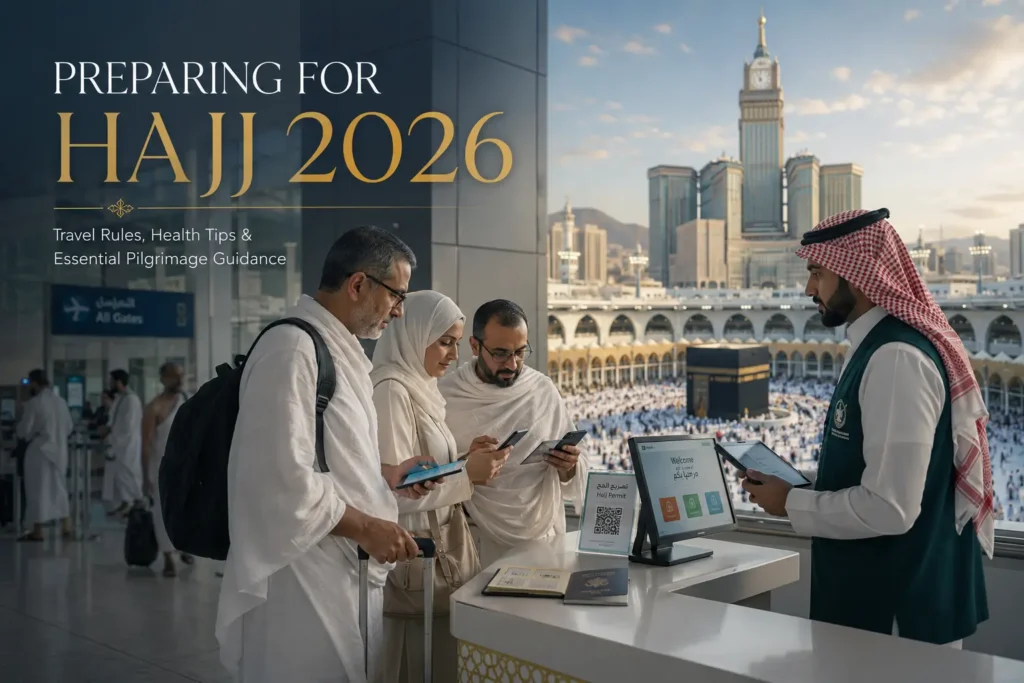
Based on current astronomical calculations, Hajj 2026 is expected to begin around May 25. The Day of Arafah — the most significant day of the entire pilgrimage — is anticipated to fall on May 26, with Eid Al Adha beginning on May 27.
That said, these dates are estimates. The official confirmation will come from Saudi authorities based on the moon sighting, so pilgrims should keep an eye on announcements as the time approaches rather than treating these dates as fixed. Travel schedules, visa timelines, and accommodation arrangements should all be planned with some flexibility built in.
Saudi Arabia Tightens Hajj Permit Rules
Saudi Arabia has made it very clear that Hajj 2026 will be strictly permit-based. Only pilgrims with valid official authorization will be allowed to perform the pilgrimage. Anyone found attempting Hajj without proper documentation is looking at serious consequences — fines, deportation, and in some cases a lengthy ban on re-entry.
During the Hajj period, entry into Mecca itself is restricted to permit holders. Saudi officials have been emphatic on this point, and it’s not something to take lightly or try to work around.
The recommended route is straightforward — register through approved Hajj operators or official digital platforms. The Nusuk platform continues to be one of the main systems for managing permits, travel approvals, and pilgrimage-related services. Going through unofficial channels isn’t worth the risk.
Health Preparation Is Essential Before Travel
Hajj is physically demanding in ways that are easy to underestimate if you haven’t experienced it before. Long walking distances between holy sites, dense crowds, and temperatures that can be intense — all of this takes a real toll on the body, regardless of age or general fitness.
The UAE Ministry of Health and Prevention has issued detailed health guidelines for pilgrims, covering mandatory vaccinations, medical consultations, and the importance of carrying essential medications. Anyone managing a chronic condition is strongly advised to speak with their doctor well before departure to ensure their health is stable enough for the journey.
Practical preparation matters too. A well-stocked first aid kit, a reusable water bottle, comfortable and broken-in footwear, and personal hygiene products are all important. Staying hydrated is not optional — heat exhaustion is a genuine risk, and drinking water regularly throughout the day needs to be a conscious habit during the pilgrimage.
Learning the Rituals Before Arrival
One of the most valuable things a pilgrim can do before leaving home is study the rituals properly. Knowing the sequence and meaning of each step doesn’t just reduce confusion — it deepens the experience and helps you focus on the worship rather than the logistics.
Hajj begins by entering the state of Ihram before reaching Mecca. From there, pilgrims perform Tawaf — the circling of the Kaaba — followed by Sa’i, the walking between the hills of Safa and Marwah. The Day of Arafah then brings the pilgrimage to its spiritual peak, with pilgrims gathering at Mount Arafat in prayer and contemplation.
The days that follow involve staying in Mina, collecting pebbles at Muzdalifah overnight, and performing the symbolic stoning of the Jamarat. For first-time pilgrims especially, traveling with an experienced group or a knowledgeable guide can make a significant difference in navigating all of this smoothly.
Technology and Crowd Management Improve Pilgrim Safety
Managing millions of people moving through relatively contained holy sites is one of the most complex crowd management challenges in the world. Saudi Arabia has been investing consistently in technology to handle it better — AI-supported monitoring systems, digital permit verification, predictive crowd analysis, and smart surveillance are all now part of how Hajj operations are run.
Transportation for Hajj 2026 includes expanded metro access, organized movement systems between sites, and multilingual support services for international pilgrims. Hotlines and digital assistance platforms have also been introduced to help pilgrims get guidance and support when they need it.
The goal is to reduce congestion, improve response times in emergencies, and make the overall experience safer for everyone.
Packing and Travel Tips for Pilgrims
When it comes to packing, less is genuinely more. You’ll be moving between holy sites repeatedly, and carrying too much becomes a burden very quickly. Keep your bag light and make sure the essentials are easy to reach — your documents, permits, medications, identification, charger, prayer items, and a change of comfortable clothing.
Footwear matters more than most people realize before their first Hajj. Comfortable, well-fitting shoes that you’ve already worn in are far more important than anything else in your bag. Unscented toiletries are required during Ihram, so make sure what you bring fits that requirement.
And perhaps most importantly — go in with patience. Hajj involves large crowds, long waits, and moments that test your composure. Scholars consistently remind pilgrims that maintaining calmness, showing respect to fellow pilgrims, and staying focused on the spiritual purpose of the journey are what make the difference between a difficult trip and a truly meaningful one.