

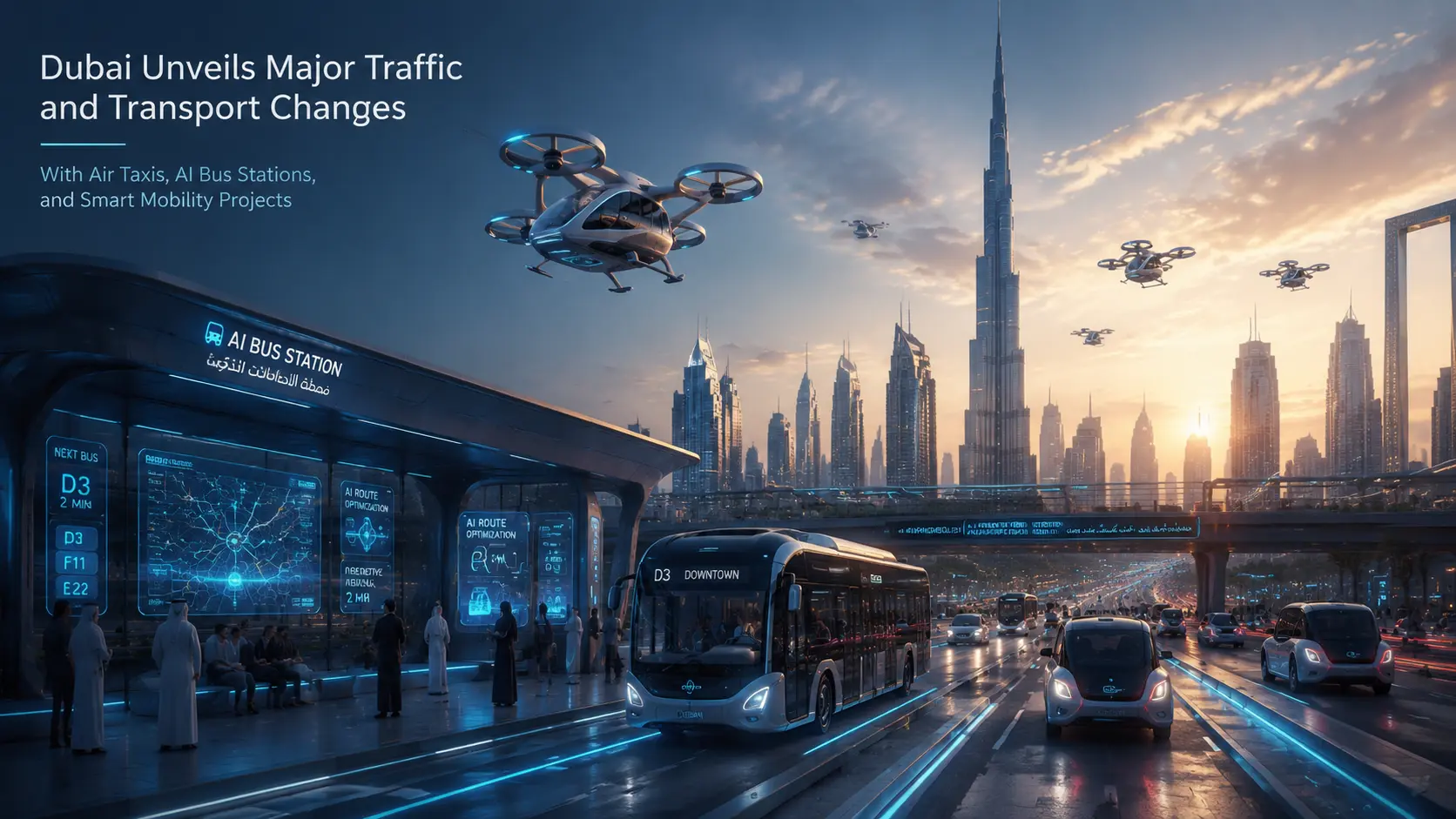
If you’ve been following what Dubai has been doing with its transport infrastructure, 2026 is shaping up to be the year a lot of those ambitious plans start becoming real. Air taxis, AI-powered bus stations, smarter traffic systems — things that sounded futuristic a few years ago are now either already here or very close to it.
The pace of change reflects how seriously the city is taking its growth. More residents, more tourists, more business activity — all of that puts pressure on how people get around, and Dubai is clearly trying to stay ahead of that curve rather than scrambling to catch up.
Dubai’s Air Taxi Project Moves Closer to Reality
The air taxi story has been generating genuine excitement, and for good reason. Dubai recently completed its first air taxi station near Dubai International Airport, which moves the project from concept to something you can actually point to and say — that’s where it starts.
The numbers being discussed are striking. Journeys that currently take around 45 minutes by road could potentially be done in roughly 10 minutes using electric vertical take-off and landing aircraft. The planned network would connect major destinations including Downtown Dubai, Palm Jumeirah, Dubai Marina, and the airport.
Beyond the novelty factor, the practical case for this is real. Reducing road congestion while offering faster point-to-point travel using electric aircraft — it addresses multiple problems at once. Commercial services are expected to launch later this year.
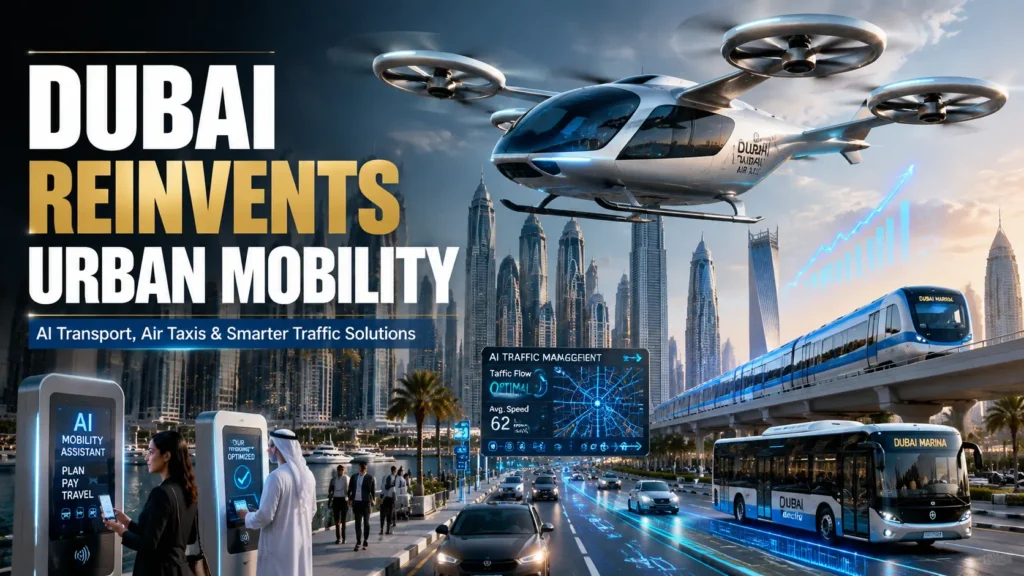
AI-Powered Smart Bus Station Launches at Mall of the Emirates
The Roads and Transport Authority has opened what’s being described as the world’s first AI-powered smart bus station at Mall of the Emirates, and the details are worth paying attention to.
The station uses AI-based crowd monitoring to manage passenger flow in real time. Digital ticketing, interactive kiosks, and live arrival information for both buses and the Metro are all built into the experience. For commuters, it’s a noticeably smoother way to use public transport compared to the older setup.
The environmental angle is there too — the station runs on solar power and uses energy-efficient infrastructure throughout. The broader goal is to make public transport a more appealing choice for people who currently default to driving, and a more comfortable, better-informed experience goes a long way toward that.
Metro Expansion and Traffic Improvement Projects Continue
The Dubai Metro remains one of the city’s most heavily used transport systems, and expansion plans are already in motion to extend its reach as population and visitor numbers grow.
On the roads, a series of improvement projects are underway — new bridges, upgraded intersections, better traffic signal systems, and road widening in areas where congestion has become a persistent issue. These aren’t glamorous in the way air taxis are, but they matter enormously for day-to-day commuting.
Increasingly, the city is also using data and predictive technology to manage traffic more intelligently. AI monitoring systems that can anticipate bottlenecks before they happen and adjust signal timing accordingly are becoming a standard part of how Dubai manages its roads.
Also Read: Dubai Launches AI Smart Bus Station Near Mall of the Emirates to Transform Public Transport
Smart Mobility Supports Dubai’s 20-Minute City Vision
All of these individual projects connect to something larger — Dubai’s “20-minute city” ambition. The idea is straightforward: design the city so that residents can reach work, schools, healthcare, and daily essentials within 20 minutes using efficient, comfortable transport options.
Achieving that requires a lot of things to work together — autonomous vehicles, electric public transport, better cycling infrastructure, and AI-managed traffic systems all have a role to play. Dubai is betting that moving early on these technologies, rather than waiting for them to become standard elsewhere, will give the city a meaningful advantage.
For residents, the eventual payoff is a city that’s simply easier and less stressful to move around in.
Sustainability Remains a Key Focus for Future Transport
Running through all of these projects is a consistent environmental thread. Electric air taxis produce no direct emissions. Solar-powered bus stations reduce grid dependency. Cleaner public transport options mean fewer private cars on the road.
Dubai has made sustainability a genuine priority in its transport planning rather than an afterthought, and the projects being rolled out in 2026 reflect that. Authorities are also continuing to explore autonomous and electric mobility solutions as the next phase of the city’s transport roadmap develops.
For a city that has built its reputation on being ahead of the curve, the transport transformation currently underway feels very much in character.