

Most bus stations are functional at best. You show up, you wait, the bus arrives, you get on. The experience itself is rarely something anyone thinks about.
Dubai’s Roads and Transport Authority has other ideas.
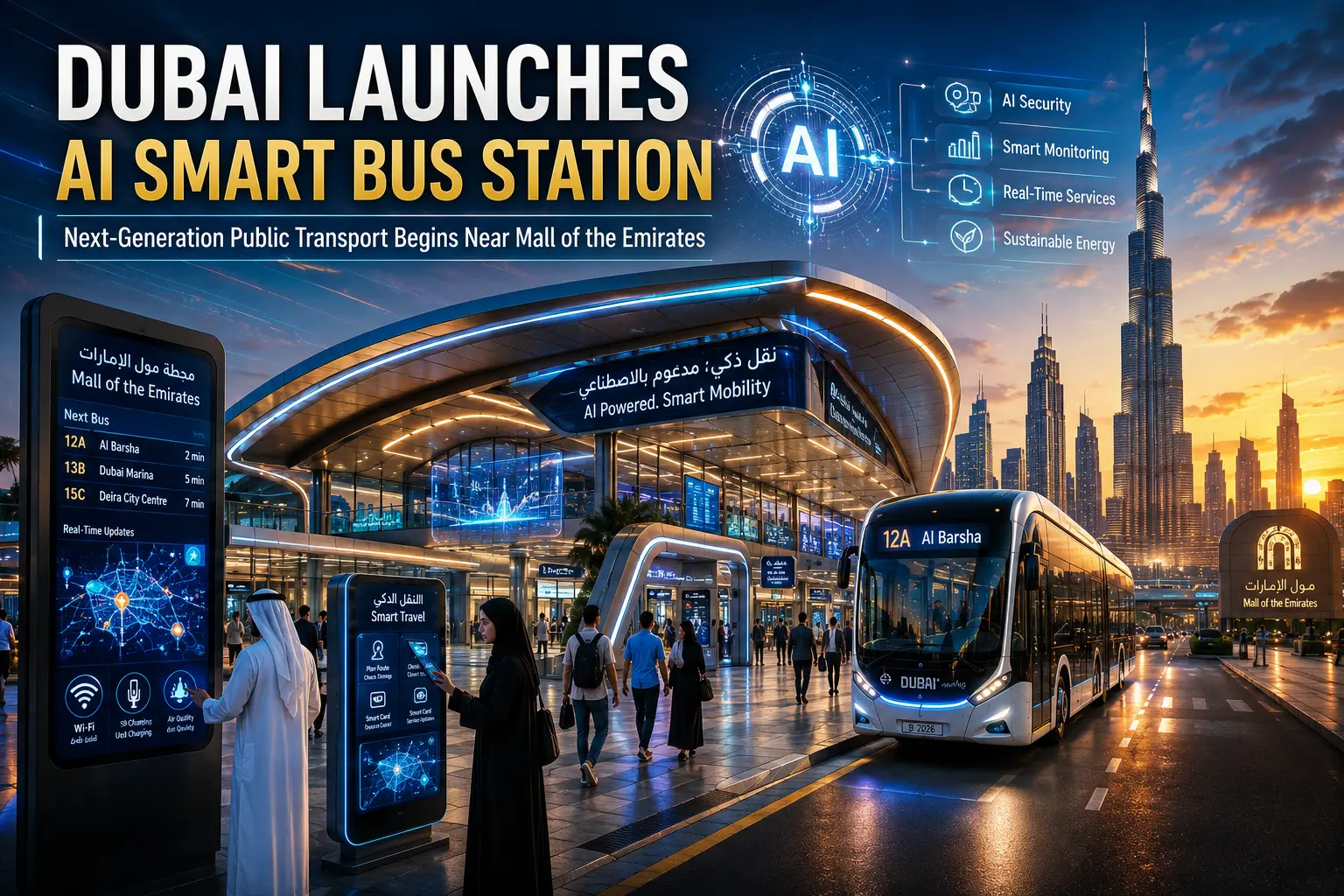
The new smart bus station near Mall of the Emirates in Al Barsha has just launched, and it’s worth paying attention to — not because Dubai opening something futuristic is unusual, but because of what this particular project says about how seriously the city is thinking about the everyday experience of using public transport.
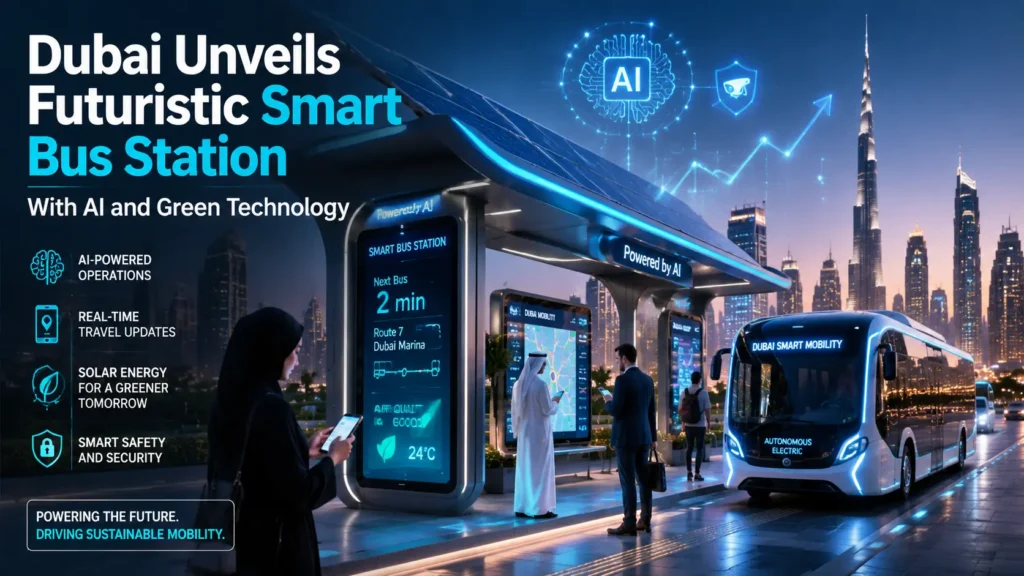
This isn’t a showpiece terminal. It’s a bus station that thousands of regular commuters will use every day. And it has been built with AI cameras, solar panels, contactless everything, real-time digital displays, Wi-Fi, USB charging ports, and LEED Platinum sustainability certification.
For a bus stop. That’s the point.
What the AI Is Actually Doing Here
The phrase “AI-powered” gets attached to a lot of things that don’t really warrant it. In this case, it’s describing something specific and genuinely useful.
The station is equipped with advanced cameras that use artificial intelligence to monitor passenger flow, manage crowd density, and flag security concerns in real time. If something unusual is happening — a crowd building in a way that suggests a problem, a security concern developing — the system can detect it faster than any human monitor watching a screen bank could.
Smart sensors installed throughout the facility also track environmental conditions: air quality, temperature, humidity. The data feeds into systems that adjust the station’s environment automatically to keep it comfortable for passengers, regardless of what the weather outside is doing. In Dubai’s summer, when outdoor temperatures regularly exceed 40 degrees Celsius, that’s not a luxury — it’s genuinely important for public health.
The combination of security monitoring and environmental management through AI is the kind of infrastructure investment that doesn’t generate headlines but makes a real difference to the experience of using public transport every day.
No Paper, No Counters, No Waiting in Line
The station is fully contactless. There are no paper tickets, no physical customer service counters for routine transactions, no queuing to talk to someone about a basic travel query.
Everything runs through Dubai’s existing NOL card system and the S’hail smart mobility app, which passengers are already using across the city’s transport network. Digital displays throughout the station show real-time bus schedules, route information, and service updates — information that used to require either a physical timetable or a phone call to find out.
For daily commuters who move through this station repeatedly, the time saved on small friction points adds up quickly. For visitors who are unfamiliar with the routes, multilingual announcements and clear digital information make the system navigable without needing to ask anyone for help.
The paperless approach also reflects a practical operational logic beyond the environmental benefit — digital systems are easier to update, faster to fix when something changes, and cheaper to maintain at scale than printed materials and staffed counters.
The Sustainability Side
The station is built to LEED Platinum standards, which is the highest certification available for sustainable building design. That certification isn’t handed out for good intentions — it requires specific, measurable performance across energy use, water efficiency, materials, and indoor environmental quality.
Solar panels on the facility reduce its dependence on grid electricity and lower its carbon footprint. Smart lighting systems adjust automatically based on occupancy and ambient light levels, avoiding the energy waste that comes from running full lighting in areas that don’t need it.
Dubai’s RTA has been building its sustainability credentials steadily — electric buses are already operating on parts of the network, and the authority has announced plans for zero-emission mobility solutions as part of its longer-term transport strategy. This bus station fits into that progression rather than standing apart from it.
The city has committed to significant sustainability targets for 2050, and transport infrastructure is one of the sectors where those commitments need to show up in concrete projects rather than just policy documents. This is one of those projects.
Why Al Barsha Makes Sense for This
The location near Mall of the Emirates isn’t arbitrary. Al Barsha is one of Dubai’s most densely connected commercial and residential areas — the mall itself draws enormous foot traffic, there are residential communities throughout the surrounding district, and the area sits at a junction point for multiple important bus routes linking different parts of the city.
Choosing this location means the smart station’s benefits reach a large and diverse group of users: residents commuting to work, shoppers, tourists navigating between attractions, and business travelers moving between the airport and commercial areas. The station connects to communities, business centers, and entertainment destinations across several districts.
That reach matters. A smart station in a quiet location is an interesting experiment. A smart station in one of Dubai’s busiest transport nodes is infrastructure that actually changes how people move around the city.
Also Read: 7 Best Private Dining Rooms in Dubai — Because Some Occasions Deserve More Than Just a Good Table
The Bigger Picture
This station is one piece of a much larger strategy. Dubai’s RTA launched its Artificial Intelligence Strategy 2030 with more than 80 projects and initiatives spanning predictive analytics, intelligent traffic management, and smart mobility systems across the emirate.
AI-powered traffic signal control is expected to roll out across the city in 2026. Autonomous transit networks are in planning stages. Electric vehicle infrastructure is expanding. The smart bus shelter program has been running in parallel, with upgraded shelters appearing across Dubai’s transport network.
The smart station near Mall of the Emirates is best understood as part of that pattern — one node in a network that is being rebuilt from the ground up around digital connectivity, data-driven management, and the idea that public transport should be pleasant and efficient rather than merely functional.
What It Means for Commuters Right Now
If you use bus services in or around Al Barsha, the practical changes are immediate and noticeable. Real-time schedule information means you know when the next bus is actually coming rather than guessing. Contactless payment means no fumbling with tickets or queuing at counters. Comfortable, monitored, climate-controlled waiting means the experience of getting to the bus is less unpleasant than it used to be.
Those aren’t revolutionary changes in isolation. But collectively, they address almost every friction point that puts people off using public transport and keeps them in private cars instead. Reducing those friction points — at scale, across the city’s busiest transport nodes — is how you actually shift commuter behavior rather than just asking people to change their habits.
Dubai has been trying to get more people onto public transport for years. The smart bus station near Mall of the Emirates is, among other things, a concrete argument for why the bus might actually be worth taking.