


Dubai has just made a move that many property investors have been quietly hoping for. The city has updated its visa rules for property owners — and the headline change is simple: there’s no longer a minimum property value you need to hit to qualify for residency.
For anyone who’s been watching the Dubai real estate market but held back because they couldn’t meet the old investment threshold, this is a pretty significant development.
Table of Contents
What Has Changed in Dubai Property Visa Rules
Previously, if you wanted to use your Dubai property as a path to residency, your investment had to cross a certain value to qualify. That cutoff left a lot of small and mid-level investors out of the picture, even if they genuinely owned property in the UAE.
That requirement is now gone. Under the updated rules, owning a single completed property — regardless of its market value — can make you eligible to apply for a residency visa, as long as you meet the other standard conditions.
It’s a straightforward change on paper, but the practical impact is quite wide.

Boost for Single-Property Buyers
This is probably the group that benefits the most from the change. If you owned one property in Dubai but its value didn’t clear the old minimum, you were simply ineligible — even though you were a genuine property owner in the city.
That’s no longer the case. Single-property buyers can now apply for residency, which makes owning a home or apartment in Dubai feel a lot more worthwhile. It also lowers the barrier for first-time buyers who want to get a foot in the door without committing to a large investment upfront.
Why Dubai Is Making This Move
This isn’t happening in isolation. Dubai has been steadily working to make itself more attractive to global investors across the board, and this visa change fits neatly into that broader picture.
The city wants more foreign investment flowing into real estate. It wants people to stay longer, build lives here, and contribute to the local economy. Easing residency access through property ownership is a practical way to make all of that happen.
It also makes Dubai more competitive in a global market where other cities are also fighting for the attention of international investors.
Impact on the Real Estate Market
The property market is likely to feel this fairly quickly. When you remove a barrier that was keeping buyers out, demand tends to follow — especially in the mid-range and affordable segments that were previously less attractive to visa-seeking investors.
Real estate professionals are already pointing to the potential for more transactions, greater interest from first-time international buyers, and a generally more active residential market. Developers who focus on smaller units and mid-range projects could find themselves with a larger pool of interested buyers than before.
Benefits for Foreign Investors
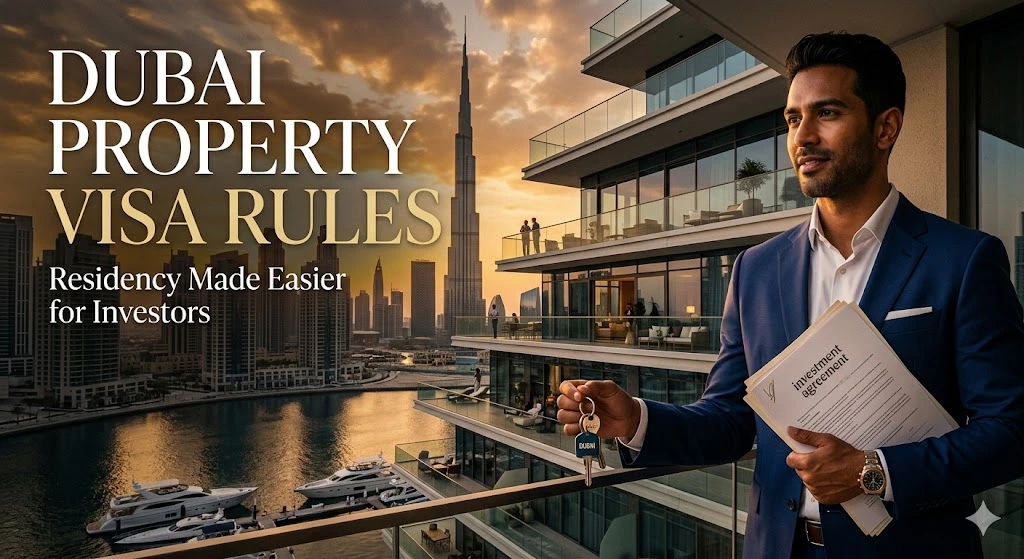
For international buyers, the updated rules open up some genuinely useful possibilities. You no longer need to stretch your budget to hit an arbitrary value threshold just to qualify for residency. You can make a property decision based on what actually works for you financially and still have a path to living legally in Dubai.
That means access to UAE residency, the ability to live and work here, and the long-term stability that comes with property-backed visa status — without needing to over-invest just to tick a box.
How the New System Works
The minimum value requirement is gone, but the process still has some basic conditions. Your property needs to be completed — off-plan purchases don’t count. You’ll need valid documentation proving ownership, and your application has to comply with standard UAE residency regulations.
Authorities have also worked on making the application process smoother, so the administrative side should be less of a headache than it used to be.
Growing Appeal of Dubai for Investors
Dubai was already pulling in strong numbers from global buyers before this change. Tax-free income, solid infrastructure, a safe environment, and a genuinely high standard of living have all been part of the appeal for years.
The visa rule update adds another reason to take the city seriously as an investment destination. Residency through property ownership was already attractive — now it’s accessible to a much broader group of people.
What This Means for the Future
Removing the minimum threshold isn’t just a policy tweak — it’s a signal about the direction Dubai wants to go. The city is clearly interested in bringing in a more diverse mix of investors, not just high-net-worth buyers looking to park large amounts of capital.
As more people gain access to residency through property, the city’s residential population is likely to grow alongside its property market. That kind of sustained, broad-based growth tends to be healthier in the long run than one driven entirely by top-end transactions.
Increased Opportunities Across Segments
The ripple effects of this change will likely spread across different parts of the market. Affordable units, smaller apartments, and mid-range developments now have a stronger value proposition for international buyers who previously had little incentive to look at them.
For developers, that’s actually good news. There’s now a wider audience to build for and more room to create projects that serve different budgets and preferences — all within a market that just got a meaningful shot of confidence.