

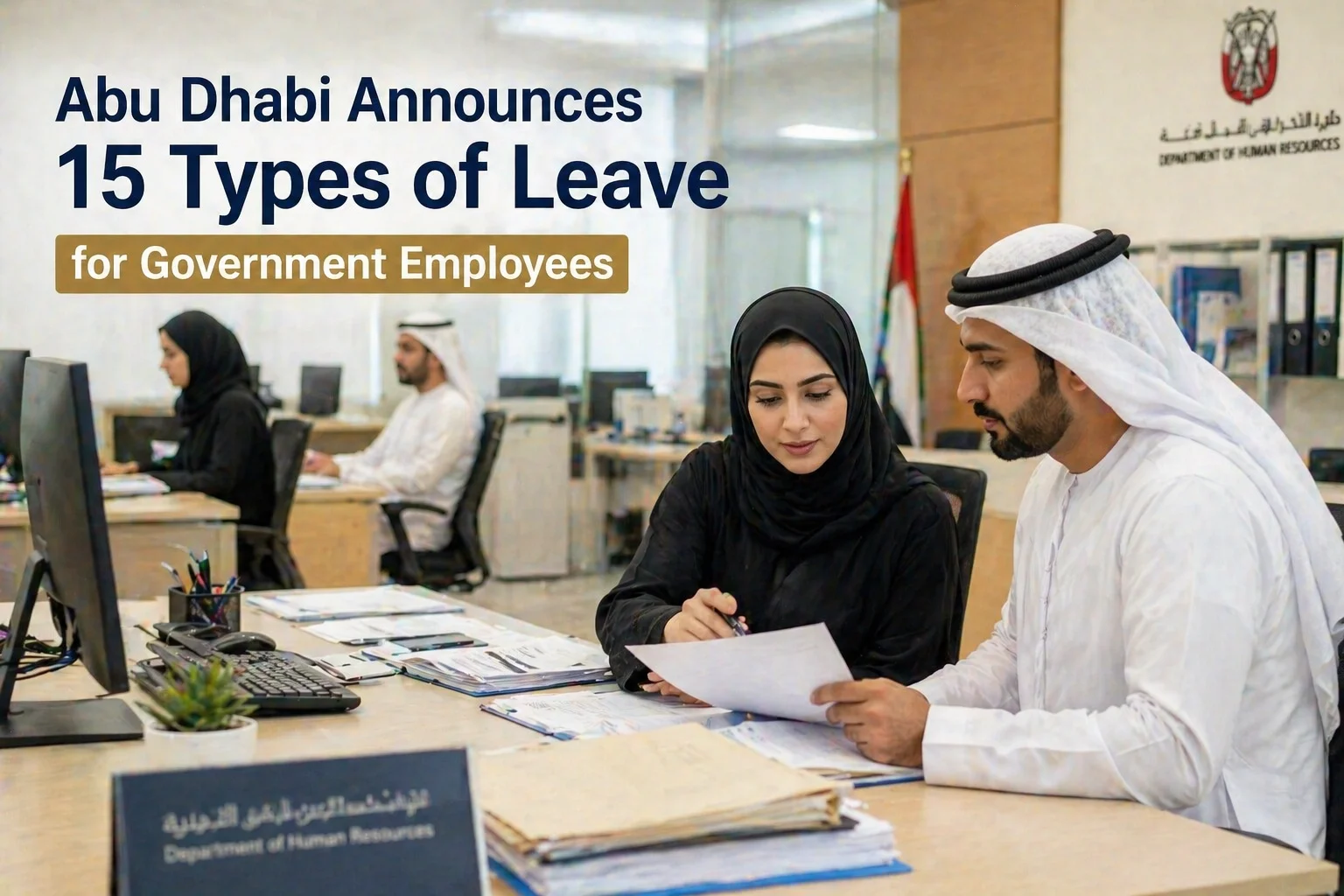
Abu Dhabi Offers Government Employees the Most Comprehensive Leave Policies in the Region. Workplace leave policies tend to be one of those things that employees only think about when they need them—and then discover, often at the worst possible moment, that the system doesn’t quite cover their situation.
Abu Dhabi has taken a different approach with its new government employee leave framework. Rather than the bare minimum, the policy covers 15 distinct categories of leave, ranging from the standard and expected to some genuinely thoughtful provisions that reflect real human circumstances.
The framework applies to Abu Dhabi government employees and represents a meaningful update to how the public sector handles worker welfare. New leave policy expands employee benefits with flexible options for family, health, and personal needs
Why 15 Categories?
The honest answer is that life is complicated, and a leave policy that only recognises a handful of situations leaves a lot of employees stuck when something important happens that doesn’t fit the standard boxes.
The new framework tries to anticipate the full range of circumstances that affect people during a working career — health, family, religion, personal milestones, unexpected crises — and build a structured response to each one. The result is a policy that’s significantly more comprehensive than most government employees in the region are used to.
Here’s a breakdown of the key categories:

The Standard Categories — Properly Defined
Annual leave — The basic entitlement for rest and personal time, now clearly structured.
Sick leave — For illness and medical recovery, with defined entitlements rather than vague employer discretion.
Work-related injury leave — A specific and important addition. If an employee is injured because of their work, they get dedicated time to recover without having to dip into other leave entitlements or face financial pressure while healing. This is a provision that exists in many developed-world labour frameworks but isn’t always present in the region.
Family and Life Event Leave — The Most Important Additions
This is where the new policy gets meaningfully different from older frameworks.
Maternity leave — Extended to up to three months for new mothers. That’s a substantial entitlement that gives women genuine recovery time and time with a newborn rather than a perfunctory few weeks.
Paternity leave — Available for fathers, recognising that supporting a new family isn’t only the mother’s responsibility. The duration is shorter than maternity leave, but its inclusion is a clear statement about family roles.
Adoption leave — Available for employees who adopt a child, ensuring that the path to parenthood through adoption receives the same workplace recognition as biological parenthood. This is a notably progressive inclusion.
Marriage leave — Time off when an employee gets married, because getting married involves a significant amount of practical organisation beyond just the ceremony itself.
Bereavement leave — For the loss of a family member. The existence of a formal bereavement category means employees don’t have to negotiate their grief with a manager or use annual leave to attend a funeral.
Religious and Cultural Leave — A Genuinely Inclusive Approach
Hajj leave — One of the most important religious obligations in Islam is performing Hajj at least once in a lifetime. Having a formal leave category for this means Muslim employees can fulfil this duty without it affecting their employment standing or eating into their annual leave allocation. That’s a meaningful provision.
Iddah leave — This covers the waiting period observed by Muslim women following divorce or the death of a spouse. Including this in an official policy framework reflects a sensitivity to religious and cultural practice that goes beyond what most workplaces acknowledge formally.

The Less Common Categories — Worth Paying Attention To
Companion leave — This is one of the more thoughtful additions and deserves specific attention. It allows an employee to take time off to support a family member who is going through a medical or personal crisis. Sometimes being a caregiver or a support person is as demanding as being the patient, and this provision recognises that reality.
This kind of leave is relatively rare in regional HR frameworks and its inclusion suggests genuine thought went into what employees actually need, not just what’s easiest for employers to manage.
What This Means in Practice for Government Employees
The clearest immediate benefit is transparency. With 15 defined categories, employees know exactly what they’re entitled to and for what situations. There’s no ambiguity, no having to ask whether something “counts,” no relying on a sympathetic manager to make an exception for something the policy doesn’t technically cover.
That clarity reduces stress. When you know you have a legitimate entitlement — whether it’s for your wedding, a parent’s illness, a religious obligation, or a workplace injury — you can use it without guilt or negotiation. That changes the relationship between employees and their employer in ways that eventually show up in morale, retention, and performance.
Also Read: How OneClickDrive Is Powering Dubai’s Rise as a Global Car Export Hub for India
The Broader Picture for the UAE’s Evolving Workplace Standards
Abu Dhabi’s public sector setting a benchmark like this tends to create pressure across the broader employment landscape. When government employees have access to comprehensive leave provisions, private sector employers — particularly those competing for the same talent — face increasing expectations to match or at least approach those standards.
The UAE has been steadily modernising its labour policies across recent years, and this move fits into that pattern. The direction of travel is clearly toward workplaces that take employee wellbeing seriously as a structural priority rather than a nice-to-have.
What This Means for Government Employees
Fifteen leave categories covering annual leave, sick leave, maternity and paternity leave, adoption leave, Hajj leave, marriage leave, bereavement leave, work injury leave, companion leave, and several other specific provisions.
Government employees in Abu Dhabi now have one of the most comprehensive leave frameworks in the region, with clear entitlements for the kinds of life events that actually happen to people during a working career.
If you’re an Abu Dhabi government employee, it’s worth reading through the full policy details to understand exactly what each category covers and how to access them. The framework is only useful if people know what’s in it.