

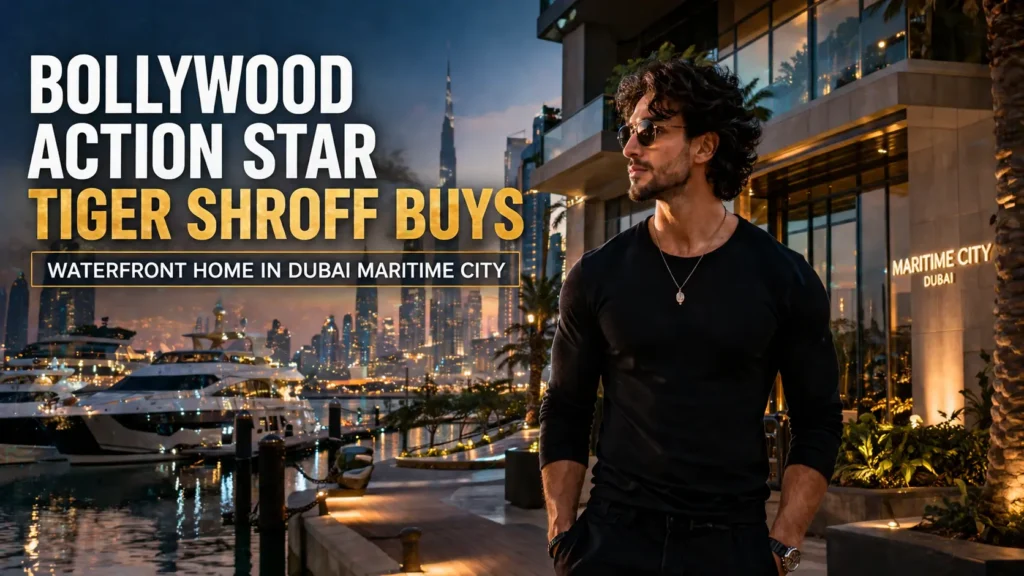
Bollywood actor Tiger Shroff has reportedly purchased a luxury waterfront property in Dubai Maritime City, joining a growing list of Indian celebrities and high-net-worth individuals who have been quietly building real estate positions in the emirate over the past few years. Another Bollywood name, another Dubai waterfront address — but Tiger Shroff’s move is a much bigger story about where Indian money is going
The timing is interesting. Dubai’s property market has been showing early signs of stabilization after its extraordinary post-pandemic run, with some segments recording slight price corrections in early 2026. For buyers with a long-term view and the liquidity to act, that kind of environment tends to look like an opportunity rather than a warning sign — and it appears Shroff’s team reached the same conclusion.
What We Know About the Property
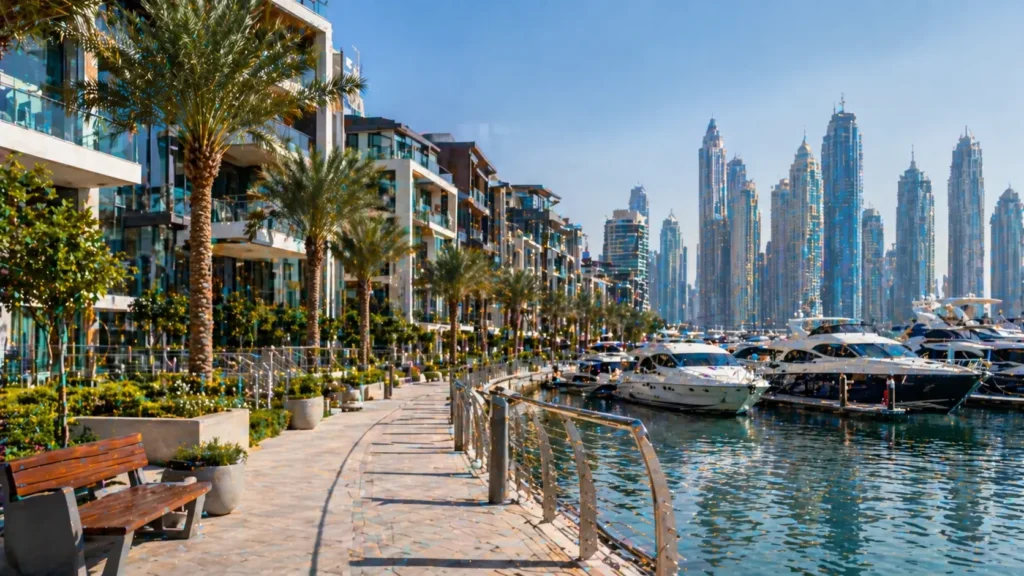
The purchase is in Dubai Maritime City, a waterfront development that’s been gaining real traction with premium buyers over the last couple of years. It’s not the most obvious address — places like Palm Jumeirah or Downtown Dubai tend to get more headlines — but Maritime City has a specific appeal that a certain kind of buyer finds compelling.
The location offers harbour views, proximity to the city centre, and the kind of integrated lifestyle infrastructure — marinas, private amenities, high-end residential facilities — that premium buyers at this level are looking for. It’s an area where supply has remained relatively limited compared to demand from serious buyers, which tends to be good for long-term value.
The specific purchase price hasn’t been publicly disclosed, which is fairly standard for transactions at this level in Dubai.
Why Dubai Keeps Attracting Indian Buyers
Tiger Shroff’s investment isn’t happening in isolation. Indian nationals have consistently been among the top buyers in Dubai’s real estate market for several years running, and the reasons are fairly consistent across the spectrum from individual investors to ultra-high-net-worth buyers.
Zero property tax is the obvious starting point. When you’re comparing returns from a property in Mumbai or Delhi against an equivalent in Dubai, the tax picture alone shifts the calculation significantly. Add in stable regulation, a legal framework that has become increasingly transparent and investor-friendly, and rental yields that remain competitive — and the argument for Dubai becomes straightforward for Indian investors who have the capital and the appetite.
The residency angle matters too. Property investment above certain thresholds in Dubai comes with long-term residency options, which adds a practical dimension beyond pure financial returns. For families who want optionality — a base in the UAE without fully relocating — property ownership is a clean way to secure that.
The Celebrity Effect on Specific Neighbourhoods
Tiger Shroff is far from the first Bollywood name to buy in Dubai, and he won’t be the last. Over the years, a steady stream of actors, directors, and industry figures have invested in the city, drawn by a combination of genuine financial logic and the lifestyle that Dubai’s premium neighbourhoods offer.
What high-profile purchases do — beyond the transaction itself — is shift awareness and perception around specific developments and areas. When buyers who are aspirational figures to a large audience choose a particular location, it creates a halo effect that’s genuinely difficult to manufacture through marketing alone. Dubai Maritime City getting visibility through a Tiger Shroff connection will reach audiences that traditional property marketing wouldn’t.
For developers in that area, it’s a meaningful boost. For other buyers already invested there, it reinforces confidence.
Buying During a Stabilisation Phase — Is It Smart?
This question is worth examining honestly rather than just treating the celebrity purchase as validation of the market.
Dubai’s property market rose dramatically from 2020 through to 2025 — prices in many segments more than doubled. Some correction was always going to come, and in early 2026, it has arrived, partly driven by regional geopolitical uncertainty affecting international buyer sentiment.
Premium waterfront properties in established locations have held up better than other segments during this softer period. They tend to attract buyers with genuine long-term intentions rather than short-term speculators, which provides some insulation from sentiment-driven price swings.
Buying in this environment carries the standard real estate caveat — values could fall further before they recover, and nobody times markets perfectly. But for investors with a five to ten year horizon who are focused on location quality and long-term demand drivers rather than short-term price movements, the current environment is arguably more interesting than buying at the peak of the boom in 2024.
What the Broader Trend Looks Like
The pattern here is consistent and worth noting for anyone tracking where Indian capital is flowing internationally. Dubai has moved from being a lifestyle destination for wealthy Indians to being a genuinely mainstream investment destination across a wider range of wealth levels.
You have established business families who have held Dubai assets for decades. You have a growing cohort of tech founders, startup executives, and professionals who have made significant money in India’s boom years and are diversifying internationally. And you have high-profile cultural figures like Shroff whose investments get visibility and signal to their audiences that this is where serious people are putting money.
Each layer reinforces the others, and together they’ve made the Indian buyer one of the structural supports of Dubai’s premium real estate market.
Also Read: Top 10 Visa-Free and Visa-On-Arrival Countries for UAE Residents in 2026
Opportunities for Investors Going Forward
Tiger Shroff buying a waterfront property in Dubai is a story worth paying attention to — not because celebrity real estate purchases are inherently important, but because of what this particular purchase reflects about broader trends.
Dubai Maritime City gaining a high-profile Indian buyer during a period of market stabilization in a segment that continues to attract serious long-term capital despite short-term uncertainty tells you something about how informed buyers are reading this market right now.
Whether you’re an investor considering Dubai real estate yourself or just someone following where money and people are moving globally, the trend this purchase represents is one of the more consistent and durable stories in international real estate in 2026.