

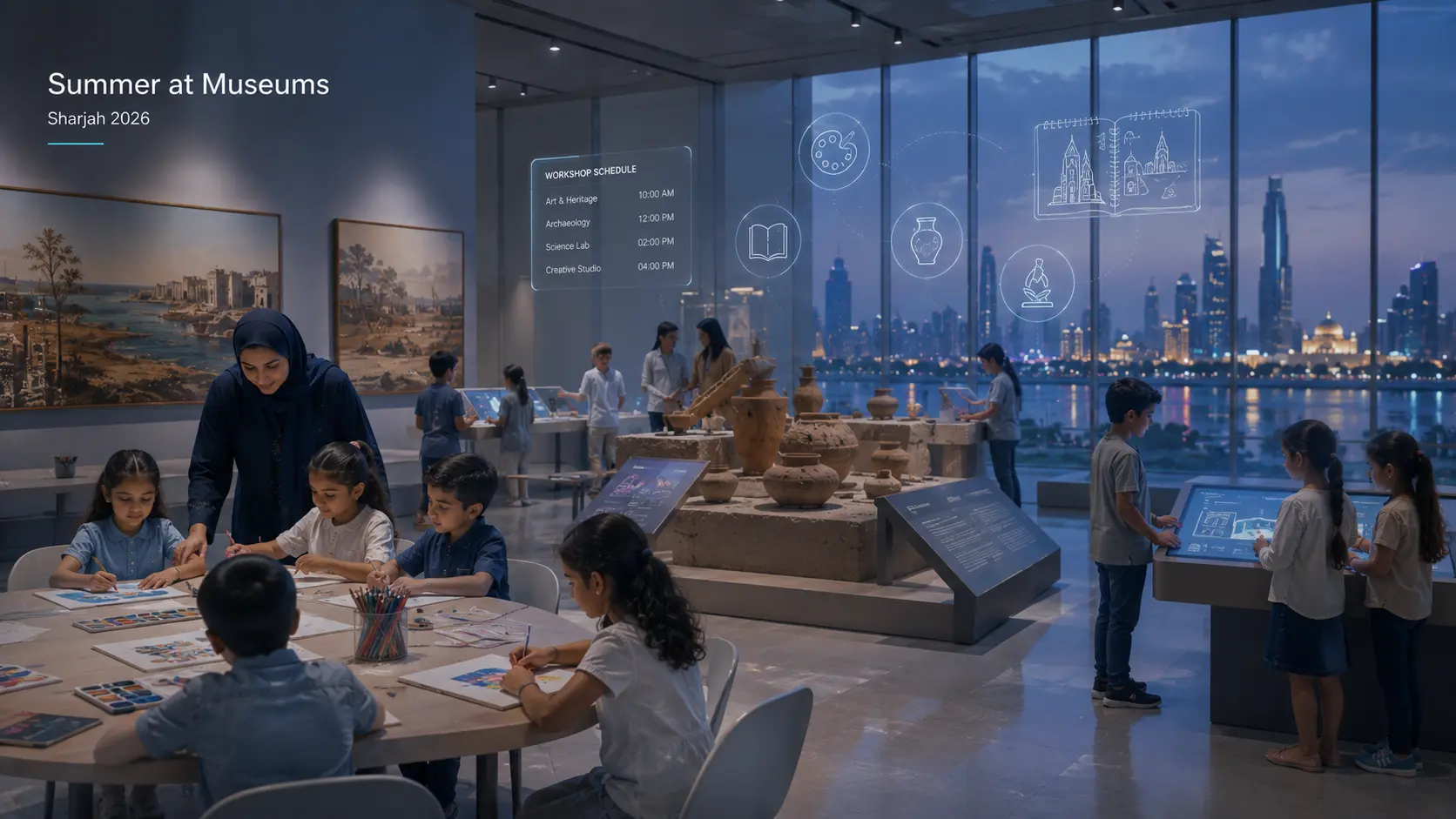
If you’re looking for something genuinely worthwhile to do with children during the school holidays, the Sharjah Museums Authority has put together one of the more impressive summer programmes in the region. The Summer 2026 lineup covers camps, educational workshops and interactive experiences spread across several of Sharjah’s museums — designed to keep children and families engaged while giving young participants something they’ll actually remember.
The activities blend education with real hands-on participation — scientific experiments, storytelling, heritage experiences, creative arts and more — so it doesn’t feel like an extension of the school year. It feels like discovery. That balance is something Sharjah’s museum network has consistently gotten right, and this year’s programme continues that tradition.
A Wide Range of Museums Are Participating
The programme runs across multiple museums under the Sharjah Museums Authority umbrella, each offering activities built around its own collections and expertise. That variety is one of the strengths of the initiative — you’re not getting the same experience at every venue.
Depending on which museums you visit, children can explore archaeology, marine life, Islamic civilisation, science, traditional crafts, fine arts and local heritage. The range is broad enough that there’s something genuinely interesting for most children regardless of what they’re curious about, and the spread of venues gives families a reason to explore parts of Sharjah they might not have visited before.
Summer Camps Designed Around Creativity and Discovery
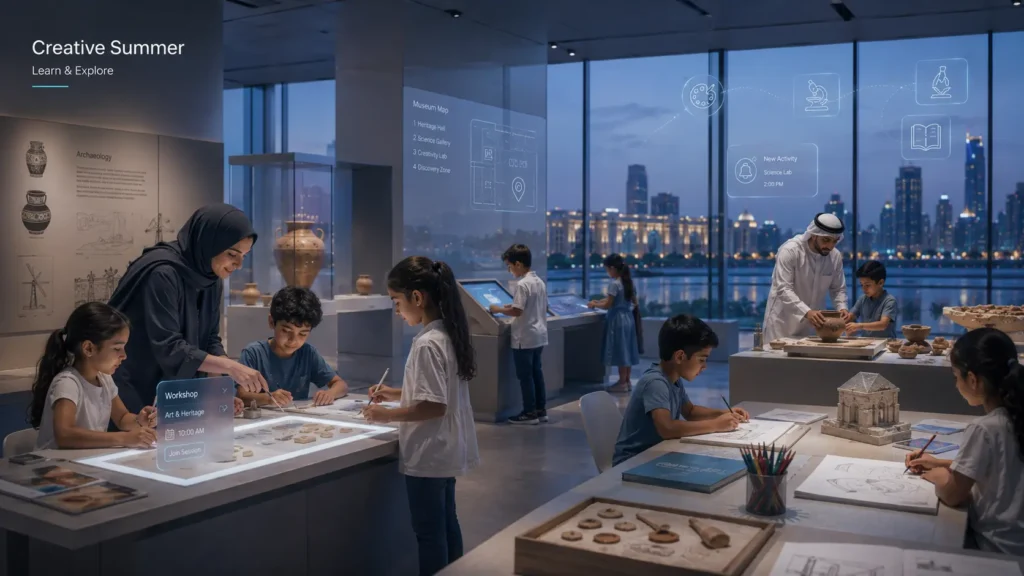
The themed summer camps are the centrepiece of the programme. They’re built around group activities, educational games, art projects, museum tours and hands-on challenges — and they’re split across age groups, so the content is actually appropriate for who’s attending.
The emphasis throughout is on doing rather than sitting and listening. Children are encouraged to ask questions, work through problems together and engage with ideas directly rather than having them explained at them. The practical effect is that camps end up building communication skills, confidence and creative thinking almost as a byproduct of the activities themselves — which is exactly how learning tends to stick.
Interactive Workshops for Every Interest
Running alongside the camps are a range of workshops covering science, history, culture, design, traditional crafts and visual arts. Many of the sessions are built around making something — participants create their own projects using a mix of traditional techniques and more contemporary approaches, guided by museum educators and specialists who know the collections inside out.
That access to genuine expertise is what separates a museum workshop from an ordinary craft activity. When a specialist walks you through the story behind an artefact or an artistic tradition and then helps you create something connected to it, the experience lands differently. It becomes something children remember and talk about rather than something they forget by the time they get home.
Encouraging Families to Learn Together
The programme isn’t aimed exclusively at children, which is worth noting. Families are actively encouraged to participate together in many of the activities — interactive tours, cultural demonstrations, storytelling sessions and collaborative workshops that work for both parents and children at the same time.
That shared experience matters. There’s something different about learning alongside your child rather than dropping them off and collecting them later. It creates conversations that continue at home and builds a genuine connection to cultural heritage that tends to last longer than any school lesson.
Supporting Education Beyond the Classroom
One of the quieter but more important things this kind of programme does is fill in the gaps that formal education naturally leaves. Observation, creativity, critical thinking, teamwork — these are skills that textbooks struggle to teach directly but that emerge naturally from the kind of hands-on, inquiry-driven learning that museum environments are built for.
The Summer 2026 programme gives children direct contact with real historical objects, artworks and scientific displays. That kind of encounter with actual things — not pictures of things, not descriptions of things, but the things themselves — tends to make ideas feel more real and more worth caring about.
Also Read: Dubai’s nol Card Is Getting Its Biggest Upgrade Since the Metro Launched
Promoting Sharjah as a Cultural Destination
Sharjah has spent years building an international reputation as a city that takes arts, education, literature and heritage seriously. The annual summer programme is one of the more visible expressions of that commitment — opening museum spaces to young people and families in a way that’s genuinely engaging rather than dutiful.
The programme also supports domestic tourism throughout the holiday season, giving residents from across the UAE a good reason to make the trip to Sharjah and spend time exploring what the emirate’s museums have to offer.
Registration and Programme Details
Activities are scheduled throughout the school holiday period, with workshops and camps running on selected dates across participating museums. Registration is available through the Sharjah Museums Authority, and parents can choose programmes based on their children’s ages and interests.
With this much variety on offer — camps, workshops, family activities, cultural experiences across multiple museum sites — it’s one of the more comprehensive museum-based summer programmes available in the UAE right now. Worth registering early, since places at the more popular sessions tend to fill up quickly.