

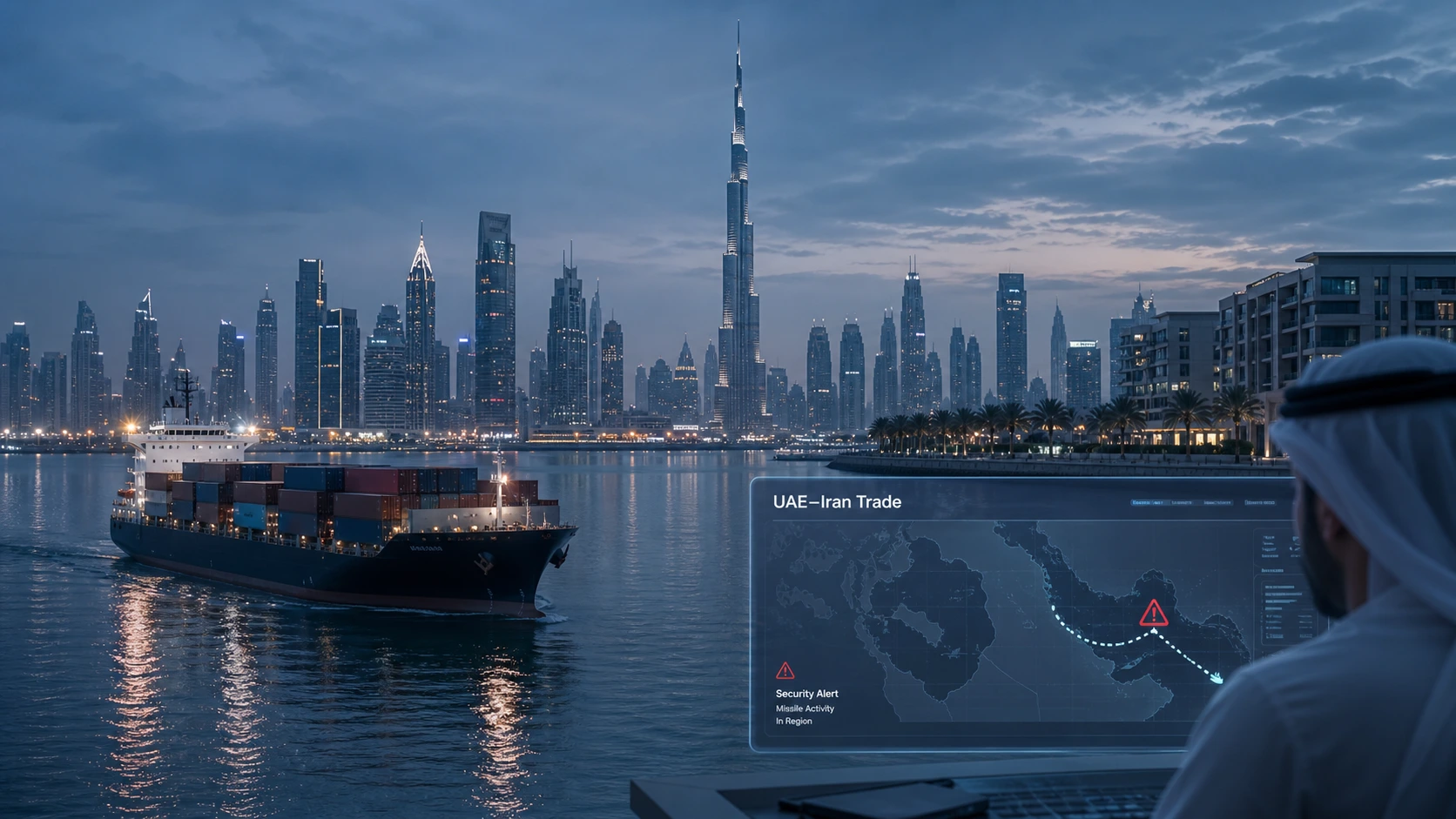
The United Arab Emirates has suspended all trade, commercial exchanges, and financial transactions with Iran until further notice, marking a major turn in relations between the two countries. The UAE Foreign Ministry pointed to regional developments it says are undermining regional and international peace and security.
Afra Al Hameli, Director of Strategic Communications at the UAE Ministry of Foreign Affairs, announced the decision on Wednesday, while also reaffirming the UAE’s commitment to protecting the integrity of the international financial system and sticking to international law and global standards.
The announcement came shortly after the UAE reported detecting two ballistic missiles launched from Iran, a development that has only added to concerns over security, shipping, and commercial activity across the Gulf.
Why has the UAE suspended trade with Iran?
The UAE says this suspension is tied directly to the latest regional escalation and growing security concerns. It covers trade, commercial exchanges, and financial transactions, and stays in place until further notice.
This marks a significant shift, since the UAE has traditionally kept important commercial ties with Iran alive even through political tensions and international sanctions. The latest decision comes as the wider conflict, and incidents involving Gulf shipping keep piling pressure on regional economic activity.
The UAE has also stressed how seriously it takes international financial standards, framing its position as protecting the integrity of the financial system while responding to what it sees as a genuine threat to regional stability.
UAE says two ballistic missiles were launched from Iran
The UAE Ministry of Defence said it detected two ballistic missiles originating from Iran during the latest incident. Both missiles ended up falling into the sea, with one landing inside UAE territorial waters and the other outside them.
The UAE later said its assessment pointed to the missiles targeting maritime traffic, and the incident prompted heightened security measures as authorities monitored the situation and responded to the potential threat.
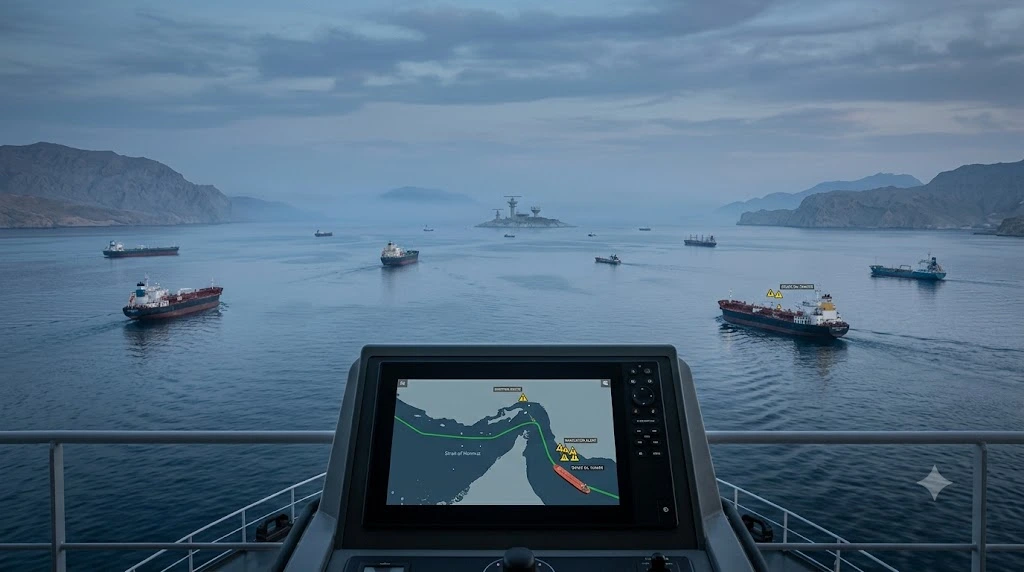
This latest incident carries extra weight because it comes after a string of attacks and security incidents involving vessels linked to the UAE in the Strait of Hormuz, developments that have already raised concerns over the safety of commercial shipping through one of the world’s most important waterways.
Iran denies launching missiles at UAE
Iran has pushed back on the UAE’s claim that it launched these missiles. Iranian Foreign Ministry spokesman Esmail Baghaei called the accusations baseless and urged regional parties to steer clear of claims that could ramp up tensions further.
That leaves the reported missile incident disputed between both sides. The UAE has pinned the launch on Iran, while Tehran has firmly denied any responsibility.
This denial lands at a moment when tensions between Iran and Gulf countries have already been intensifying amid the wider conflict involving Iran, the United States, and Israel, adding fresh uncertainty for shipping companies, energy markets, and businesses operating across the region.
Dubai residents receive missile alert
Residents in Dubai received a missile threat alert on Tuesday as UAE air defence systems responded to incoming threats. Authorities later confirmed the situation was safe, letting residents get back to normal activities.
The alert was a stark reminder of just how quickly regional tensions can ripple into everyday life in the UAE. Authorities have urged residents to rely only on official government channels for information and to avoid spreading unverified reports during security incidents like this one.
UAE defence authorities have also made clear that the country’s forces remain ready to respond to any threats against national security and sovereignty, with the latest alert coming as the country continues monitoring developments tied to Iran and the wider regional conflict.
Strait of Hormuz adds to regional concerns
This latest UAE-Iran escalation comes amid growing disruption in the Strait of Hormuz, a strategically vital maritime route for global energy supplies. Shipping through the waterway has already taken a hit from the wider conflict and ongoing security concerns.
Several vessels linked to Abu Dhabi National Oil Company (ADNOC) have come under attack while passing through the Strait of Hormuz in recent days, according to UAE authorities, who have blamed Iran for the incidents and called for an end to attacks on shipping.
This waterway matters enormously because a large share of the world’s oil and liquefied natural gas has traditionally passed through it. Any prolonged disruption here can ripple out into shipping costs, energy markets, and international supply chains.
UAE-Iran trade suspension could affect businesses
This suspension of trade and financial transactions is likely to create real uncertainty for companies doing business between the UAE and Iran. Businesses involved in imports, exports, payments, shipping, and other commercial services may run into additional restrictions while this decision stays in effect.
Given the UAE’s role as a major regional trading and financial centre, this decision matters well beyond just the UAE-Iran relationship itself. How much impact it has will depend on how long the suspension lasts and whether further measures follow.
Financial institutions and businesses will also need to keep a close eye on official UAE requirements and international compliance rules, since any changes to the current restrictions could affect cross-border payments and commercial arrangements.
Previous attacks have raised UAE security concerns
This latest incident follows earlier attacks and alleged attacks involving the UAE throughout the wider regional conflict. The UAE has previously reported missile and drone threats linked to Iran, including attacks involving US military facilities in the country.
In recent days, the UAE has also reported attacks on vessels linked to ADNOC while they were passing through the Strait of Hormuz, incidents that have only added to the pressure on the UAE to protect maritime navigation and its national interests.
So this current escalation is not an isolated event, but the latest in a string of developments. The combination of missile threats, shipping incidents, and now the suspension of economic dealings has further complicated an already strained UAE-Iran relationship.
Also Read: Dubai International Holy Quran Award 2026 Draws Record 20,500 Applications
UAE remains focused on regional and financial stability
Even with the suspension in place, the UAE continues to stress the importance of international law and stability. The Foreign Ministry has framed this decision around protecting regional and international security, alongside maintaining the integrity of the financial system.
This latest move also highlights just how closely tied security developments and economic activity have become in the Gulf. As tensions continue building around the Strait of Hormuz, governments and businesses across the region are watching closely for anything that could affect trade, shipping, and financial flows.