

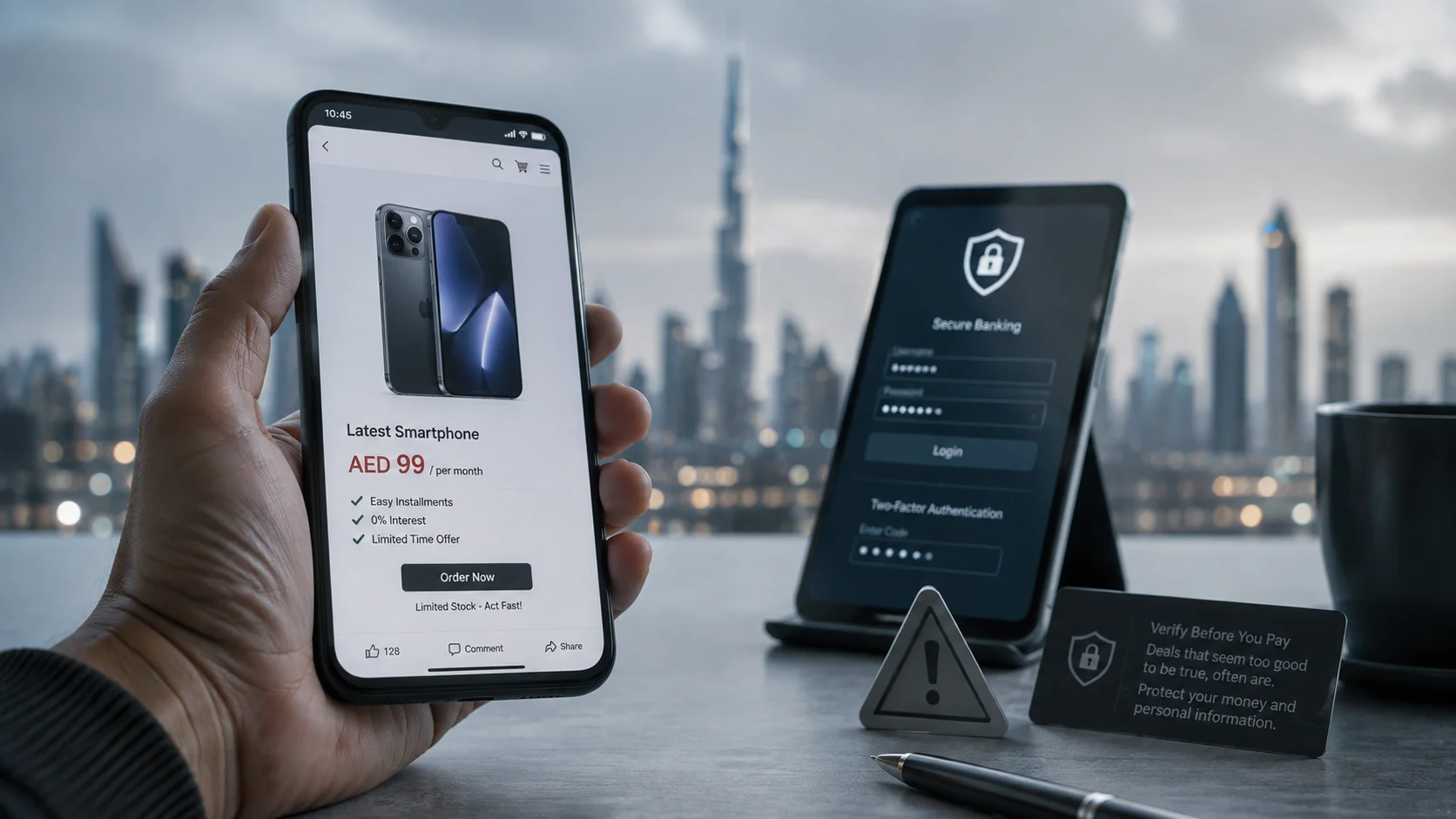
The UAE Ministry of Interior has issued a warning that residents need to take seriously — fake social media advertisements offering mobile phones on attractive instalment plans are being used to steal banking information and money.
Scammers are getting better at making these ads look legitimate, and the consequences of falling for one can be significant. Authorities are urging residents to slow down and verify before they click, share or pay.
UAE Ministry of Interior Issues Scam Warning
The Ministry of Interior flagged the trend as online fraud continues to evolve across the country. Criminals are using social media platforms, fake websites and professionally designed advertisements to impersonate genuine businesses — and the fake phone instalment offers are one of the latest tactics being used to get victims to hand over sensitive financial information.
The warning is a reminder that the more convincing something looks, the more carefully it should be scrutinised. A polished advertisement is not proof that the seller behind it is real.
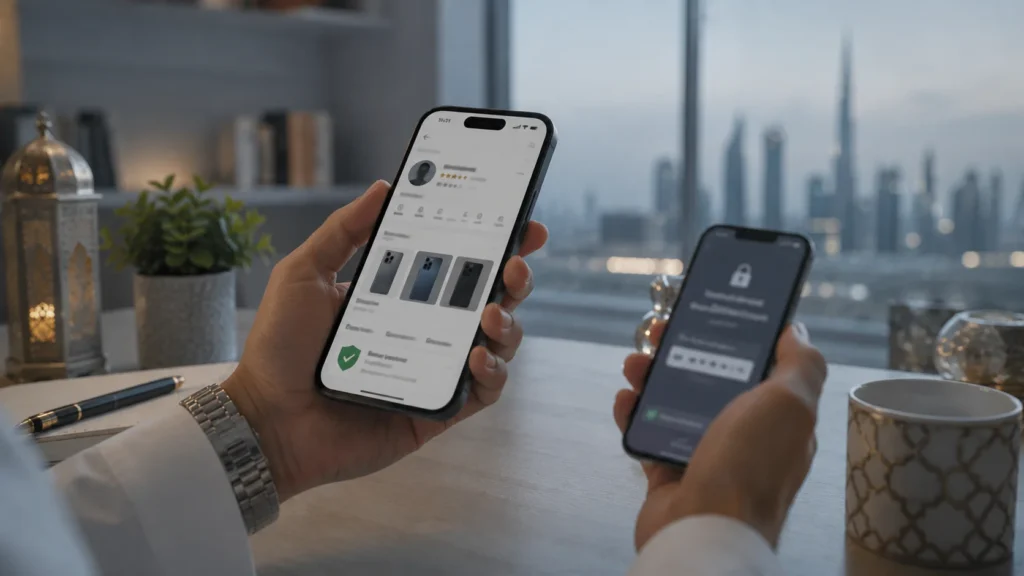
Fake Phone Offers Could Put Banking Details at Risk
The way these scams typically work is straightforward. An advertisement offers a phone deal that looks genuinely attractive — easy instalments, low upfront cost, well-known brand. When a consumer engages, they’re directed toward a link or asked to provide financial information to “secure” the offer.
That information — card details, banking credentials or verification codes — can then be used to access accounts or make fraudulent transactions. The Ministry of Interior has specifically flagged this as the goal behind many of these advertisements, and residents are being urged not to assume that an unusually good deal is genuine just because it appears in their feed.
Verify Sellers Before Making a Purchase
Before putting money down or entering any personal details, the Ministry is advising residents to verify independently that the seller is legitimate.
The safest approach for purchasing mobile phones and other high-value electronics is through official or authorised retailers. When an advertisement appears on social media, don’t rely solely on the contact details or links provided within it — search for the company through official channels and confirm the offer exists on their verified website.
A few minutes of checking can prevent a much larger problem.
Do Not Click Suspicious Links or Share OTPs
Authorities have been direct about two specific behaviours that residents should avoid entirely.
The first is clicking suspicious links in social media advertisements or any messages connected to them. These links often lead to fake websites that are designed to look authentic but exist only to harvest personal or financial information.
The second — and this is critical — is never sharing one-time passwords (OTPs) with anyone claiming to represent a retailer, bank or other organisation. Banking passwords, verification codes and sensitive financial information should stay private, regardless of how convincing the request sounds or how legitimate the offer appears. No genuine retailer or financial institution will ask for your OTP.
Dubai Police Also Targets Fraudulent Social Media Accounts
The ministry’s warning comes alongside ongoing enforcement action. Dubai Police shut down 103 fraudulent social media accounts during the second quarter of 2026 as part of a sustained effort to tackle digital fraud.
The scale of that action reflects how widespread the problem has become. Criminals are creating accounts that convincingly mimic real companies and using attractive promotions to build trust before making their move. Residents are being encouraged to report suspicious accounts and advertisements rather than simply scrolling past them.
Scammers Using Increasingly Sophisticated Methods
UAE authorities have been consistent in flagging this trend — fraudsters are getting more sophisticated. Fake profiles, messages, websites and advertisements are being crafted to look indistinguishable from the real thing, making the instinct to trust a convincing-looking offer a real vulnerability.
The warning signs tend to be consistent regardless of how polished the presentation is. Pressure to act quickly before the offer expires. Prices that are noticeably lower than anything established retailers are offering. Requests for banking details or verification codes at an unusually early stage of the transaction. Any of these should prompt a pause, not a click.
Also Read: From Machboos to Ghaf Juice: Etihad Rail Brings Emirati Flavours to Abu Dhabi–Fujairah Journey
How UAE Residents Can Stay Safe Online
The protective measures aren’t complicated, and they don’t require technical expertise — just a bit of patience before making decisions.
When you see a phone deal on social media, verify the seller independently before engaging. Avoid clicking links directly from the advertisement. Compare the price with what established retailers are actually charging. Use trusted and secure payment channels rather than methods proposed within the ad.
Keep your Emirates ID details, card information, banking credentials, passwords and OTPs to yourself unless you are completely certain you are dealing with a legitimate, verified service. If the offer feels too good to be accurate, it almost certainly isn’t. Checking before you commit costs nothing. Falling for a scam can cost a great deal more.