

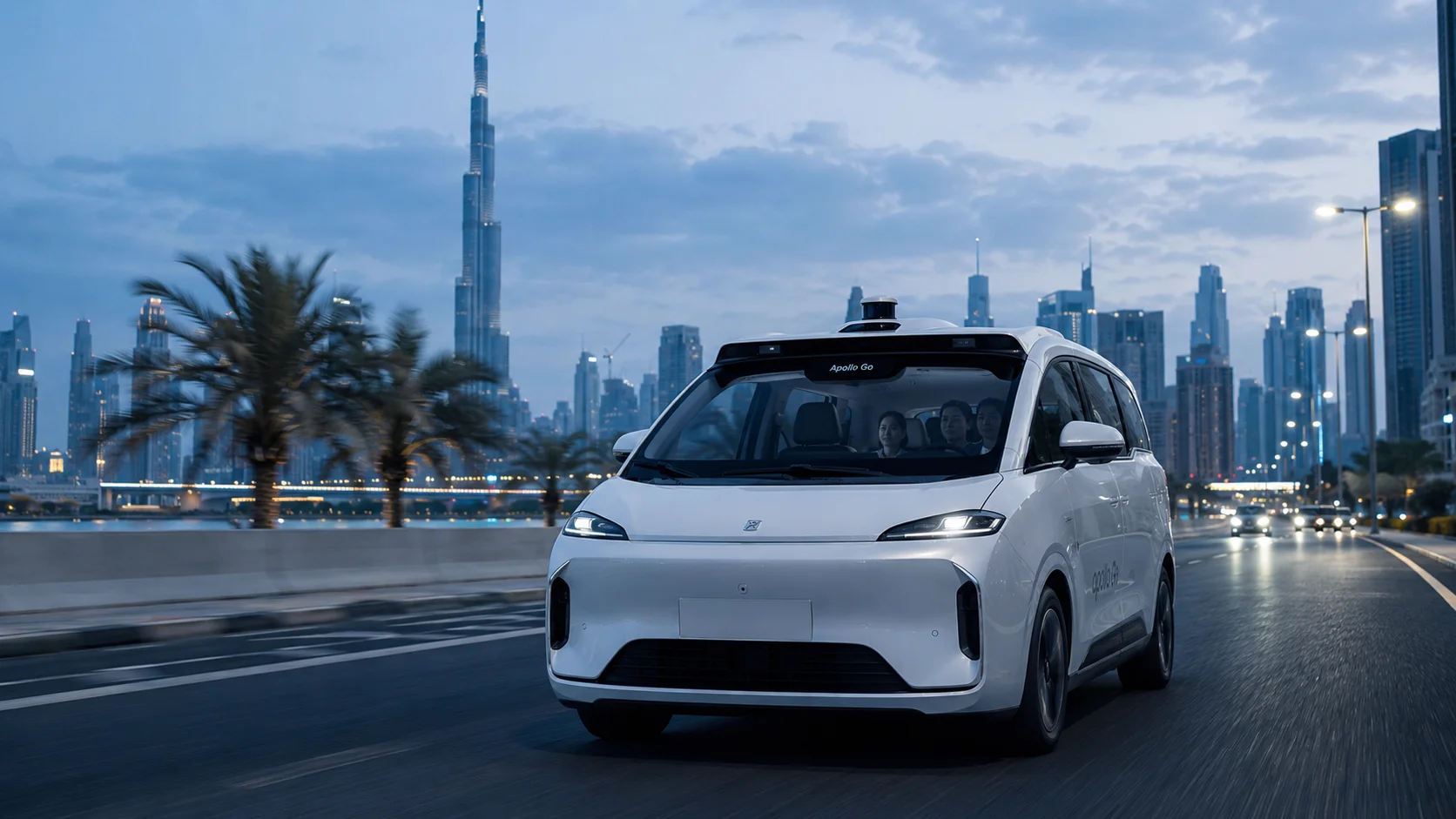
Dubai has taken another step towards autonomous transport with Baidu’s Apollo Go RT6 robotaxi now operating as a fully driverless service for Uber riders. The deployment gives passengers in selected parts of the city access to autonomous rides without a human driver behind the wheel.
The service is being operated by New Horizon Luxury Transport and represents the first active deployment of Uber’s multi-partner autonomous vehicle network on public roads. It also brings Baidu’s sixth-generation autonomous vehicle technology into Uber’s ride-hailing marketplace in Dubai.
The launch highlights Dubai’s growing role as a testing ground for advanced mobility technology. It also shows how ride-hailing companies are increasingly working with multiple autonomous vehicle developers rather than relying on a single robotaxi fleet.
Apollo Go RT6 available through Uber
Uber riders requesting UberX or Uber Comfort in the service area may be matched with an Apollo Go vehicle. Eligible passengers can also select the Autonomous option in the Uber app when booking a ride.
The Apollo Go RT6 is a purpose-built, fully electric robotaxi designed specifically for autonomous transportation. The vehicle can carry up to three passengers, making it suitable for individual riders and small groups.
For passengers, the experience is designed to work within the familiar Uber booking system. Instead of manually arranging a separate robotaxi service, eligible riders can access the autonomous vehicle through Uber’s existing platform.
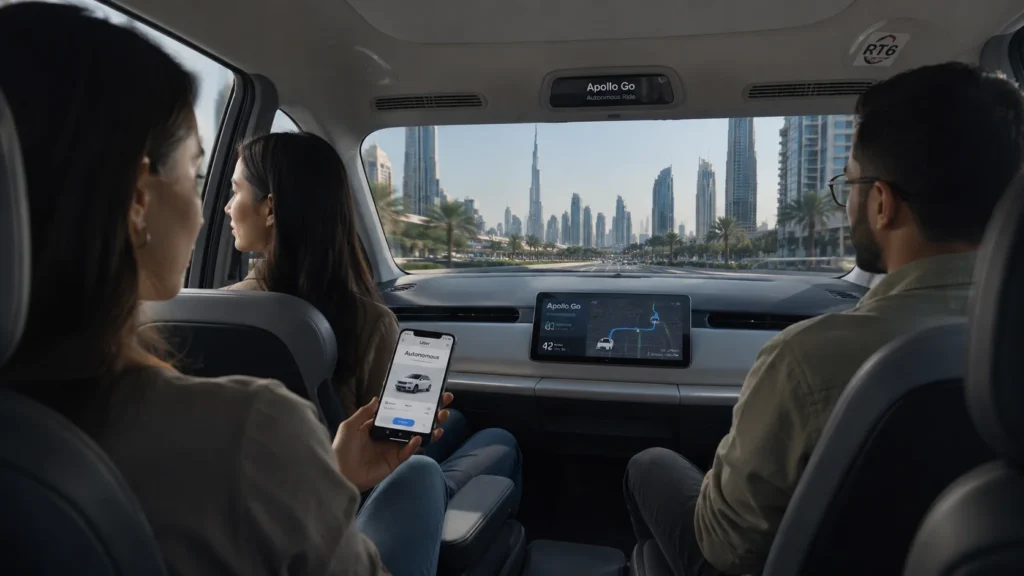
Autonomous rides cover Umm Suqeim and Jumeirah
The initial Apollo Go deployment covers Umm Suqeim and Jumeirah, two well-known areas of Dubai. The service is therefore currently focused on a defined part of the city rather than being available across the entire Dubai road network.
The selected areas give the autonomous fleet an opportunity to operate in real urban traffic while remaining within a controlled service zone. As autonomous services expand, coverage areas could become an important part of how cities manage the introduction of driverless vehicles.
The Dubai launch also provides an example of how autonomous mobility can be integrated into an existing transport ecosystem. Uber supplies the customer-facing marketplace, while the autonomous technology and vehicle fleet are provided through its partner network.
What makes Baidu Apollo Go RT6 different?
The Apollo Go RT6 is Baidu’s sixth-generation robotaxi and has been designed from the beginning as an autonomous electric vehicle. Unlike conventional cars that are adapted for driver-assistance systems, purpose-built robotaxis are developed around the requirements of automated driving.
The RT6 can accommodate up to three passengers and operates without a driver during the Dubai deployment. Its fully electric design also places the vehicle within the broader shift towards cleaner and more technology-focused urban transportation.
The vehicle forms part of Baidu’s wider Apollo Go autonomous mobility programme. The company has been expanding the service internationally as robotaxi technology moves from controlled trials towards commercial passenger operations.
Apollo Go has covered more than 350 million autonomous kilometres
Baidu says Apollo Go has deployed in 28 cities globally and accumulated more than 350 million autonomous kilometres. Of that total, more than 240 million kilometres have been completed fully driverless.
The scale of those operations gives Baidu significant experience in deploying autonomous vehicles across different road environments. The company says its accumulated mileage also reflects an established safety record for the service.
However, autonomous driving remains a developing technology, and operating conditions can vary between cities. Dubai’s roads, traffic patterns, weather conditions and regulatory environment provide another real-world setting for Apollo Go to build operational experience.
Dubai becomes an important autonomous mobility market
The Apollo Go deployment is particularly significant because Dubai has been actively developing its autonomous transport ecosystem. The city has positioned advanced mobility technologies as part of its long-term vision for smarter and more efficient transportation.
The arrival of Apollo Go through Uber adds another layer to that ecosystem. Instead of a single operator controlling the entire autonomous ride-hailing experience, passengers can potentially access vehicles from different technology and fleet partners through one marketplace.
This approach could help autonomous ride-hailing services expand more quickly if different vehicle operators can be integrated into the same platform. It also gives Uber greater flexibility as it develops its global autonomous mobility strategy.
Uber is building a multi-partner autonomous network
Uber currently works with more than 30 autonomous vehicle partners, according to the company. The Dubai Apollo Go deployment is described as the first step towards potentially scaling thousands of Apollo Go vehicles across Uber’s global network.
This multi-partner model allows Uber to bring together autonomous vehicle companies rather than developing every vehicle and self-driving system itself. The company can focus on connecting riders with available autonomous fleets through its existing marketplace.
Sarfraz Maredia, Uber’s Global Head of Autonomous, said the deployment demonstrates how autonomous technology and a global marketplace can work together to support a shared autonomous future.
Baidu expands its international robotaxi strategy
For Baidu, Dubai represents an important international milestone. Baidu Vice President Nan Yang said Dubai is the first city where Apollo Go operates both its own service and a partner-based autonomous ride-hailing operation internationally.
The development allows Baidu to test a broader business model in which its autonomous vehicles can serve passengers through an established third-party mobility platform. It also gives the company access to Uber’s large customer base in the city.
The partnership could become significant if Apollo Go expands beyond the initial Dubai service area. Uber’s global network could potentially provide Baidu with additional opportunities to deploy its robotaxis in other markets where regulatory and operational conditions allow.
Also Read: Jasmine Sandlas Live in Dubai: The Dream Girl Tour to Hit Coca-Cola Arena on September 13
Dubai moves closer to driverless public transport
The launch of Apollo Go on Uber adds to Dubai’s growing portfolio of autonomous mobility projects. Driverless taxis and other automated transport solutions are becoming an increasingly visible part of the city’s plans for future transportation.
For residents and visitors, the biggest change is that autonomous rides are moving from technology demonstrations towards everyday passenger services. The Apollo Go RT6 deployment gives eligible Uber riders an opportunity to experience a fully driverless journey on Dubai’s public roads.
As autonomous fleets gain more operational experience, partnerships between technology companies, vehicle operators and mobility platforms could play a major role in determining how quickly driverless transportation becomes part of daily urban travel.