

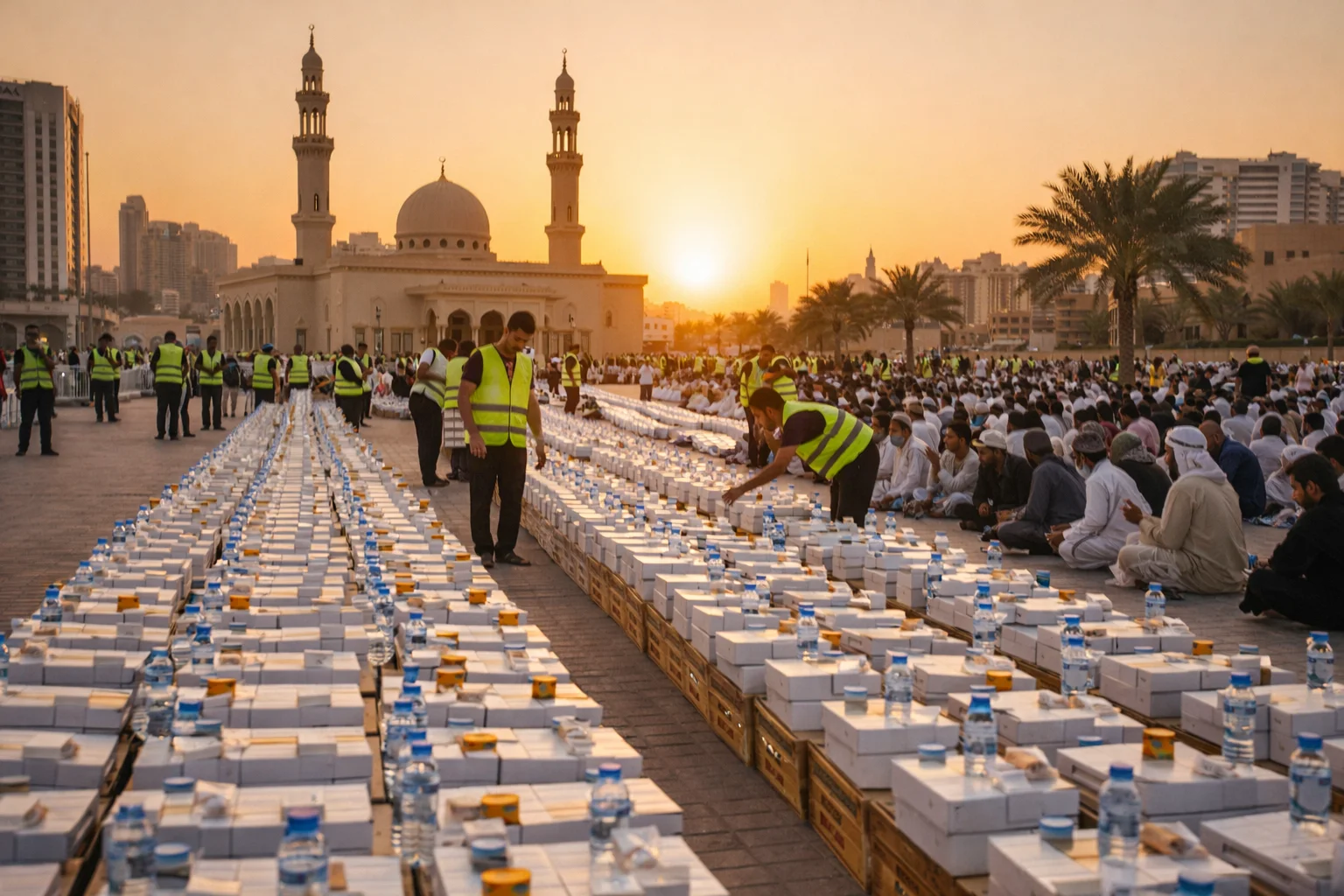
Sharjah authorities have recently announced the approved sites for iftar distribution across the emirate this Ramadan. The initiative is meant to help residents and visitors easily access meals for breaking the fast in a well-organized and safe way. These distribution points are spread across key community areas to make iftar more accessible to everyone.
The guidelines set by the Sharjah government aim to ensure food is shared respectfully and hygienically. This move supports community spirit and helps reduce food wastage during the holy month. As the number of fasting residents and visitors increases, planning and approving official distribution locations has become a priority.
Strategic Placement of Iftar Sites
The approved iftar locations are placed thoughtfully, not just in random spots, but in areas where people live, pray, and move daily. Most sites are located near mosques, open community squares, and densely populated neighbourhoods to allow people to reach them easily after the fast-breaking prayer. This approach ensures that low-income families, workers, and residents don’t have to travel far for a meal when they are fasting.
The goal of placing these sites strategically is to reach the largest number of beneficiaries and make iftar a smooth experience for residents and visitors alike. Authorities aimed to bring meals into neighbourhoods rather than expecting people to travel to central locations, easing the journey home before sunset.
Food Safety and Organisation
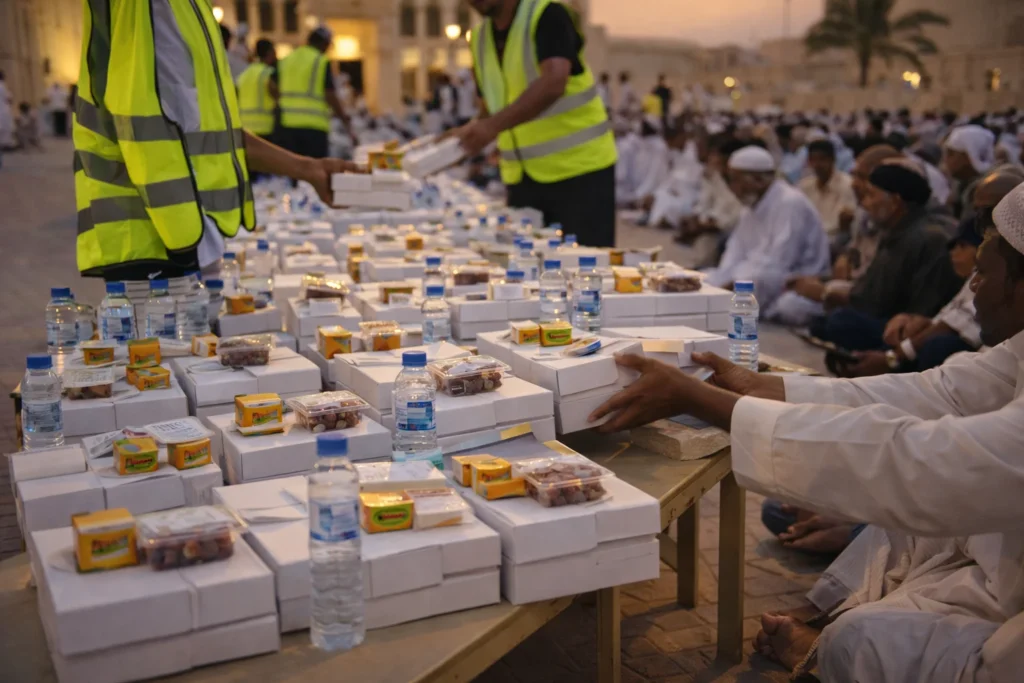
Ensuring food safety and hygiene at large distribution points is a major priority for Sharjah’s authorities. The approved sites must follow strict standards for food handling, storage, and transportation to keep meals fresh and safe for distribution. This includes using specialized containers and approved methods to serve food responsibly.
Organizers and volunteers must adhere to crowd safety measures and use equipment to prevent any health risks. By enforcing clear standards, the authorities aim to protect the well-being of fasting individuals gathering in open areas at sunset.
Reach Across the Emirate
The iftar sites cover a wide range of areas across Sharjah, including residential districts, major mosque surroundings, and public parks. This broad coverage helps ensure that meals are available at convenient points where community members naturally gather.
By offering accessible locations, the initiative supports people who may find it challenging to cook or organize meals during busy Ramadan days. It also benefits workers, families, students, and elderly residents by providing a nearby iftar option without the need for long travel.
Encouraging Togetherness and Community Unity
Iftar meals are more than food distribution; they are places where people from different backgrounds gather to break their fast together. These community tables allow strangers to sit side by side, share food, and connect in a spiritual and social setting.
The shared experience of iftar invites interactions between people of different cultures, ages, and professions, reinforcing the spirit of compassion, solidarity, and unity that is central to Ramadan.
Supporting Charitable and Volunteer Efforts
The approval of iftar sites also encourages charitable organizations and volunteers to play an active role in Ramadan initiatives. Community groups, local donors, and volunteers can participate by setting up meal preparation points and assisting at distribution areas.
Many of these groups already support regular distributions in the emirate, and the expanded approval of sites provides a structured framework to coordinate their efforts effectively. Volunteers form an essential part of ensuring meals are delivered on time and served warmly to those who have spent the day fasting.
Enhancing Accessibility and Participation
The wide network of approved sites is planned to accommodate a range of people, including those who may live in areas with limited access to large Ramadan tents. By placing distribution sites throughout communities, Sharjah authorities aim to make Ramadan services more inclusive.
This approach also eases crowding at major tents by spreading out the meal services across the city. Residents can choose the site closest to them, whether they are returning home from work, visiting a mosque, or simply out in the community.
Role of the Department of Islamic Affairs
Sharjah’s Department of Islamic Affairs has taken the lead in planning and approving the iftar distribution sites, working with other relevant authorities to ensure compliance and safety. The organization’s role extends beyond approvals to guiding how these meals are prepared, handled, and served at each location.
This leadership supports a unified effort across the emirate, helping different groups align with food safety protocols and encouraging community volunteers. It also underlines Sharjah’s commitment to organized and meaningful Ramadan charitable efforts.
Also Read: Soon You Can Book Uber Air Taxis in Dubai Directly Through the App
How Residents Can Participate
Residents and visitors who wish to join these community initiatives can look for information at local mosques, community centres, and municipal announcements. Many volunteers help set up, arrange, and serve meals at the approved sites every evening as sunset approaches.
Participation by families, youth volunteers, and local organizations makes the meal distribution more impactful. These collaborative efforts help strengthen the fabric of community support during the significant month of Ramadan.
What the Initiative Means for Ramadan in Sharjah
By approving hundreds of iftar distribution sites throughout the emirate, Sharjah is aligning spiritual observance with social support systems. These efforts highlight the values of care, generosity, and unity that define Ramadan in the region.
The widespread distribution and safety measures help ensure that everyone, regardless of background or circumstance, can experience a welcoming space to break their fast and share moments of connection during the holy month.