

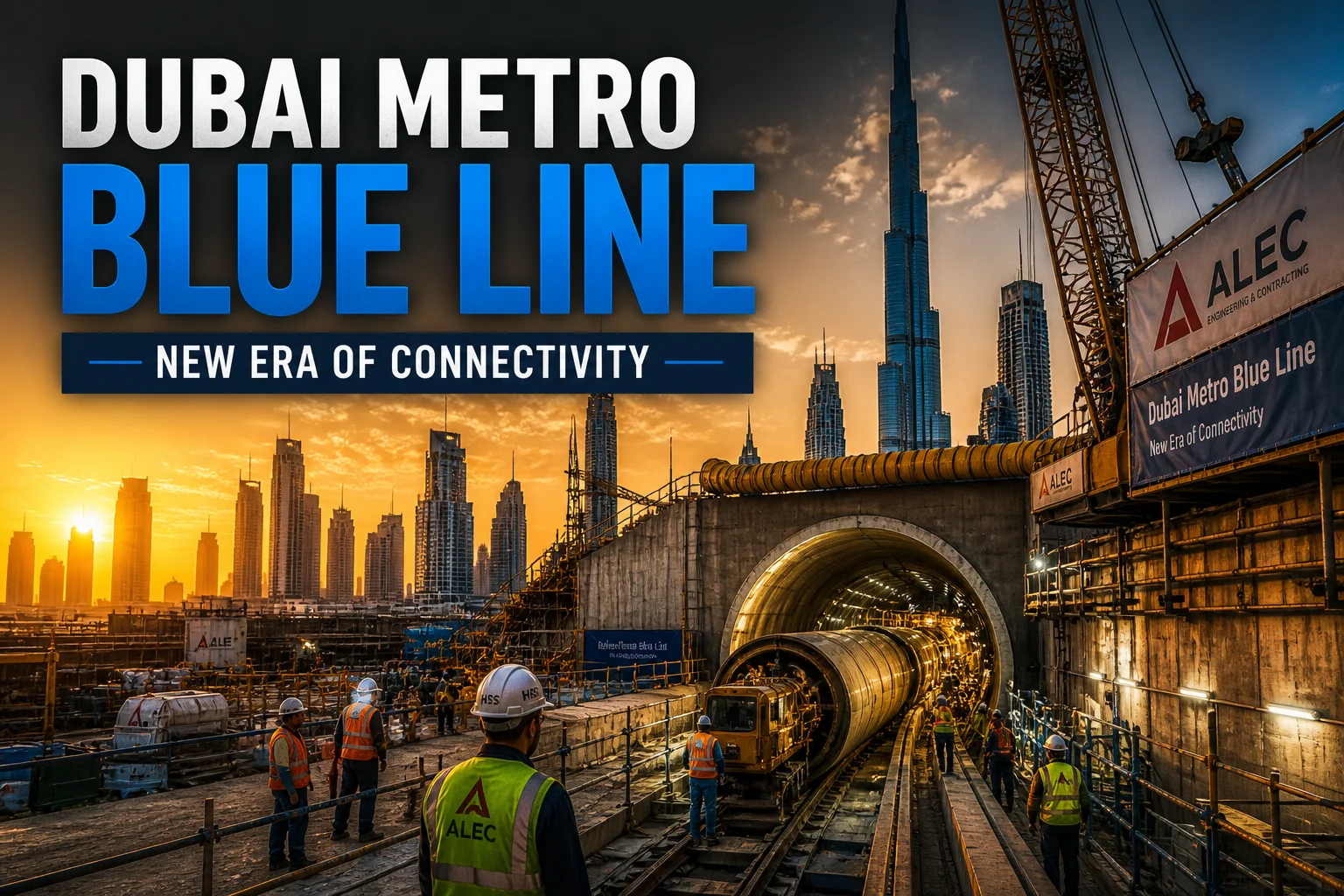
Dubai is building a new metro line — and if you’ve spent any time stuck in traffic on Sheikh Zayed Road, you’ll understand why that’s a big deal.
Construction on the Metro Blue Line has officially started, a project announced under the direction of Sheikh Mohammed bin Rashid Al Maktoum. The goal is straightforward: give people a faster, easier way to get around a city that keeps growing, without adding more cars to roads that are already stretched.
It won’t be finished overnight. But the fact that tunnelling has begun means this is no longer just a plan on paper.
So What Exactly Is the Blue Line?
The Blue Line is a new addition to Dubai’s existing metro network. Think of it as filling in the gaps — connecting residential communities and business districts that currently aren’t well served by the Red or Green lines.
Multiple stations are planned along the route, most of them in high-density areas where demand for public transport is already high. Once it’s running, commuters will be able to transfer between the Blue Line and existing metro routes without much fuss, which is usually where these expansions live or die.
The integration with the current network is something officials have specifically highlighted. A metro line that requires three connections and a taxi to actually get where you’re going isn’t much of an improvement. The plan here is to make transfers genuinely smooth.
The 20% Congestion Target
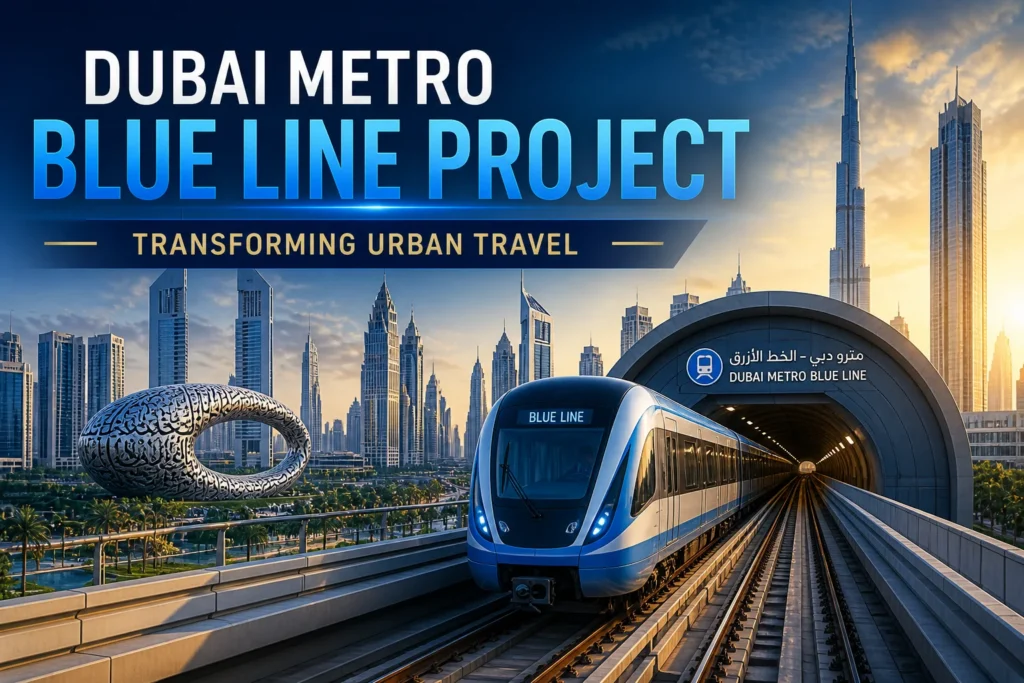
Authorities have said the Blue Line could cut traffic congestion by up to 20% in certain parts of the city.
That’s an ambitious number, but not an unreasonable one. Dubai’s road network has been under growing pressure for years. The population has expanded rapidly, and most of that growth has translated directly into more cars on the street. Every person who takes the metro instead of driving is one fewer vehicle in traffic — and the math eventually adds up.
There’s an environmental side to this too. Fewer cars means lower emissions, which aligns with Dubai’s broader sustainability commitments. The metro expansion isn’t just a transport story — it’s part of a longer conversation about what kind of city Dubai wants to be.
Tunnels First
The first major phase of construction is tunnel work. This is typically the most technically demanding part of any metro project — you’re working underground, in a city that’s already built, and any mistake has consequences that go well beyond just the metro itself.
Authorities say they’re using modern engineering techniques to manage both safety and efficiency. That’s fairly standard language for a project at this scale, but the pace of tunnel completion will largely determine whether the rest of the timeline holds.
Once the underground sections are done, the rest of the construction tends to move faster.
Who Benefits Most?
Areas that currently depend almost entirely on road transport stand to gain the most. If you live somewhere in Dubai where your only real options are a car or a taxi, a metro station changes your daily life significantly.
That means shorter commutes, less time in traffic, and lower transport costs over time. For daily commuters — people traveling to work, to school, to hospital appointments — the Blue Line could genuinely shift how they plan their day.
Beyond residents, there’s a broader economic benefit too. Better connectivity between residential zones and commercial hubs tends to support business activity. It makes areas more accessible, which matters for everything from retail foot traffic to office leasing.
More People on the Metro
Dubai has been trying to shift commuter behavior toward public transport for a while now. The existing metro system has done reasonably well — ridership has grown since the Red Line opened back in 2009 — but there’s still a lot of road traffic that could theoretically move underground.
The Blue Line expansion is a direct attempt to capture more of that. Modern stations, better coverage, and faster travel times are the levers being pulled here. Whether it works depends partly on the infrastructure and partly on whether the route actually goes where people need to go.
Tourists are also part of the calculation. Dubai draws tens of millions of visitors a year, and a well-connected metro that reaches key attractions and airport terminals makes the city easier to navigate without a rental car.
Also Read: Dubai Miracle Garden Free Entry and Family Deals Before Season 14 Closes on May 31
The Bigger Picture
The Blue Line is one piece of a much larger puzzle. Dubai is actively preparing for continued growth — more residents, more businesses, more visitors — and the city needs infrastructure that can absorb that without everything grinding to a halt.
Metro expansions are one of the more reliable tools for managing urban growth. They’re expensive and slow to build, but once they’re running, they keep working for decades.
The Blue Line fits into Dubai’s broader urban development strategy — the push toward smarter, more sustainable mobility that the city has been building toward for years. It’s not a silver bullet for congestion or emissions, but it moves the needle in a meaningful direction.
What Comes Next
Construction is underway. The tunnels are the immediate focus. From here, the timeline depends on how the engineering work progresses and whether any complications slow things down — as they often do with underground metro projects.
When it eventually opens, the Blue Line will quietly reshape how large parts of Dubai function. That’s the nature of metro infrastructure: it takes years to build and then, once it’s there, it becomes something people can’t imagine the city without.