

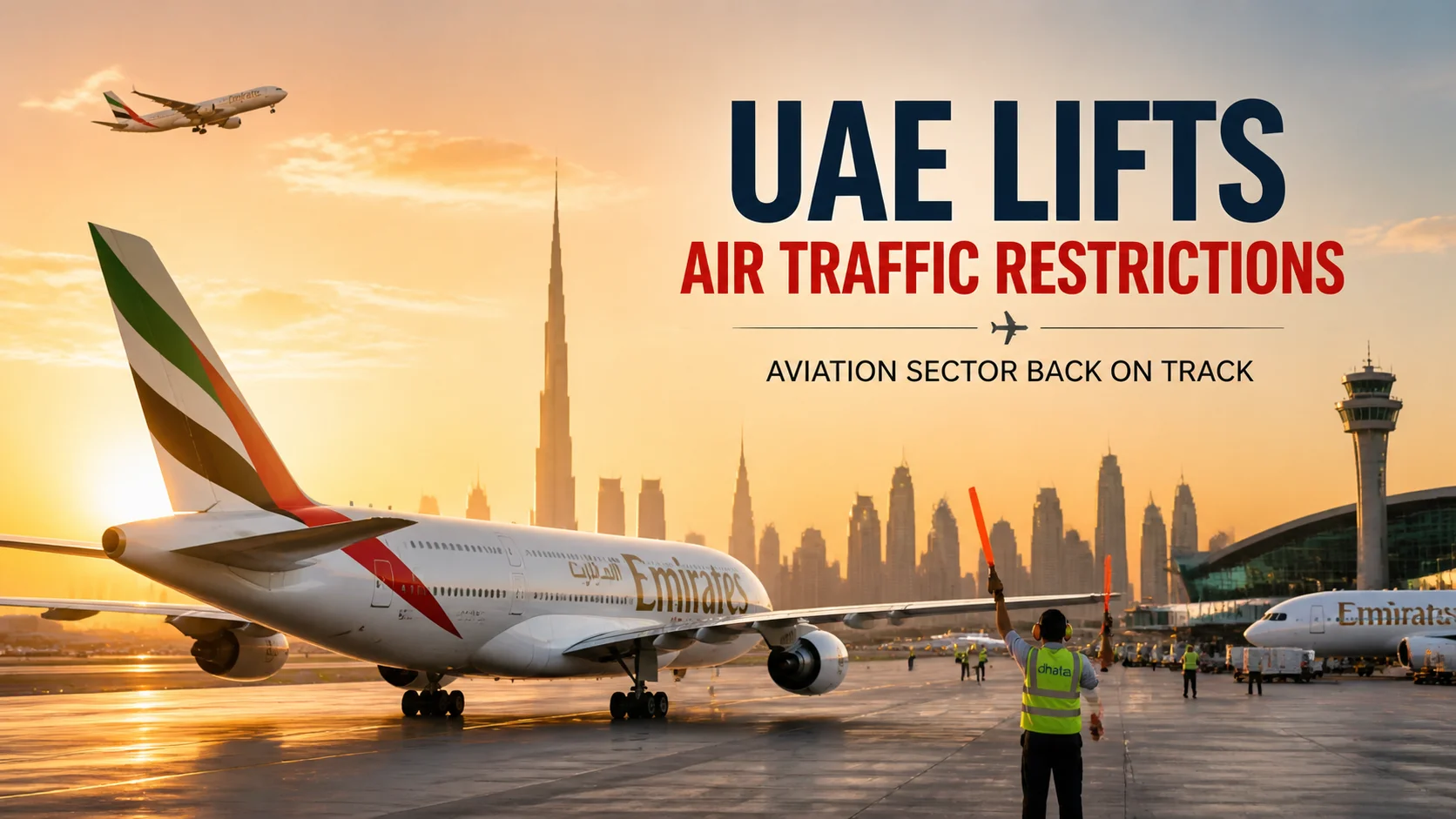
If you’ve had a flight cancelled, rerouted, or delayed through Dubai or Abu Dhabi in recent months, here’s some welcome news: the UAE has officially lifted all air traffic restrictions that were put in place during the Iran war.
The country’s General Civil Aviation Authority confirmed the decision following a full review of security and operational conditions. Airspace is now fully restored, airlines are rebuilding their schedules, and the two airports that sit at the center of global aviation are getting back to work.
It’s a significant moment — not just for the UAE, but for anyone whose travel plans run through this part of the world.
How It Got to This Point
The restrictions didn’t come out of nowhere. They were introduced in late February 2026 as the Iran war escalated and security risks spread across the Gulf region. Missile and drone activity in the area prompted authorities to act quickly, and that meant limiting airspace access as a precautionary measure.
The knock-on effects were immediate and wide-ranging. Flights were cancelled. Others were rerouted on longer paths around restricted zones, burning more fuel and adding hours to journeys. Passengers were stranded or scrambling to rebook. Airlines had to rebuild entire scheduling operations on the fly.
And it wasn’t just the UAE. Several countries across the Middle East temporarily closed or restricted their airspace during this period, which sent ripple effects through global aviation networks that took weeks to fully untangle.
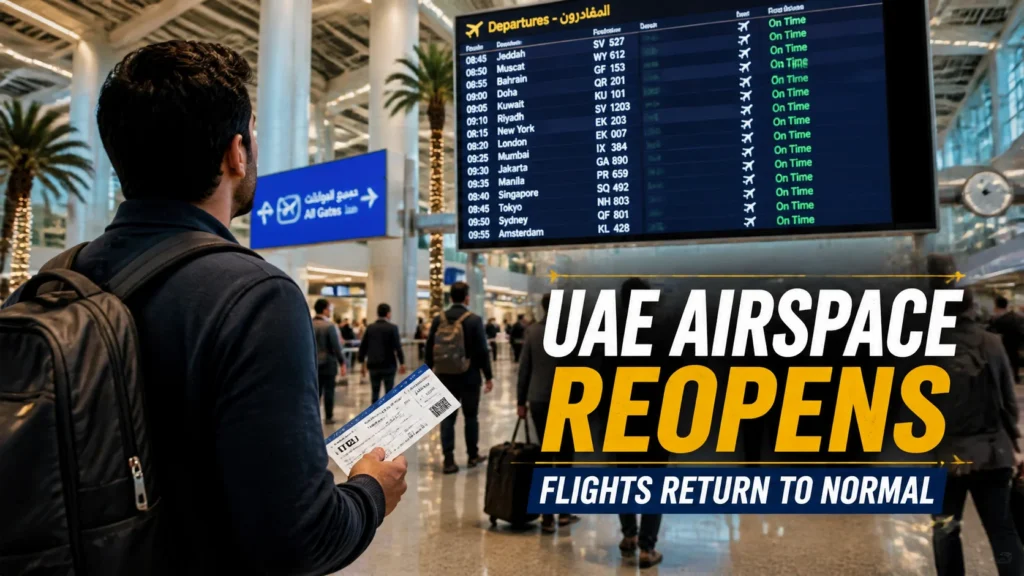
Dubai and Abu Dhabi Were Hit Hard
Both airports — among the busiest in the world on any normal day — took the brunt of the disruption. Dubai International handles an enormous volume of transit passengers connecting between Europe, Asia, and Africa. Abu Dhabi International carries significant long-haul traffic of its own.
When those hubs are even partially constrained, the effects spread fast. Airlines that use the UAE as a connecting hub had to rethink routes. Cargo operations were disrupted. Hotels, tour operators, and businesses relying on that steady flow of arrivals felt the pinch too.
Getting these airports back to full capacity isn’t just good news for travelers — it matters for the entire regional economy.
What Happens Now
Airlines are already moving to restore suspended routes and increase seat availability. Travel demand, which took a hit during the uncertainty, is expected to recover relatively quickly now that the restrictions are gone and confidence in regional stability is returning.
Industry experts are cautiously optimistic. The UAE’s role as a connecting point between continents makes it difficult to substitute — when it’s running well, global aviation runs better. The recovery here will ease pressure on alternative routing options that were stretched during the disruption.
Tourism, hospitality, and logistics — all heavily dependent on smooth air access — should see a fairly direct benefit in the weeks ahead.
Monitoring Stays On
One thing worth noting: lifting the restrictions doesn’t mean switching off the radar.
UAE authorities have been clear that real-time monitoring systems remain fully active. The message is essentially that operations are back to normal, but the caution that comes with operating in a still-complex regional environment hasn’t gone away.
Airlines and airports are continuing to follow strict safety protocols as they scale operations back up. That’s probably the right approach — resuming normalcy without pretending the past few months didn’t happen.
Also Read: 5 Aesthetic Indoor Padel Courts in Dubai You Need to Try
A Signal About the Region
Beyond the practical aviation news, the decision to lift restrictions carries a broader meaning. It reflects an official assessment that the immediate security threat has reduced enough to allow normal operations to resume safely.
That matters for investor and business confidence in the region, not just for travelers. The UAE has a lot riding on its reputation as a stable, well-managed place to do business and transit through. Every week that disruptions continued was a week that reputation took a quiet hit.
The speed with which authorities have moved to restore normalcy — once conditions allowed — says something about how seriously the UAE takes that reputation.
What It Means for Travelers
If you’re planning to fly through Dubai or Abu Dhabi in the coming weeks, the situation is essentially back to what you were used to before the war disruptions began. Routes that were suspended are coming back. Frequencies are being restored. The transit experience that millions of passengers rely on is returning to form.
There will likely be a brief period of schedule rebuilding as airlines work through the logistics, but the underlying infrastructure — the airspace, the airports, the systems — is all clear and operational.
For an aviation hub that prides itself on connecting the world, that’s exactly where it needs to be.