

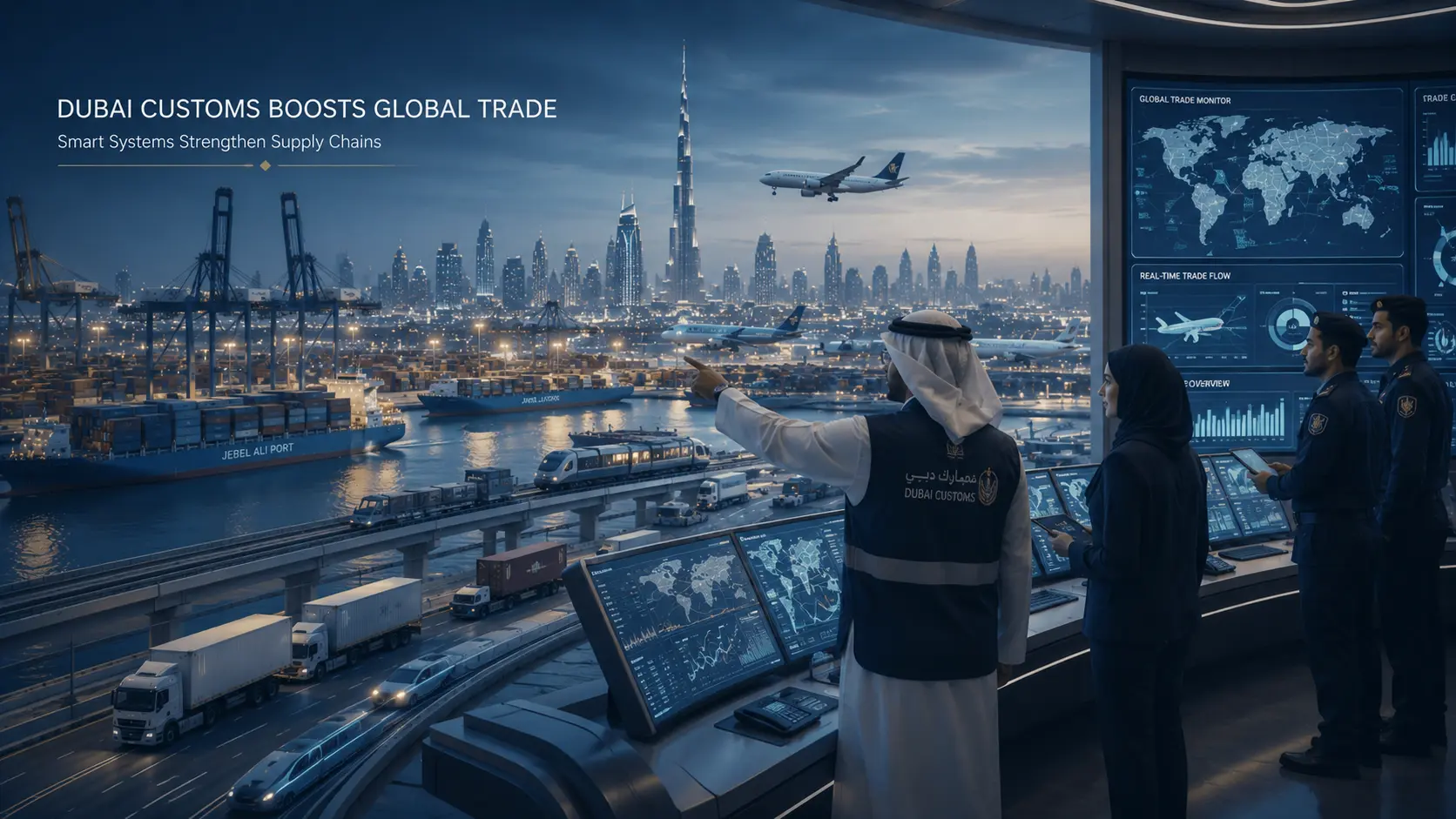
Global trade hasn’t had an easy few years. Shipping disruptions, geopolitical tensions, rising costs, and economic uncertainty have tested supply chains across every major market. Dubai Customs has been responding to that environment by doubling down on the things that have always made the emirate competitive — speed, efficiency, and smart infrastructure.
The focus is on getting cargo moving faster, reducing administrative friction, and using technology to maintain high security standards without slowing things down. For businesses moving goods through the region, that matters a great deal.
Dubai’s geographic position — sitting between Asia, Europe, and Africa — has always been one of its most valuable assets in global trade. The ongoing investment in customs innovation and trade-friendly regulation is what turns that geography into a genuine competitive advantage.
Smart Customs Systems Improve Cargo Movement
Dubai Customs has been integrating digital systems and smart inspection technologies into its operations in ways that are genuinely changing how cargo moves through the emirate. Electronic documentation processing, real-time shipment monitoring, and AI-assisted clearance procedures have all become part of how the department operates.
The practical result is faster clearance times and fewer bottlenecks — which is what businesses actually need when they’re managing international supply chains under time pressure. Coordination with ports, airlines, shipping companies, and logistics providers has also improved, creating a more integrated flow that helps supply chains absorb disruptions rather than break under them.
Global Trade Challenges Continue to Affect Markets
The challenges hitting global trade right now are real and persistent. Geopolitical uncertainty, ongoing shipping lane issues, inflation, and elevated transportation costs have all created pressure on businesses trying to maintain reliable supply chains.
Dubai’s response has been to lean into adaptability. Rather than waiting for global conditions to stabilize, the emirate has built systems designed to maintain operational continuity even when the external environment is difficult. Industry experts watching the region consistently point to this ability to adjust quickly as one of Dubai’s most important competitive qualities.
Dubai Strengthens Its Position as a Global Logistics Hub
The infrastructure supporting Dubai’s trade position is substantial. Major ports, international airports, and well-established free zones all contribute to an ecosystem that attracts multinational companies and global logistics operators looking for reliable access to international markets.
The industries served are wide-ranging — retail, manufacturing, e-commerce, pharmaceuticals, aviation, energy — and efficient customs operations touch all of them. For businesses in any of these sectors, reduced processing times and simplified trade procedures translate directly into lower operational costs and more reliable delivery schedules.
Digital Transformation Remains a Major Priority
Technology is central to where Dubai Customs is heading. Smart platforms, blockchain-based transparency tools, and automated inspection systems are all being introduced with the goal of making trade operations more reliable and easier to monitor.
The broader expectation is that real-time cargo tracking and faster clearance will become standard expectations across international logistics in the years ahead. Dubai is positioning itself to be ahead of that curve rather than catching up to it.
Also Read: Dubai Airport Is Getting Ready for Hajj Season — Here’s What Pilgrims Can Expect This Year
Trade Growth Supports Dubai’s Economy
Trade and logistics aren’t peripheral to Dubai’s economy — they’re central to it. Strong import and export activity creates employment, supports business growth, and feeds into the wider regional economy in meaningful ways.
The investment Dubai continues to make in customs innovation and smart logistics infrastructure reflects an understanding that maintaining a competitive position in global trade requires ongoing effort rather than resting on existing strengths. For businesses using Dubai as a trade gateway, the continued improvement of that infrastructure is genuinely good news.