

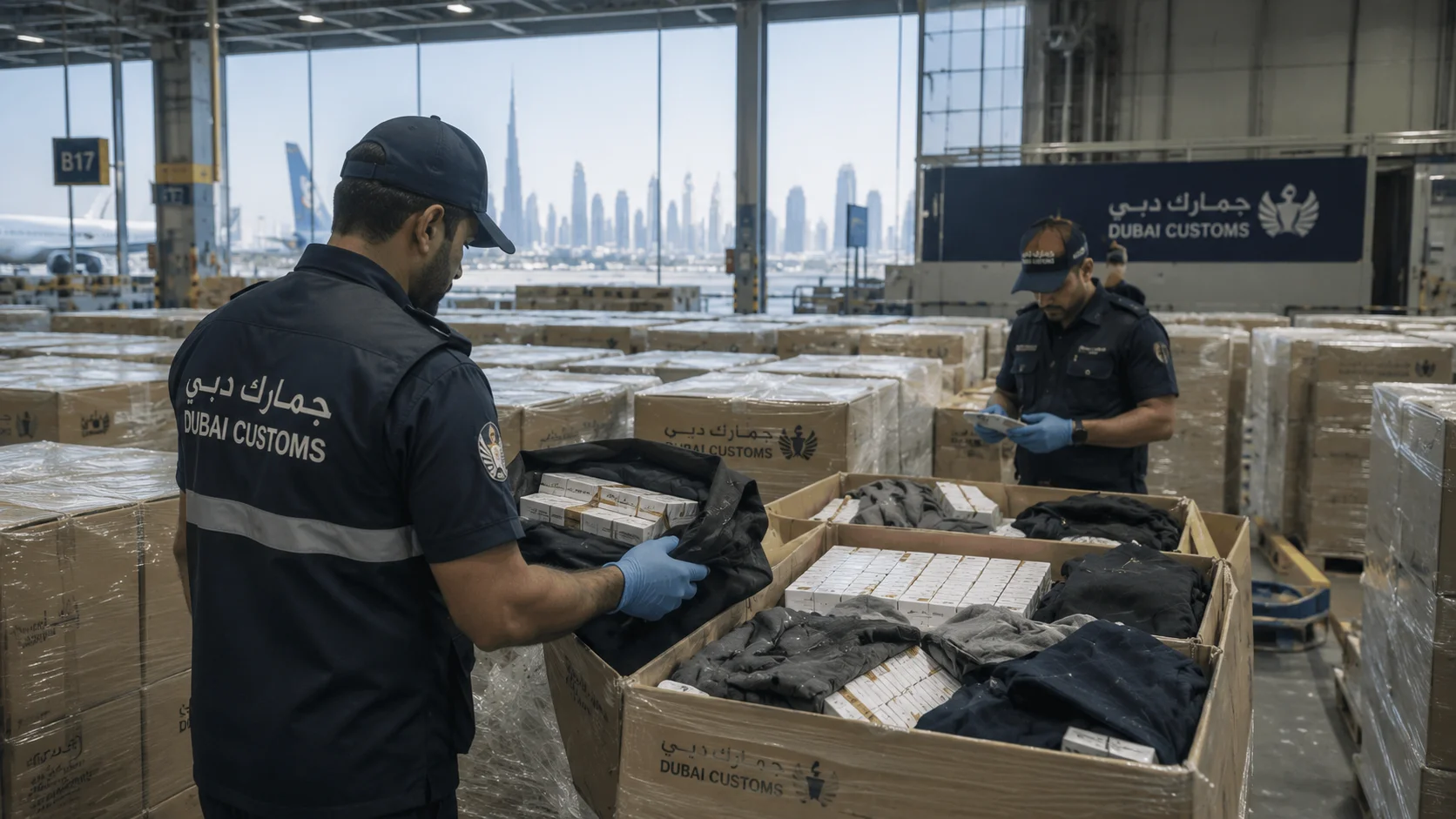
Dubai Customs has stopped a significant smuggling operation — more than 70 million illicit cigarettes destined for a European country were intercepted before they could leave the UAE.
The operation covered nine shipments processed through three separate air cargo facilities in Dubai. What made the interception particularly notable was the method: customs officials didn’t stumble across the cigarettes through a routine check. They identified suspicious patterns in shipment data, followed the thread, and connected all nine consignments to a single importer before the cargo could clear.
Cigarettes Concealed as Clothing
The nine shipments collectively contained 360,500 cartons of cigarettes — nearly seven tonnes of tobacco discovered during inspections.
None of the shipments were declared as tobacco. All of them had been officially logged as “clothing” — a false declaration designed to make the cargo look routine and unremarkable in the system. It’s an approach that works on volume: if customs officers are reviewing hundreds of clothing shipments, a few extra declarations blend into the background.
In this case, they didn’t. Risk indicators flagged by the Air Cargo Centers Management team prompted closer inspection, and the inspections revealed what the paperwork was trying to hide.
Nine Shipments Linked to One Importer
The operational achievement here wasn’t just catching the first shipment — it was recognising that there were nine of them, spread across different facilities, and that they all belonged to the same network.
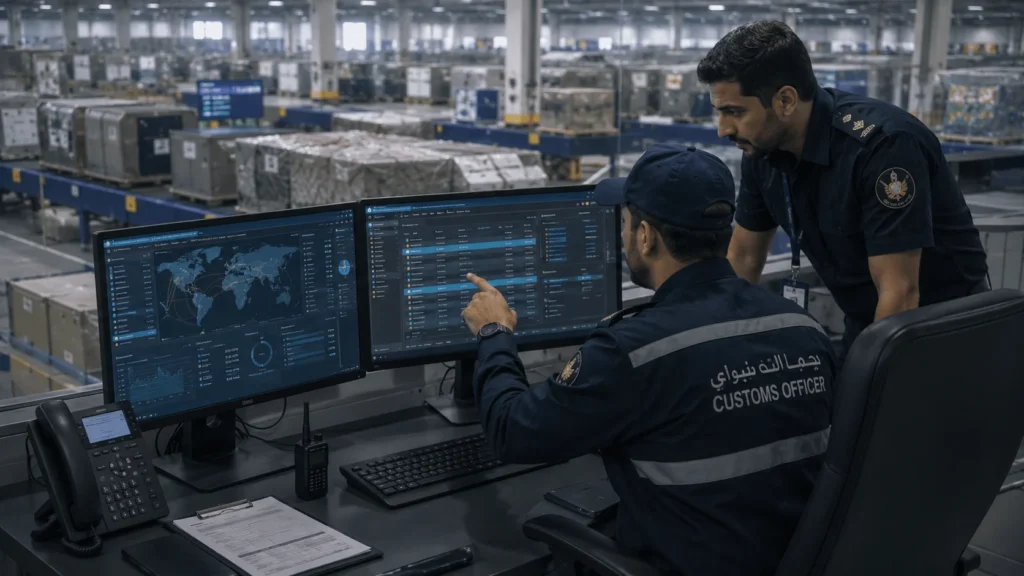
After the initial suspicious consignment was flagged, targeting teams continued examining common indicators and related shipping data across the broader cargo movement. The analysis confirmed that all nine shipments traced back to the same importer, which allowed customs officials to treat them as a coordinated operation rather than isolated incidents.
That connective work — linking disparate data points across separate facilities — is what turned a single discovery into a complete interception.
Data Analysis Strengthens Customs Inspections
Dubai Customs described the operation as a demonstration of what intelligence-led, data-driven targeting can achieve in modern customs enforcement.
The days of relying primarily on physical inspection of random or selected cargo are increasingly supplemented by something more systematic — teams that analyse shipment information, identify anomalies in declared cargo, assess risk patterns and determine which consignments warrant a closer look before any physical check even begins.
Abdulla Ahmad Alblooshi, Director of the Air Cargo Centers Management at Dubai Customs, said the operation reflected the importance of reading information accurately, connecting risk indicators and anticipating threats before shipments complete their journey out of the UAE.
Focus on Detecting Concealment and Document Manipulation
The capabilities being developed at Dubai Customs extend well beyond scanning technology. Inspectors and targeting specialists are being trained to read shipping data analytically, assess risk profiles, recognise different concealment techniques and identify signs that documentation has been manipulated or falsified.
As illicit traders become more sophisticated in their methods — using misleading cargo descriptions, layered shipping arrangements, and false declarations to obscure what they’re actually moving — the enforcement response has to keep pace. The cigarette operation is evidence that it’s doing so.
182 Seizures Recorded at Dubai Air Cargo Centres
The cigarette interception is part of a broader pattern of enforcement activity at Dubai’s air cargo facilities. Over three months, customs teams recorded 182 seizures across the air cargo network — 21 classified as customs seizures and 161 as security-related seizures.
Those numbers reflect the scale of monitoring happening across Dubai’s cargo facilities every day, and the role that targeted, risk-based inspection plays in catching shipments that would otherwise pass through undetected.
Also Read: Dubai Government Launches Three Initiatives to Strengthen Employee Well-Being
Dubai’s Air Cargo Network Under Closer Scrutiny
Dubai sits at one of the world’s most active international cargo crossroads, which makes effective monitoring of air freight both more challenging and more consequential than in most other jurisdictions.
The ability to link consignments across different facilities using shared data — identifying that nine separate shipments at three different locations all belong to the same operation — reflects a level of integration in customs intelligence that makes large-scale smuggling attempts considerably harder to execute undetected.
The outcome of this particular case is a useful illustration of where the balance between legitimate cargo flow and enforcement scrutiny currently sits: the cigarettes didn’t get through, and the operation that put them together is now clearly visible to authorities on both ends of the attempted export route.