

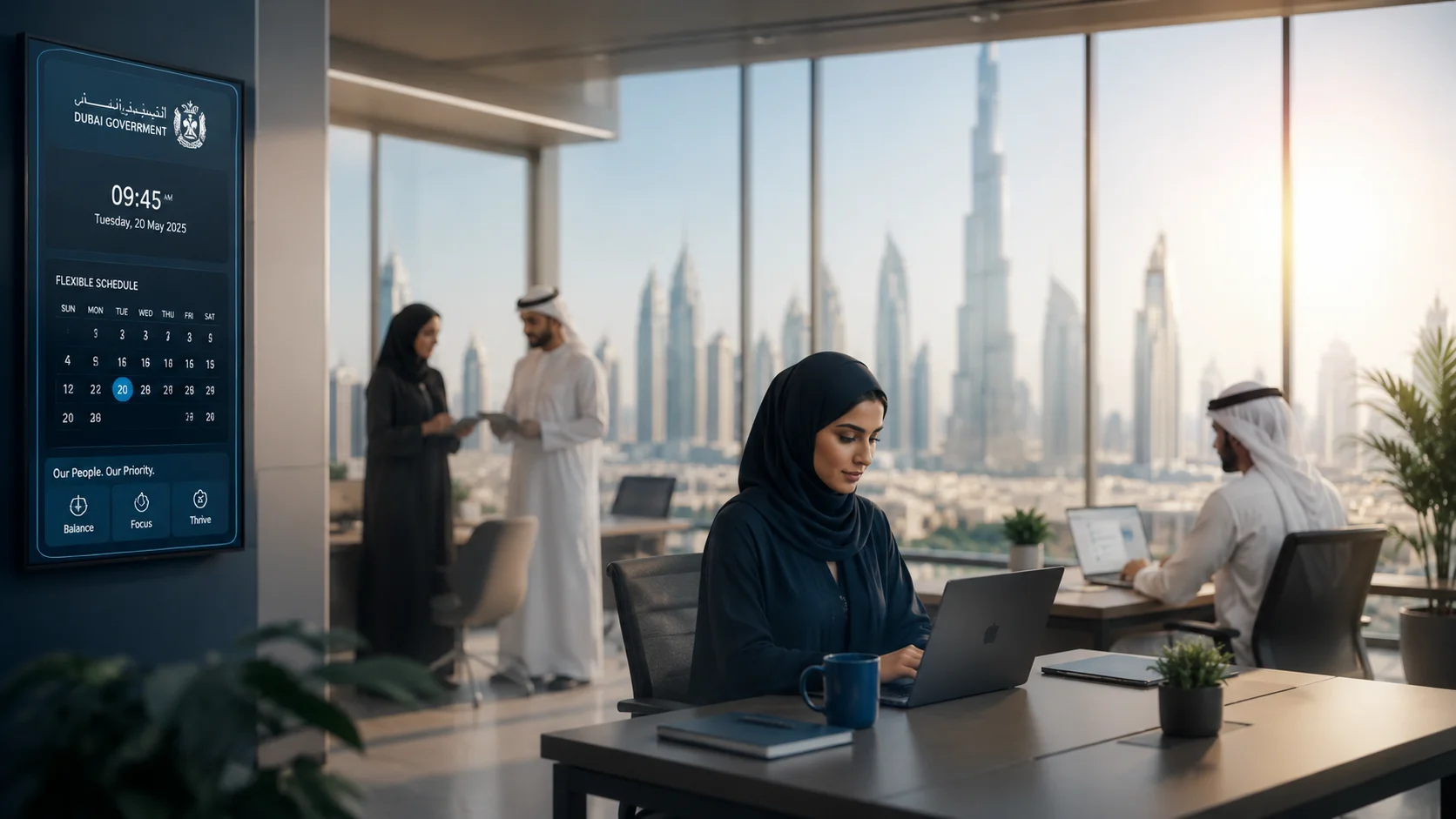
Dubai has announced flexible working hours for government employees through the peak summer season, and it’s a move that makes a lot of practical sense given the conditions. With temperatures regularly climbing well above 40°C during the UAE’s hottest months, the traditional nine-to-five simply puts more strain on workers than it needs to.
The initiative reflects Dubai’s ongoing push to build a workplace culture that puts people first — one that takes the realities of the climate seriously while keeping public services running smoothly.
New Summer Working Hours Announced
The flexible working arrangement will roll out across participating government entities during the summer period. Employees will have access to adjusted schedules that give them more control over how they structure their day, without compromising the quality or continuity of public services.
Government departments will keep things running as usual — the flexibility is in how employees organise their hours, not in reducing service availability. The change builds on a wider effort to modernise workplace policies and make them fit for how people actually want and need to work today.
Focus on Employee Wellbeing
The wellbeing angle here is straightforward. Dubai summers are intense. Commuting during the hottest parts of the day is uncomfortable at best and genuinely draining at worst. By giving employees more scheduling flexibility, the initiative helps people avoid the most punishing hours while reducing the stress that comes with peak travel times.
The downstream effects are real too. Less commuting strain tends to mean better time management, more energy during working hours and a greater sense of balance between work and personal life. Dubai has been investing in workplace wellbeing for years, and this is another concrete step in that direction.
Building on Successful Workplace Initiatives
This isn’t the first time Dubai has moved to improve working conditions for its government workforce. The emirate has a track record of introducing employee-focused policies — from happiness initiatives to hybrid working arrangements — that reflect changing expectations about what a good working environment looks like.
The evidence for flexible working is well established. Employees who have more control over their schedules tend to perform better, stay more engaged and report higher levels of job satisfaction. The UAE’s summer climate adds an extra layer of urgency to those findings, making flexibility not just a nice-to-have but a genuinely sensible operational decision.
Supporting Productivity and Service Excellence
It’s worth being clear about what this initiative is and isn’t. Flexible hours doesn’t mean reduced hours or lower output — it means giving employees more room to deliver their best work during the conditions that suit them most.
Government entities will continue meeting their service commitments to residents, businesses and visitors. Officials are clear that the goal is to support both employee wellbeing and operational excellence at the same time rather than trading one off against the other. The underlying logic is simple: employees who feel supported tend to do better work.
Aligning with Dubai’s Vision for the Future Workplace
Dubai has been quietly building a reputation as one of the more forward-thinking places to work in the region, and policies like this one contribute to that. The emirate understands that attracting and retaining strong talent requires more than competitive salaries — it requires a working environment that respects people’s time, health and personal lives.
Flexible working, wellbeing support and work-life balance have moved from fringe benefits to baseline expectations for many professionals. Dubai’s summer hours initiative is a recognition of that shift, applied to the unique seasonal context of life in the UAE.
Also Read: Dubai Announces 3 New Projects: AI-Designed Park, 8 km Creek Lighting Plan and Falcon Market
Encouraging a Better Work-Life Balance
Summer in Dubai also means school holidays, family travel and a general reshuffling of daily routines for households across the city. Flexible working hours give employees a practical way to navigate all of that without having to choose between family commitments and work responsibilities.
Better work-life balance doesn’t just benefit employees personally — it shows up in the workplace too. Higher morale, stronger mental wellbeing and greater engagement are consistent outcomes when people feel their employer is working with them rather than against them. More organisations globally are coming around to this, and Dubai’s government is moving in the same direction.
Part of a Broader Human-Centric Strategy
What this initiative really reflects is a broader philosophy about how government should treat the people who work for it. Dubai’s approach to public sector management has been shifting toward one that sees employee welfare not as a cost but as an investment — in performance, in public service quality and in long-term organisational health.
As the summer heat settles in across the region, flexible working hours offer a practical, thoughtful response to a seasonal challenge. For Dubai’s government employees, it’s a welcome change. For the emirate’s reputation as a forward-looking place to build a career, it’s another step in the right direction.