

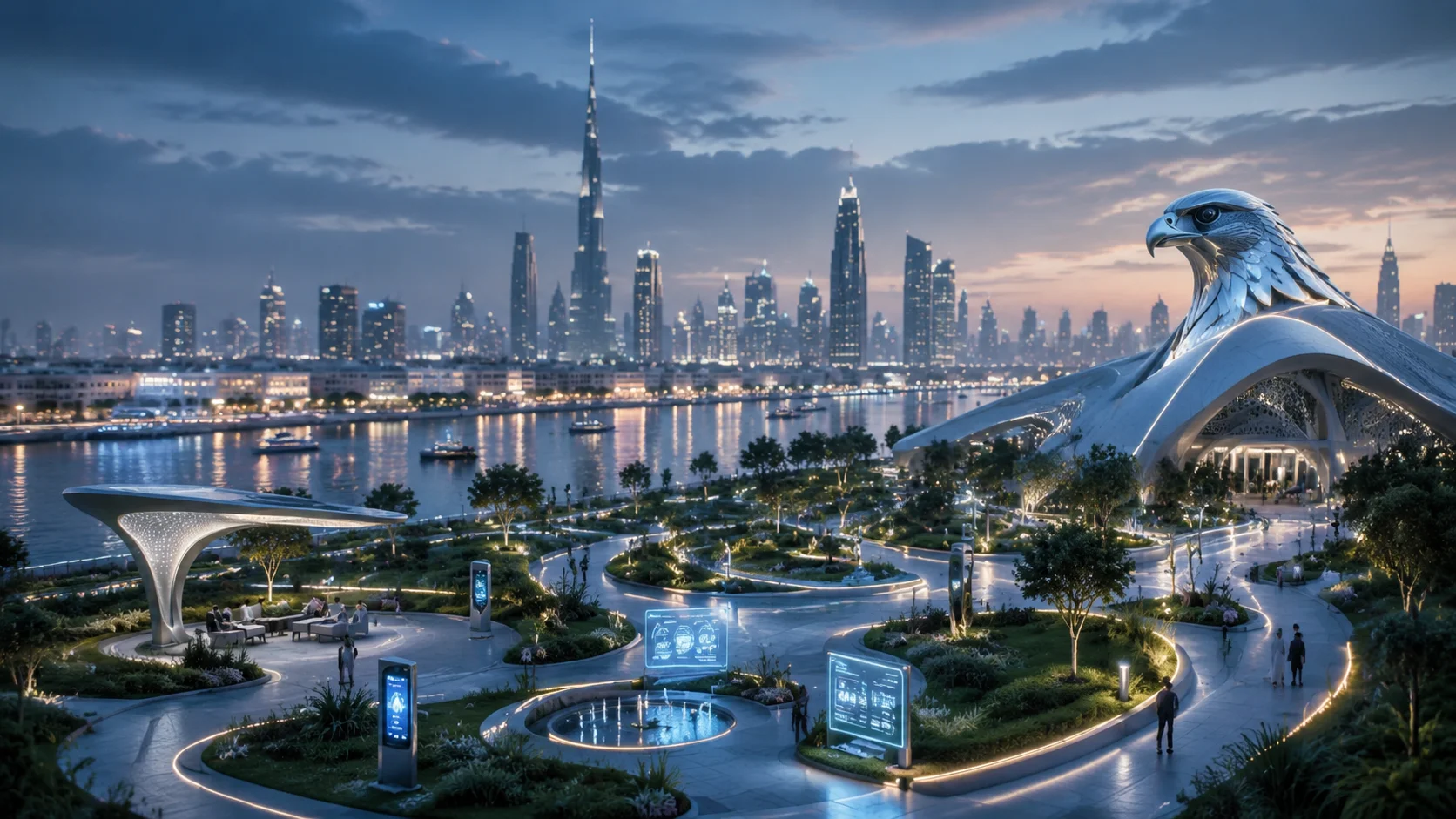
Dubai has unveiled three new projects that together say a lot about where the emirate is headed — one rooted in technology, one in preserving history, and one in celebrating the culture that defines it. The announcements cover an AI-designed public park, a large-scale lighting transformation along Dubai Creek, and a dedicated Falcon Market honouring one of the UAE’s most cherished traditions.
Each project is part of Dubai’s ongoing push to build a city that doesn’t have to choose between being modern and being meaningful.
AI-Designed Park Brings Technology into Urban Planning
The most technologically forward of the three projects is a new public park designed with the help of artificial intelligence. It’s a signal of how seriously Dubai is taking AI as a practical tool — not just in business or government, but in the everyday built environment where people actually live.
Using AI in the design process means planners can draw on data covering visitor patterns, climate conditions, accessibility needs and sustainability targets to make sharper, more informed decisions about how a space is laid out. The result, in theory, is a park that works better for the people who use it rather than one built on assumptions.
The park is expected to include green spaces, recreational zones, shaded walkways and community facilities designed to serve people of all ages. It also fits neatly into Dubai’s wider goal of using technology to make urban living more sustainable and enjoyable for residents across the city.
8km Dubai Creek Lighting Project to Transform the Waterfront
The second project is a lighting overhaul stretching eight kilometres along Dubai Creek — one of the most historically significant stretches of land in the emirate.
Dubai Creek isn’t just a waterway. It’s where the city began. It has been a centre of trade, culture and community life for generations, and its heritage districts remain some of the most visited parts of Dubai. The new lighting plan is designed to bring that history to life after dark, illuminating architectural landmarks, waterfront spaces and heritage sites in a way that draws people out in the evenings.
For tourism, the benefits are clear. Well-lit, visually engaging public spaces encourage people to explore longer and return more often. For residents, it adds another dimension to one of the city’s most atmospheric areas. Officials say the project will enhance the visitor experience while keeping the cultural significance of the creek fully intact.
Dedicated Falcon Market Celebrates Emirati Heritage
The third announcement is perhaps the most personal to the UAE’s sense of identity. Dubai plans to develop a dedicated Falcon Market — a specialised destination for falcon owners, traders, enthusiasts and visitors who want to engage with one of the most enduring traditions in Emirati culture.
Falconry isn’t just a hobby in the UAE. It’s a living piece of heritage, practised and passed down through generations, and recognised globally as part of the country’s cultural identity. A dedicated market gives that tradition a proper home — somewhere organised, modern and accessible that brings together falcon-related services, equipment, supplies and expertise under one roof.
For visitors, it also offers a genuinely unique window into Emirati culture that goes well beyond the typical tourist experience.
Also Read: Dubai Launches Sea Guest Pick-Up and Drop-Off Service to Simplify Yacht Travel
Enhancing Tourism and Community Experiences
What ties all three projects together is a shared purpose: improving the experience of living in and visiting Dubai while staying connected to what makes the city distinctive.
The AI park speaks to the future. The Creek lighting plan honours the past. The Falcon Market keeps a living tradition visible and vibrant. None of the three exist in isolation — they all contribute to a city that wants to be experienced rather than simply passed through.
Supporting Dubai’s Vision for the Future
Taken together, these announcements reflect a Dubai that is clearly comfortable holding two ideas at once: that innovation and heritage are not competing priorities but complementary ones.
AI is being used to make public spaces better. Historic waterways are being given new life through thoughtful design. Cultural practices that have defined the region for centuries are being given modern platforms to thrive. Each of these projects, in its own way, is an expression of the same underlying commitment — to build a city worth living in, visiting and returning to for years to come.