

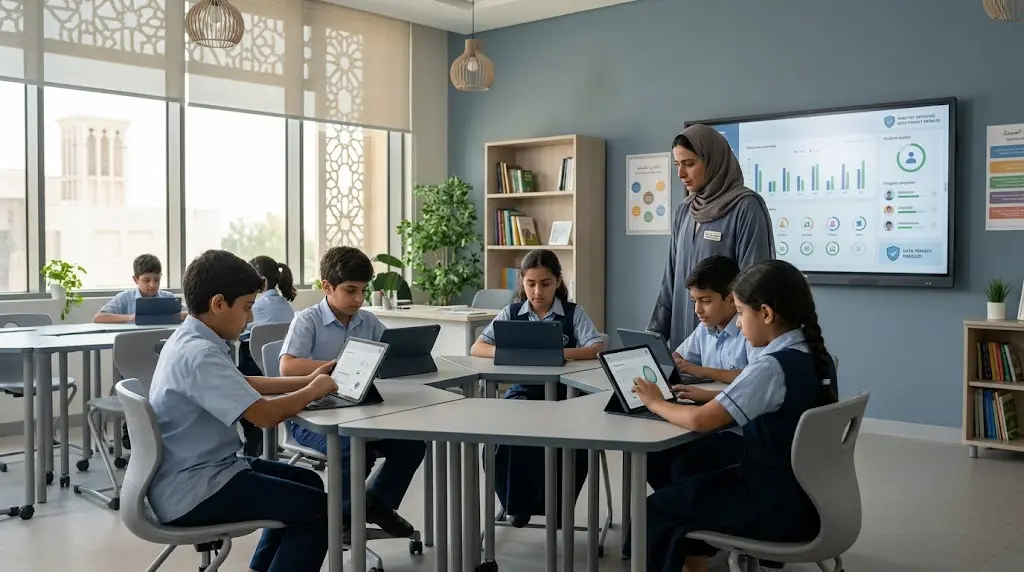
The UAE Ministry of Education has introduced tighter controls on the digital tools used in government schools. Under the new guidelines for the 2026-2027 academic year, schools can only use digital platforms and educational resources that have been formally approved by the ministry.
This rule applies even to tools that are free or publicly available. Teachers cannot simply bring a digital learning platform into the classroom because it looks useful or does not cost anything.
Free Digital Tools Must Also Be Approved
The ministry has made it clear that being free does not automatically make a digital tool suitable for classroom use. Any platform or educational resource has to go through an official review before teachers can use it with students.
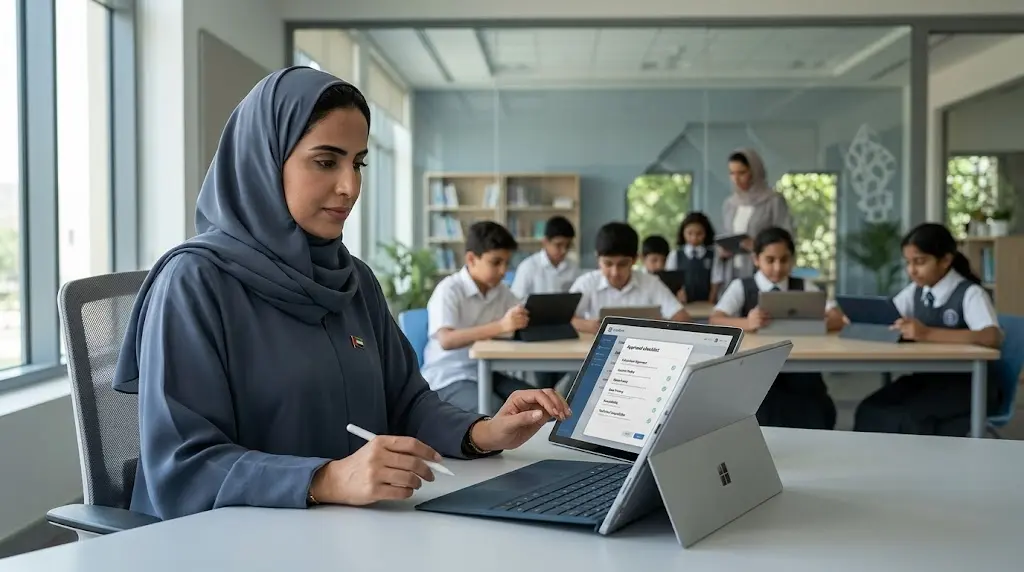
If a teacher comes across a new tool that could help students, the resource has to be submitted to the Curriculum and Assessment Sector and the Technical Operations Department. From there, it goes through evaluation and screening before anyone decides whether it can be approved.
Student Safety and Data Privacy Are Key
The new rules put a lot of weight on student safety and privacy. Approved tools get checked against UAE data privacy requirements, child protection standards and wider ministry policies before they make the cut.
The ministry also wants digital learning resources to line up with the UAE national curriculum. In other words, technology used in classrooms should support official learning goals rather than just add another digital activity to lessons.
Tools Must Support the UAE Curriculum
Curriculum alignment is one of the key requirements for approval. Digital platforms need to support national curriculum objectives and help students reach the expected learning outcomes for their age and level.
The ministry also looks at whether a tool is easy to use across different devices and platforms. Support for both Arabic and English is another important factor when educational resources are reviewed.
Accessibility for Students of Determination
The approval process also checks whether digital resources can be used by students of determination. Accessibility is a big part of the ministry’s approach, since digital learning should be available to students with different educational needs.
Tools are expected to offer flexibility where possible and support different levels of difficulty, letting students learn at a pace that actually fits their individual abilities and needs.
Encouraging Better Learning Through Technology
The ministry is not trying to stop schools from using technology. The new rules are simply meant to make sure the digital tools used in classrooms have a clear educational purpose and meet safety requirements.
Approved resources should encourage active learning, creativity, problem-solving and collaboration. The ministry also weighs whether a tool can offer flexible learning experiences instead of applying the same approach to every student.
Training and Technical Support Matter
Another part of the approval process looks at whether training and ongoing technical support are available. A digital platform might have great educational features, but schools also need to know how to use it properly and what support is available if technical problems crop up.
This requirement should help teachers get more out of approved technology in their lessons, while also cutting down on problems caused by rolling out platforms without proper training or support.
What Happens When a Tool Creates a Problem?
The guidelines also spell out what teachers should do if a digital resource raises concerns, whether that is a risk to student safety or privacy, inappropriate content, or a breach of ministry rules.
Teachers have to report such concerns to the school coordinator, technical support service or school administration, giving schools a clear process for responding when a digital resource is no longer considered suitable.
Also Read: Dubai Al Maktoum Airport Plans Queue-Free Security With AI
Schools Must Provide Approved Alternatives
Once a problem is identified with a digital resource, school leaders are expected to point teachers toward approved alternatives. This keeps lessons running without exposing students to unnecessary risks.
This approach also gives schools a clearer way to manage digital learning resources overall. Instead of letting individual teachers pick platforms on their own, the ministry wants technology choices to follow one consistent national framework.
New Rules for the 2026-2027 Academic Year
These restrictions are part of the UAE Ministry of Education’s wider push for responsible digital learning in government schools. The focus is on making sure technology actually supports education while meeting standards for privacy, safety and student protection.
For teachers, this means checking whether a platform is officially approved is now an important step before bringing it into class. For schools, it creates a more controlled approach to selecting and managing digital educational resources across the academic year.