

Most people go through their entire working lives paying a percentage of everything they earn to a government they may or may not feel serves them well. So when you first hear that there are places where personal income tax simply doesn’t exist, the instinct is to assume there must be a catch.
Sometimes there is. Sometimes there really isn’t.
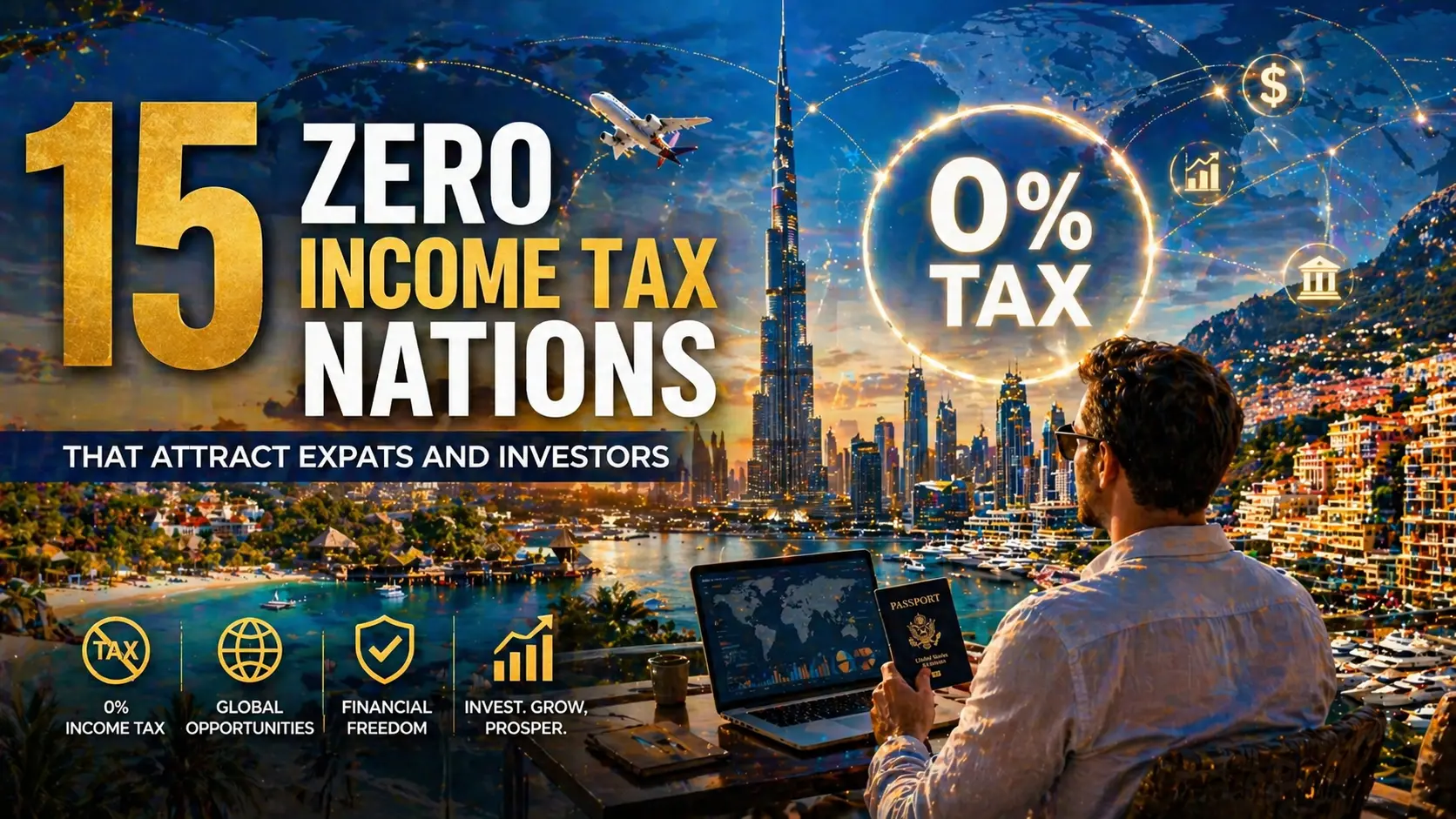
There are genuinely 15 countries in 2026 where residents pay zero personal income tax on their salaries, earnings, or pensions. They’re real places with functioning economies, modern infrastructure, and millions of residents — including an increasing number of expats, entrepreneurs, and remote workers who have done the math and decided to move.
Here’s the honest breakdown of who they are, how they fund themselves without taxing income, and what you actually need to know before romanticising the idea too much.
What Zero Income Tax Actually Means in Practice
First, a clarification is worth making upfront. Zero income tax means exactly that — no tax on personal income. It does not mean zero taxes on everything, forever.
Most of these countries collect revenue through other means. VAT or consumption taxes, customs duties, tourism levies, licensing fees, corporate taxes, luxury real estate transactions, and — in the Gulf states’ case — vast natural resource revenues. You might pay more for certain goods and services or face indirect costs that partially offset the income tax savings, depending on your lifestyle.
The key point is that your salary, your freelance income, and your investment returns as a resident — these don’t get taxed at source in these countries. For high earners, especially, that’s a very significant difference compared to living in a country with 40 to 50 percent marginal income tax rates.

The Gulf States — The Most Practical Option for Most People
The six Gulf Cooperation Council countries are collectively the most popular destination for expats seeking zero income tax living, and for good reason. They’re economically developed, have strong infrastructure, and offer a genuinely high standard of living in most cases.
United Arab Emirates — The most internationally accessible of the group. Dubai and Abu Dhabi in particular have attracted enormous numbers of expats across every industry. No personal income tax, though businesses operating in the UAE are now subject to corporate tax. The ease of setting up residency, the quality of life, and the connectivity to the rest of the world make this the first stop for most people exploring this space.
Qatar — Wealthy, increasingly cosmopolitan, and tax-free on personal income. The expat community is significant and growing.
Kuwait — Oil-rich and income tax-free. The expat population is large, particularly in professional sectors.
Saudi Arabia — Undergoing significant social and economic transformation. No personal income tax, and increasingly positioning itself as an expat destination.
Bahrain — Often overlooked but genuinely appealing. Slightly more relaxed than some of its neighbours, strong financial sector, zero income tax.
Oman — The quieter, more scenic Gulf option. Beautiful country, no income tax, lower profile than the UAE but genuinely pleasant to live in.
The Caribbean — For High-Net-Worth Individuals and Investors
The Caribbean’s tax-free destinations are best known in wealth management and offshore finance circles, and they cater disproportionately to high-net-worth individuals rather than typical working expats. The lifestyle is undeniably appealing, but the cost of living and the nature of the economies make these less practical for most people than the Gulf.
The Bahamas — Beautiful, stable, no personal income tax, strong financial services sector.
Cayman Islands — One of the world’s most significant offshore financial centres. Zero income tax, zero capital gains tax. Popular with financial professionals and fund managers.
Bermuda — High cost of living, but genuinely tax-free on personal income. Strong insurance and reinsurance industry.
British Virgin Islands — Well-established offshore jurisdiction, no personal income tax.
Turks and Caicos — Quieter and less well-known than some Caribbean counterparts, but still tax-free on personal income.
The honest caveat for the Caribbean: residency requirements vary, cost of living is high across the board, and some of these places are genuinely small in terms of economic opportunity outside of the financial sector.

Europe’s Exception — Monaco
Monaco is technically in Europe but operates by entirely different rules. It’s a tiny principality on the French Riviera that has maintained zero personal income tax since 1869.
The obvious drawback is the price. Monaco is consistently one of the most expensive places in the world to live, rent, or buy property. Getting residency requires demonstrating sufficient financial means and securing accommodation — which in a place where a modest apartment can cost several million euros, significantly narrows the field.
For wealthy individuals who want a European base with no income tax and proximity to the French and Italian Rivieras, Monaco makes sense. For most other people, it’s more of a curiosity than a practical option.
Island Nations — A Different Kind of Appeal
Maldives — Zero personal income tax, extraordinary natural environment. Limited job market for expats outside of the tourism sector. Better suited to remote workers or retirees than people seeking local employment.
Vanuatu — A South Pacific island nation that has been actively marketing itself as a zero-tax residency destination, including a citizenship-by-investment programme. No income tax, no capital gains tax, no inheritance tax. Worth researching if you’re drawn to the Pacific lifestyle.
Southeast Asia and Others
Brunei — Small, oil-rich sultanate in Southeast Asia. No personal income tax. Not widely discussed in expat circles, but it’s a functioning, stable country with a high standard of living.
St Kitts and Nevis / Antigua and Barbuda — Both offer zero personal income tax combined with citizenship-by-investment programmes that have become popular with global investors seeking passport optionality.
The Full List at a Glance
- United Arab Emirates
- Qatar
- Kuwait
- Saudi Arabia
- Bahrain
- Oman
- Brunei
- Bahamas
- Cayman Islands
- Bermuda
- British Virgin Islands
- Turks and Caicos
- Monaco
- Maldives
- Vanuatu
Also Read: FIFA 2026 World Cup Prize Money Increase — Full Breakdown and What It Means for Teams
Before You Start Packing
A few things worth knowing before the zero-tax dream becomes a relocation plan.
Your home country’s tax rules may still apply. Many countries — the United States being the most notable example — tax their citizens on worldwide income regardless of where they live. Moving to the UAE doesn’t automatically free an American citizen from US tax obligations. Understanding your current country’s exit tax rules and residency-based versus citizenship-based taxation is essential groundwork.
Residency requirements differ significantly. Some of these countries are relatively easy to gain residency in. Others require significant financial commitments or specific investment thresholds.
Cost of living varies enormously. Monaco and the Cayman Islands are eye-wateringly expensive. The UAE is comfortable but not cheap. Some of the island nations have limited economic activity. The tax saving needs to be weighed against the full cost picture.
Quality of life is subjective. A zero-tax country that doesn’t suit your lifestyle, family situation, or career isn’t a good deal regardless of the financial picture.
Done properly — with legal advice, a clear understanding of your tax obligations in both your current and target country, and realistic expectations about the lifestyle involved — moving to one of these countries can make genuinely significant financial sense. For the right person in the right circumstances, it’s one of the more impactful financial decisions available.