

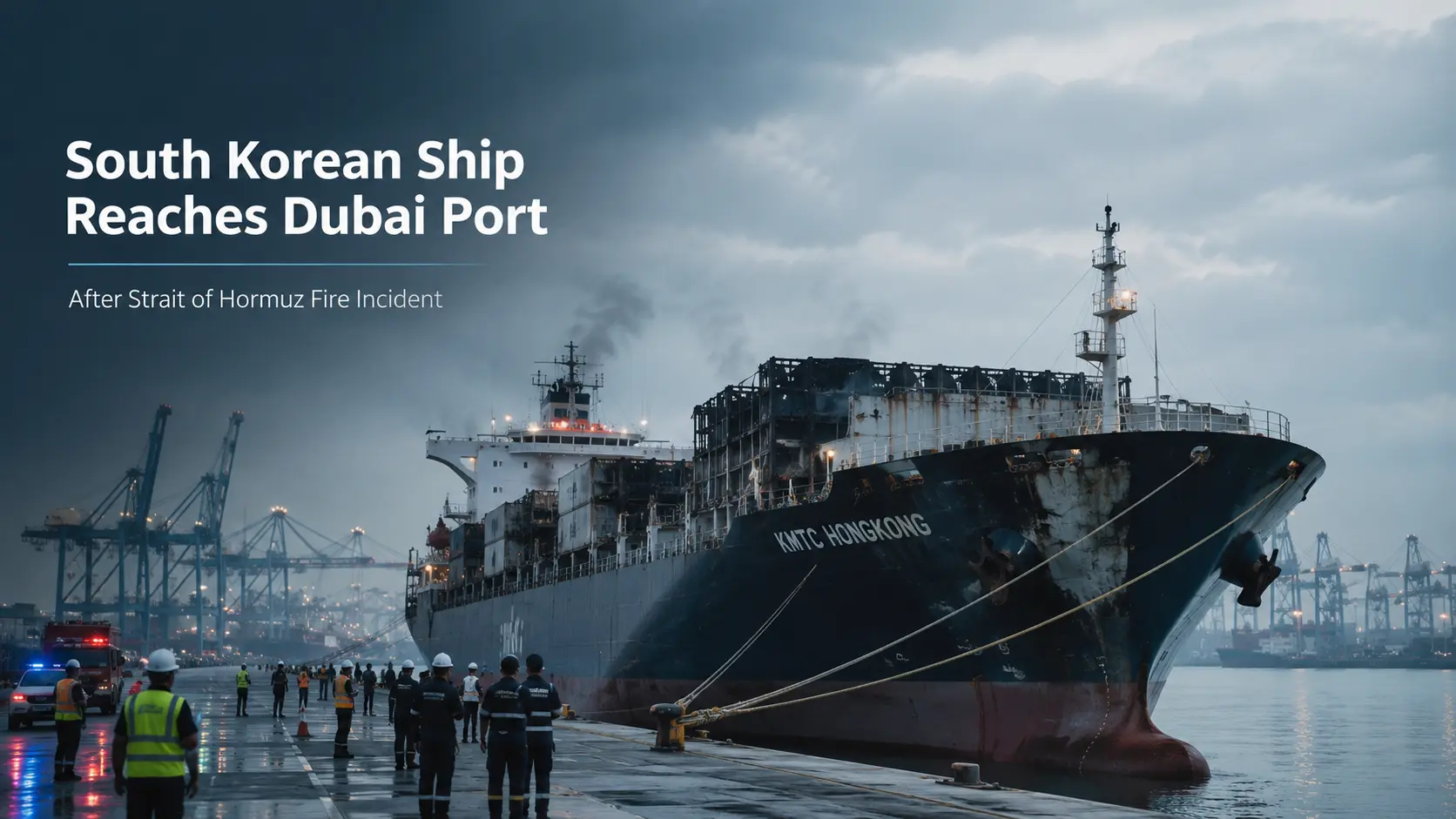
A South Korean ship caught fire while passing through the Strait of Hormuz earlier this week. The crew managed to contain it. The ship, damaged but still moving, eventually made its way to a port in Dubai under close monitoring.
Everyone onboard is reported safe — which, given how quickly things can escalate on a vessel at sea in a politically tense stretch of water, is the part that matters most.
But the fire itself, the location it happened in, and the timing of it all raise questions that aren’t going away just because the ship docked safely.
What We Know About the Fire
Initial reports point to the engine room as the likely origin of the fire, though investigators haven’t confirmed the exact cause yet. What is confirmed is that the crew responded quickly — emergency procedures were activated fast enough to prevent the situation from becoming catastrophic.
Once the fire was brought under control, the vessel continued toward Dubai rather than attempting any kind of emergency stop in waters that are, right now, not exactly the most comfortable place to be sitting still.
Maritime authorities in Dubai are now expected to carry out a full technical assessment of the damage. The investigation will look at whether this was a mechanical failure, an electrical fault, or something connected to the broader instability that has been making the Gulf region increasingly dangerous for commercial shipping over the past several months.
Why the Location Matters So Much
The Strait of Hormuz is not just another shipping lane. It’s the narrow passage that connects the Persian Gulf to the wider ocean, and somewhere between 20 and 30 percent of the world’s traded oil passes through it. Cargo of all kinds — not just energy — moves through those waters constantly.
When something goes wrong in the Strait of Hormuz, the ripple effects don’t stay local. Insurance markets react. Shipping companies reroute. Energy prices twitch. Supply chains that depend on predictable transit times start showing gaps.
The region around the Strait has been under growing pressure for months now, with regional conflict, military activity near key routes, and a general sense of unpredictability that has made shipping companies deeply nervous. This fire — whatever caused it — lands in that context. Even if the investigation concludes it was purely mechanical, the timing ensures it won’t be read that way by an industry already on edge.
Dubai as the Safe Harbor
There’s something worth noting about where this ship ended up. Dubai has quietly become one of the most important emergency support hubs for vessels navigating Gulf waters during this difficult period.
Its ports are operationally strong, its logistics infrastructure is world-class, and its location puts it within reach of ships that run into trouble in the Gulf without requiring them to push further into contested or uncertain waters. For the maritime industry, that combination of reliability and proximity has become increasingly valuable.
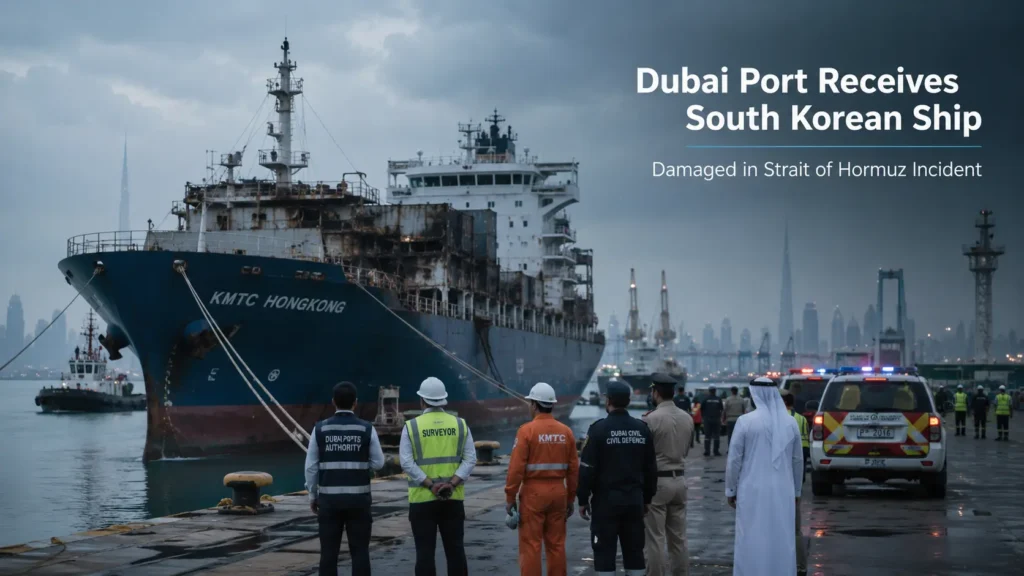
The damaged South Korean vessel was moved to a secure docking area on arrival. Technical teams are expected to work through the assessment methodically — looking at the structural damage, reviewing the ship’s systems, and piecing together a timeline of what happened.
South Korean shipping authorities are expected to cooperate closely with UAE officials throughout the process. The findings, when they come, will likely inform safety discussions well beyond this single vessel.
Also Read: Flying Through Dubai in 2026? Here’s What You Actually Need to Know Before You Go
The Broader Pressure on Gulf Shipping
This incident doesn’t exist in isolation. Over the past several months, vessels operating near the Strait of Hormuz and broader Gulf waters have been dealing with a range of threats — security concerns, navigation disruptions, and the constant background anxiety of operating in a region where geopolitical tension can turn into direct maritime risk relatively quickly.
Shipping insurance premiums for vessels on Gulf routes have already climbed significantly. Some operators have started exploring alternative routes — longer, more expensive, but less exposed to whatever happens next in the region.
Crew safety protocols have been updated. Emergency response planning has been tightened. Route monitoring has become more intensive. The industry is, in short, adapting to a new reality where operating through the Strait of Hormuz requires a level of risk management that wasn’t necessary a couple of years ago.
The fire on the South Korean vessel is the latest data point in that picture. It probably won’t be the last.
Dubai Continues Supporting Global Maritime Operations
The immediate focus is the investigation in Dubai. Technical teams need to establish the cause before anything else can be concluded. If it was purely mechanical — a faulty component, a maintenance issue that went undetected — the findings will inform safety standards for similar vessels.
If the investigation points toward something more complicated, the implications spread wider. Either way, the shipping industry will be watching closely, and the results are likely to feed into ongoing conversations between regional governments, shipping companies, and international maritime authorities about how to better protect commercial traffic through one of the world’s most critical — and right now most vulnerable — waterways.
For now, the crew is safe, the ship is docked, and the questions are just beginning.