

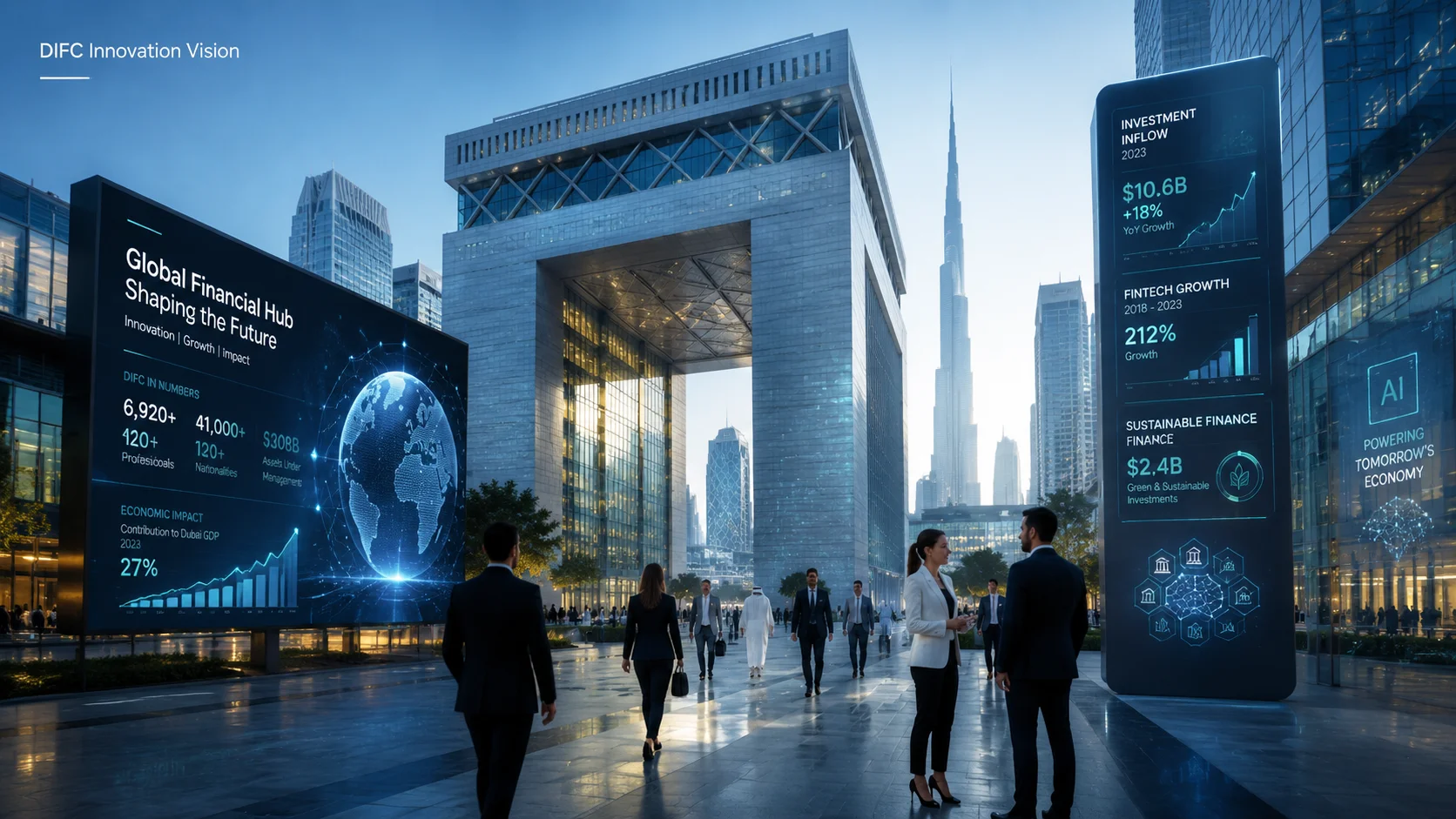
When Dubai’s Crown Prince makes a point of visiting a specific institution to review its strategy in person, it’s worth paying attention to. Sheikh Hamdan bin Mohammed bin Rashid Al Maktoum’s visit to the Dubai International Financial Centre wasn’t a ribbon-cutting or a ceremonial appearance. It was a working review of where DIFC is heading and how that direction connects to Dubai’s broader economic ambitions.
The discussions covered achievements, ongoing initiatives, and the road ahead — with particular focus on innovation, fintech, and talent attraction. Here’s the substance of what was discussed and why it matters.
DIFC’s Growing Role in Dubai’s Economy
DIFC has grown from a financial district into something considerably more significant. It’s now one of the most important business ecosystems in the entire Middle East, Africa, and South Asia region — home to banks, fintech companies, asset managers, insurance firms, legal practices, and professional services providers numbering in the thousands.
What makes DIFC work isn’t just the real estate or the location. It’s the independent legal framework based on English common law, the regulatory environment designed specifically for international financial business, and the critical mass of global institutions that have established themselves there and created an ecosystem that keeps attracting more.
During the review, officials highlighted the continued contribution DIFC makes to Dubai’s economic diversification — its role in building a high-value, knowledge-based economy that doesn’t depend on any single sector or commodity.
Focus on Innovation and Future Technologies
Innovation was at the center of the conversations during Sheikh Hamdan’s visit, and the emphasis here goes beyond buzzword territory.
DIFC has been building out genuine support infrastructure for startups and fintech companies — accelerators, funding pathways, mentorship programs, and strategic partnership opportunities. The goal is to create an environment where an early-stage financial technology company can come to DIFC, find the support it needs to develop and scale, and connect with the established institutions and investors already operating there.
The technology themes being worked on are the ones that will define financial services over the next decade: artificial intelligence applications in finance, digital asset infrastructure, advanced data platforms, and the underlying tools that make financial services more efficient and more accessible.
Officials briefed the Crown Prince on where these initiatives currently stand and where the roadmap is heading.
Supporting Dubai’s Economic Vision
The alignment between DIFC’s strategy and Dubai’s broader economic agenda — particularly the Dubai Economic Agenda D33 — was a recurring theme in the visit.
D33 sets out ambitious targets for Dubai’s global competitiveness, international talent attraction, and the transition toward a knowledge-based economy. DIFC is one of the most direct instruments for delivering on those targets in the financial and technology sectors. An institution that can attract global banks, grow a fintech ecosystem, and draw high-caliber professionals to Dubai is contributing to exactly what D33 is designed to achieve.
Sheikh Hamdan’s emphasis during the visit on maintaining momentum and ensuring Dubai stays at the forefront of global economic transformation reflects an understanding that leadership attention matters — that institutions which feel consistently prioritized by senior leadership tend to perform at a higher level than those that don’t.
Attracting Global Businesses and Talent
DIFC’s ability to attract talent is arguably as important as its ability to attract capital. The two are connected — the best financial and technology professionals want to work where the best institutions are, and the best institutions want to be where the best talent concentrates.
The discussions during the visit included specific focus on strengthening Dubai’s attractiveness for global professional talent. This isn’t just about visa policies or residency programs, though those matter. It’s about creating an environment — in terms of lifestyle, career opportunity, intellectual community, and professional development — that makes Dubai a genuinely compelling choice for someone deciding where to build their career.
DIFC’s modern infrastructure, international business culture, and proximity to a city with the lifestyle appeal of Dubai give it genuine competitive advantages in that talent attraction conversation.
Strengthening the Fintech Ecosystem
Fintech is the sector where DIFC has been most visibly aggressive in recent years, and for good reason. Financial technology is one of the fastest-growing parts of the global economy, and whoever builds the most compelling fintech hub in the Middle East will capture a disproportionate share of regional and international investment and talent.
DIFC’s fintech ecosystem has been growing steadily through its accelerator programs, the FinTech Hive initiative, and the connections it facilitates between early-stage companies and the established financial institutions that can be their first customers, investors, or partners.
The Crown Prince’s visit reinforced leadership support for continuing to invest in this direction — signal that matters to companies and investors evaluating where to place their bets.
Also Read: 7 Indian Workers Died in Dubai Road Accident After Minibus Collides With Truck
A Vision for Sustainable Growth
The broader theme running through the discussions was sustainability — not in the environmental sense specifically, but in the sense of building economic momentum that can be maintained and built upon rather than being dependent on any single favorable condition.
DIFC’s leadership has been consistent about building for the long term: creating regulatory frameworks that evolve with the market, supporting the kinds of companies that create durable economic value, and attracting the kinds of professionals who build careers rather than just passing through.
Sheikh Hamdan’s visit provides the visible leadership endorsement that keeps that long-term orientation on track — a reminder to everyone inside DIFC and observing it from outside that the institution’s direction has the full backing of Dubai’s leadership.
For businesses considering DIFC as a base and for investors evaluating Dubai’s financial future, that continuity of vision and support is itself a meaningful signal.