

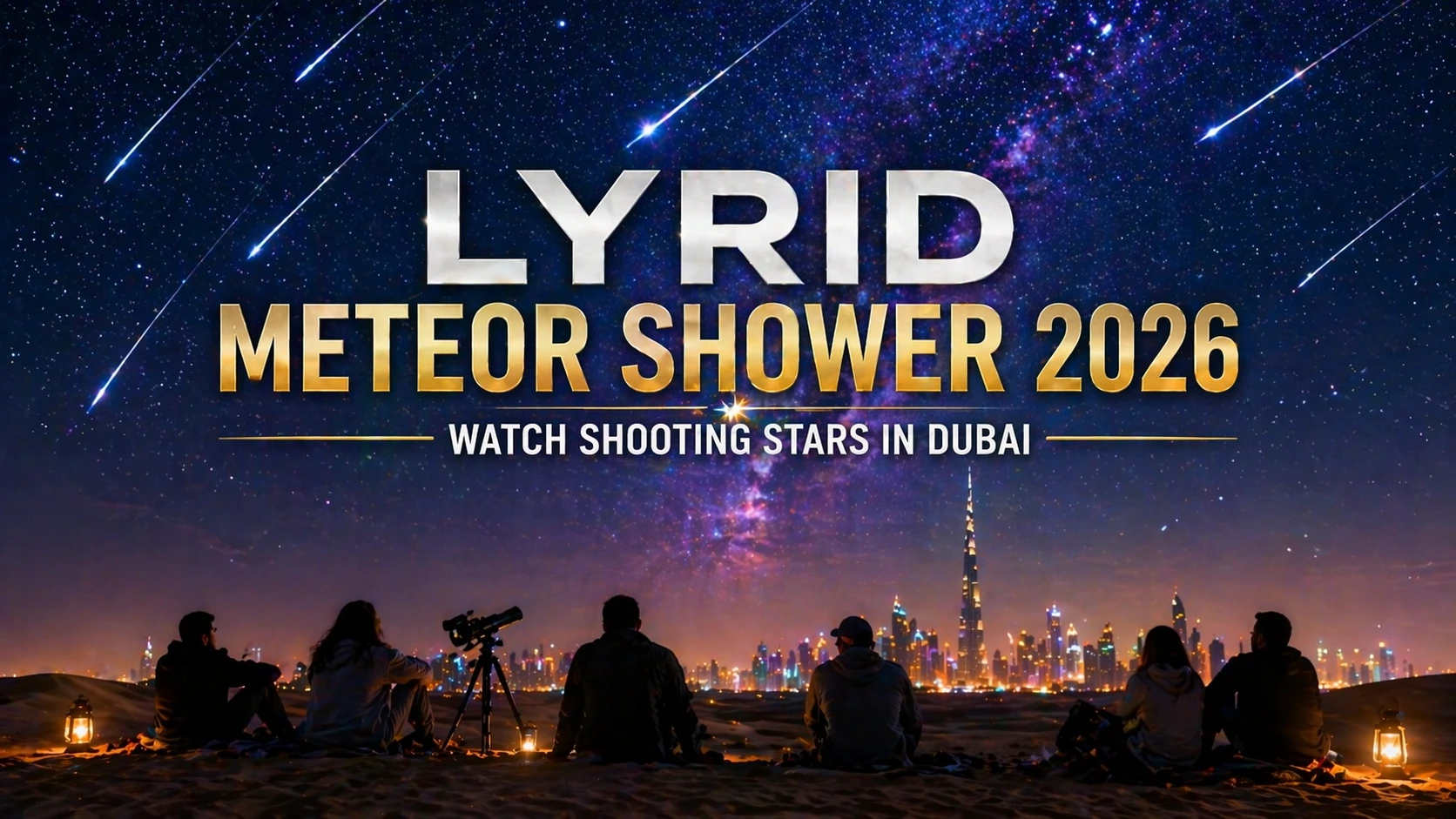
If you haven’t made plans for the night of April 22nd yet, here’s a reason to. The Lyrid meteor shower — one of the oldest and most reliable annual sky events — is currently active and hitting its peak right now, with the best viewing stretching from the late night of April 22 into the early hours of April 23.
For people in Dubai and across the Middle East, this is genuinely good timing. Clear skies, low humidity, and vast stretches of dark desert on the doorstep make this region one of the better places on earth to catch a meteor shower. You just need to know where to go and when.
When Exactly Should You Head Out?
The short answer: after midnight, and the closer to dawn, the better.
That’s when the sky reaches its darkest, and the Lyra constellation — where the meteors appear to radiate from — climbs highest in the sky. If you head out at 10 pm expecting a show, you might be disappointed. But if you’re willing to stay up or set an early alarm for 2 or 3 am, you’re in a much better position.
The shower remains active until around April 25, so if tonight’s weather doesn’t cooperate or you miss the peak, you still have a few more nights to try.
How Many Meteors Will You See?
On a good night, under properly dark skies, you’re looking at around 15 to 20 meteors per hour. That’s not the most intense shower of the year — the Perseids or Geminids can push much higher numbers — but the Lyrids have a quality that makes up for the quantity.
They’re fast and bright. The streaks tend to be vivid rather than faint, and there’s always a chance of catching a fireball — a brighter-than-usual meteor that lights up a bigger chunk of sky for a second or two. Those are the moments people remember.
In rare years, the Lyrids have surprised observers with sudden bursts of much higher activity. It doesn’t happen every time, but it’s part of what keeps the shower interesting.
Best Places to Watch in Dubai
This is where most people go wrong — they try to watch from a balcony or rooftop in the city and wonder why they can barely see anything. Light pollution is a real problem for meteor watching, and Dubai’s urban glow is significant.
The good news is that a genuinely dark sky isn’t far away. A few solid options:
Al Qudra Desert is probably the most popular choice for Dubai stargazers. It’s accessible, not too far from the city, and dark enough to make a real difference. Head to the area around the lakes and find a spot away from car headlights.
Hatta is further out but rewards the drive. The mountain surroundings and lower light pollution make for noticeably better viewing conditions.
Remote coastal or desert areas beyond the main city sprawl work well too — anywhere you can pull off the road, kill the headlights, and let your eyes adjust properly.
If you genuinely can’t leave the city, find the largest, darkest open space you can — a park edge, an open plot away from street lights — and manage your expectations. You’ll see some, just not as many.
Also Read: Dubai Announces New Gold Line for Metro Expansion
Simple Tips That Actually Make a Difference
You don’t need a telescope or binoculars. In fact, those can work against you because they narrow your field of view. Meteor watching is one of the few astronomical events that’s genuinely better with just your eyes.
A few things that will help:
Give your eyes time to adjust. This is probably the most important tip and the most ignored one. It takes a solid 20 to 30 minutes for your eyes to fully adapt to darkness. If you’re checking your phone every few minutes, you’re resetting that process every time. Put the phone face down, or better yet, use a red light if you need to see anything.
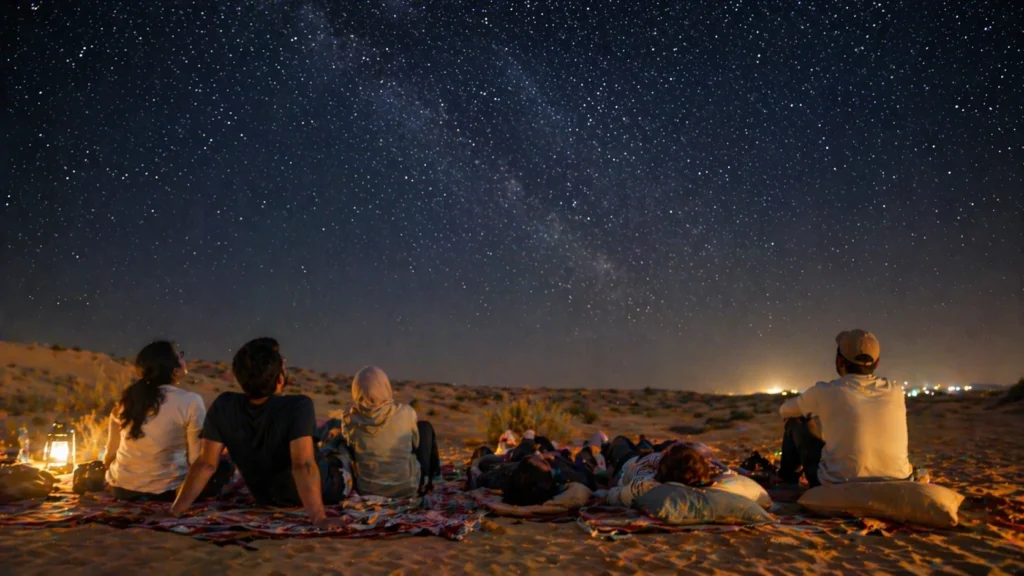
Lie down. Seriously. Craning your neck upward for an hour is uncomfortable and limits how much sky you’re taking in. Bring a mat, a blanket, or just lie on the car bonnet if you have to. Look up at as wide a section of sky as possible.
Don’t stare at one spot. Meteors can appear anywhere. You’re not trying to watch the constellation Lyra specifically — you’re watching the whole sky and letting the meteors come to you.
Dress for it. Desert nights in late April can be cooler than people expect, especially if you’re lying still for an hour or two. Bring a layer.
What’s Actually Causing All of This
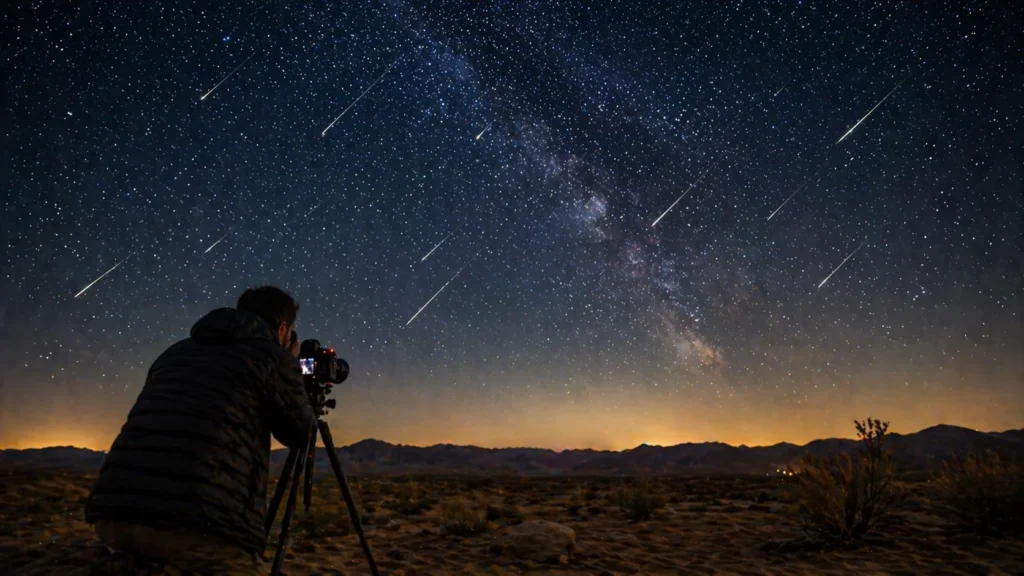
The Lyrids come from Comet Thatcher, a long-period comet that takes more than 400 years to complete a single orbit around the Sun. Every April, Earth passes through the trail of dust and debris the comet has left behind over countless orbits. When those tiny particles hit our atmosphere at high speed, they burn up and create the streaks of light we see as meteors.
What makes the Lyrids particularly interesting historically is their age as a recorded phenomenon. Humans have been watching and writing about this same shower for over 2,700 years. There’s something quietly remarkable about that — standing in the desert looking at the same light show that people recorded in ancient China.
Visible Across the Region
The shower isn’t just a Dubai event. Clear skies across the UAE, Oman, Qatar, and Saudi Arabia mean the whole region has a decent shot at a good show tonight and over the next few nights. Weather is the main variable — check local forecasts before you make the drive out of the city.
Worth the Late Night
Meteor showers are one of those rare astronomical events that don’t require any special knowledge, equipment, or expertise. You just need to show up, find somewhere reasonably dark, and look up. The experience of watching a fireball burn across a clear desert sky at 3am — often in total silence — is the kind of thing that’s hard to put into words but easy to remember.
Whether you’re heading out with family, a group of friends, or just by yourself with a thermos of coffee, the Lyrids are worth the effort this week. The peak is now, the skies look clear, and the desert is right there.