

E-scooters have quietly become one of the most common sights on Dubai’s streets. Whether it’s someone zipping through a residential community on their morning commute or a tourist exploring a beachside stretch, they’re everywhere now. And with that, growth in popularity has come a natural push from authorities to get the rules properly sorted.
Dubai’s Roads and Transport Authority has recently clarified what riders can and can’t do — where they’re allowed to go, what safety requirements they need to meet, and what happens if they ignore the rules. If you ride an e-scooter in Dubai or are thinking about getting one, here’s what you need to know.
Where E-Scooters Are Allowed in Dubai
The RTA is clear on this: e-scooters are only permitted in approved zones. That means cycling lanes, shared mobility tracks, and designated “safe street” areas that have been set up specifically for micro-mobility transport.
Several popular areas across the city fall within the permitted zones. Downtown Dubai, Jumeirah, and Palm Jumeirah are among the locations where riders can use e-scooters without issue, provided they stick to the right tracks. Residential communities with proper cycling infrastructure are also generally fine.
What you can’t do is take an e-scooter onto roads that haven’t been approved for them. High-speed roads and highways are completely off-limits — the safety risks are obvious, and authorities aren’t flexible on this point.
Restricted Areas Riders Should Avoid
Beyond the general rule about unapproved roads, certain specific areas are currently banned for e-scooter use. Saih Al Salam, Al Qudra, and Al Meydan are among the restricted locations, mainly due to road conditions and traffic safety concerns.
One of the most commonly flagged issues by both authorities and residents is riders using pedestrian footpaths and crowded sidewalks. This isn’t allowed, and it’s the kind of behaviour that’s been generating complaints. Dubai Police and transport officials have noted a rise in incidents involving pedestrians being put at risk, and enforcement has been tightening as a result.
New Monitoring Unit for E-Scooter Violations
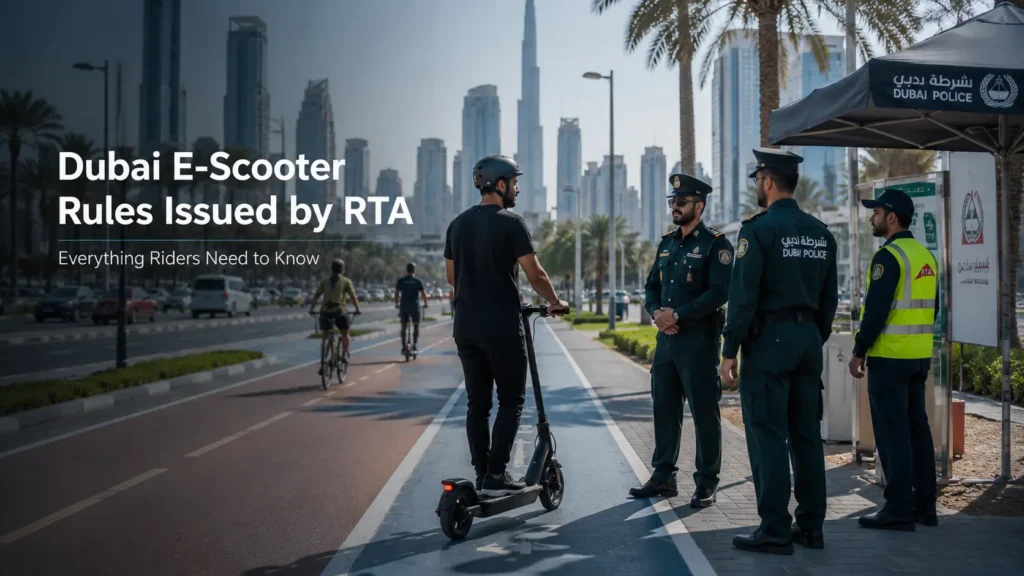
In May 2026, the RTA and Dubai Police jointly launched a dedicated monitoring unit to keep an eye on e-scooter and bicycle activity across the city. Patrol teams are now actively watching shared tracks, observing rider behaviour, and stepping in when rules are being broken.
The focus areas include reckless riding, speeding, carrying passengers, and using e-scooters outside designated zones. Officials have been clear that the goal isn’t just to issue fines — they want to raise awareness and shift behaviour over time. But the enforcement side is real, and riders should expect to be watched.
E-Scooter Permit Rules in Dubai
If you’re riding an e-scooter in Dubai’s approved zones, there’s a good chance you need a permit. The RTA issues these digitally after applicants complete an online theory-based safety test covering road awareness, traffic rules, and safe riding basics.
You need to be at least 17 years old to apply. The process is straightforward — it’s designed to make sure riders have a minimum understanding of the rules before they’re out on shared tracks.
That said, not everyone needs one. If you already hold a valid UAE driving licence or an internationally recognised driving licence, you’re exempt from the separate e-scooter permit requirement.
Important Safety Rules Riders Must Follow
The rules here are fairly practical. Helmets are mandatory. Speed limits must be followed. Riding while using your phone is not allowed, and your attention needs to stay on the road.
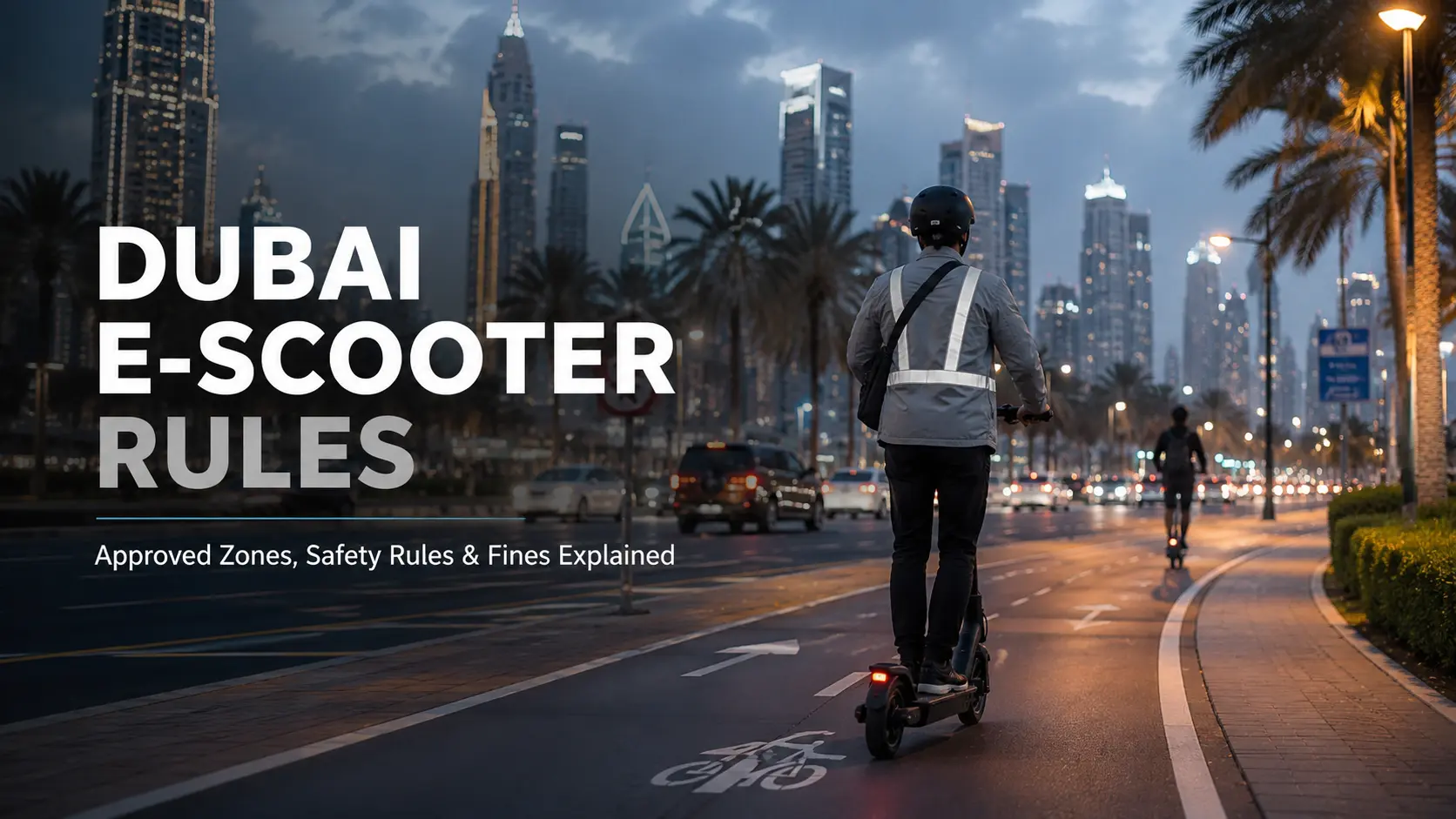
If you’re riding at night, authorities recommend wearing reflective or bright-coloured clothing so that other road users can see you clearly. Keeping a safe distance from pedestrians and cyclists is also emphasized — shared tracks work best when everyone is giving each other enough space.
And to be completely clear on one point: e-scooters are for one person only. Carrying a passenger is not permitted under any circumstances.
Can Riders Take E-Scooters on Public Transport?
Yes, but with conditions. Foldable e-scooters are now permitted on Dubai’s Metro and Tram services, provided the scooter is fully folded before you enter the station or board a train. Size and weight requirements also apply, so not every model will qualify.
Scooters need to be clean and dry when brought onto public transport, and they must be kept in designated storage areas rather than blocking aisles or seating. One thing that remains strictly prohibited: riding your e-scooter inside Metro or Tram stations. It needs to be folded and carried from the moment you enter.
Also Read: South Korean Ship Damaged in Strait of Hormuz Fire Reaches Dubai Port for Investigation
Fines for Breaking E-Scooter Rules
Fines for violations currently range from Dh200 to Dh500, depending on what the offence is. Riding without a permit, going outside approved areas, and not wearing a helmet are among the offences that attract penalties.
Getting caught carrying a passenger will also cost you. And if someone keeps racking up violations, the consequences can go beyond fines — scooter confiscation is a possibility, and authorities have indicated that the regulatory environment may become even stricter as Dubai continues to develop its micro-mobility network.
Why Dubai Is Tightening E-Scooter Regulations
The short answer is that the growth in e-scooter use has been faster than the safety culture around it. More riders means more opportunities for things to go wrong, particularly for pedestrians and cyclists sharing the same spaces.
Dubai’s broader goal is to support sustainable, smart transport — e-scooters are genuinely useful for short-distance travel and fit neatly into the city’s green mobility vision. But that vision only works if the roads feel safe for everyone using them. Clearer zones, stricter enforcement, and better rider awareness are all part of making that balance work in practice.