

Dubai had a rough few months earlier this year. Regional tensions disrupted travel plans, hotel bookings dropped, and some major events got postponed. For a city that depends heavily on tourism, that kind of disruption is no small thing.
But if you were expecting Dubai to pull back or reconsider its growth plans, that is not what is happening. Instead, the city is pushing forward with an aggressive tourism strategy that includes massive events, expanded airline routes, global marketing campaigns, and continued infrastructure investment.
The message from Dubai’s tourism leadership is clear: the long-term vision has not changed. The city still plans to be one of the top global destinations for tourism, business, and investment. And it is not waiting around for perfect conditions to get there.
The D33 Plan Is Still the North Star
Dubai’s tourism strategy is tied to something called the Dubai Economic Agenda D33. The goal is ambitious: strengthen Dubai’s position as a global economic hub and keep growing the city’s tourism, business, and investment appeal over the next decade.
Tourism officials made it clear during a recent stakeholder meeting that none of the disruptions this year have altered those plans. The roadmap is the same. The timeline is the same. The ambition is the same.
What has changed is the urgency. Dubai has been through economic downturns, pandemics, and regional instability before. Each time, it has bounced back by moving quickly, staying flexible, and keeping investors and visitors confident. That playbook is being used again now.
Events Are the Engine
If you know anything about Dubai’s tourism model, you know that events are a huge part of it. The city does not just rely on beaches and shopping malls. It builds entire seasons around festivals, sales, gaming expos, cultural events, and entertainment campaigns.
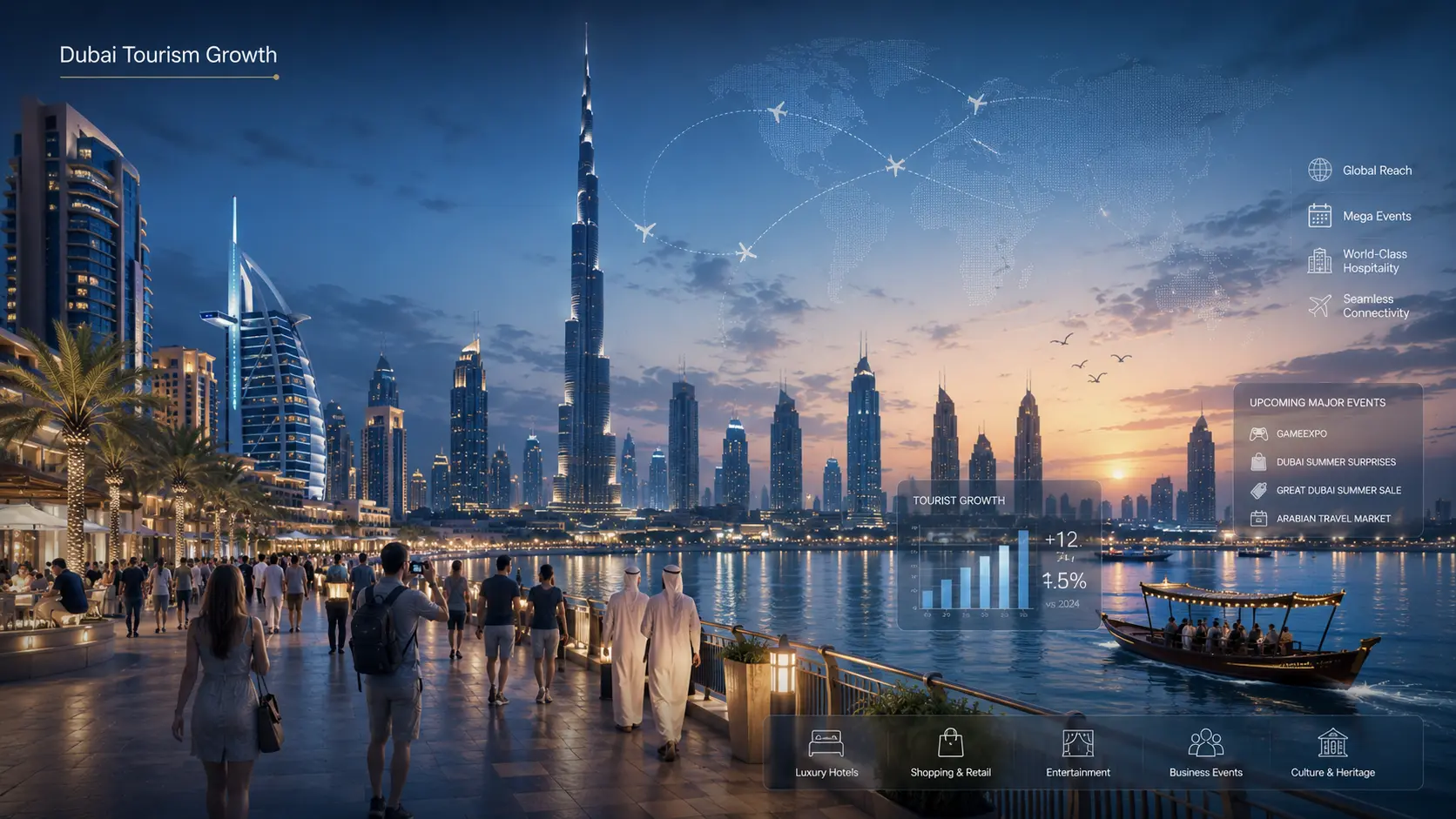
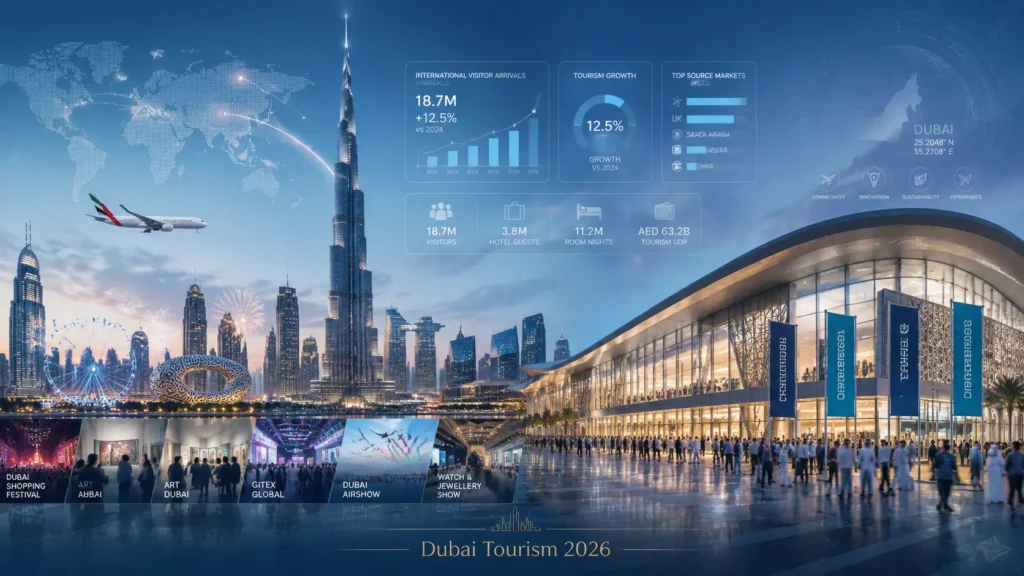
This year’s calendar is packed. GameExpo is getting bigger, targeting gaming fans from across the Middle East. Dubai Summer Surprises is coming back with more promotions and retail offers. The Great Dubai Summer Sale and Back to School campaigns are also returning, designed to pull in regional shoppers and tourists during the traditionally slower summer months.
These are not small initiatives. They drive hotel bookings, retail spending, restaurant traffic, and airline demand. They also keep Dubai visible and relevant even during off-peak travel periods.
Officials believe that maintaining a strong event calendar is one of the best ways to rebuild visitor confidence and keep momentum going after a difficult start to the year.
Tourism Numbers Are Recovering
The numbers presented at the recent tourism stakeholder briefing show that recovery is underway, even if it is gradual.
Before Eid, hotel occupancy was running at about 80 percent of what it was in 2025. During the Eid holiday itself, average occupancy across the city hit 77 percent. In some areas, it climbed as high as 85 percent.
Those are not pre-disruption numbers, but they are heading in the right direction. Travel industry experts say confidence is slowly coming back as flight routes reopen and tourists see that Dubai is operating normally.
It may take a few more months to fully stabilize, but the trend is positive.
Airlines Are Reconnecting the City to the World
Aviation is absolutely critical to Dubai’s tourism model. The city does not have a large domestic market. Almost all its visitors come from abroad, which means airline connectivity is everything.
The good news is that both Emirates and flydubai have been aggressively restoring their networks.
Emirates has brought back about 96 percent of its routes and is now flying to 138 destinations in 73 countries. The airline is operating around 1,300 flights per week, reconnecting Dubai with major cities across Europe, Asia, Africa, and the Americas.
Flydubai has restored nearly 80 percent of its network and is serving 100 destinations in 50 countries with more than 1,750 weekly flights.
This level of connectivity is essential. Without it, Dubai cannot attract the volume of tourists it needs to keep hotels, restaurants, attractions, and retail businesses running at full capacity.
Global Marketing Is Getting More Aggressive
Dubai is not just waiting for people to show up. The city is actively promoting itself through global marketing campaigns, partnerships with content creators, and collaborations with entertainment companies.
One example is the Beautiful Destinations Academy, which trains digital creators while generating fresh content that showcases Dubai to millions of people online. Dubai is also working with international TV productions and streaming platforms to get the city featured in shows and films that reach global audiences.
The goal is to keep Dubai top of mind for travelers planning their next trip. Even people who are not ready to book right now might remember Dubai when they are, especially if they keep seeing positive, engaging content about the city.
Infrastructure Projects Are Moving Forward
Despite the disruptions, Dubai has not paused its infrastructure development. Road improvements, transport upgrades, and even air taxi stations are still on schedule.
This is not just about responding to current demand. It is about preparing for future growth. Dubai is betting that visitor numbers will continue to rise over the next decade, and it wants the infrastructure in place to support that increase.
Building during uncertain times is a risk, but it is also a signal of confidence. It tells investors, businesses, and potential visitors that Dubai believes in its own future.
Also Read: Dubai Launches SME in a Box Platform to Make Business Setup Faster and Cheaper
Business Events Are Coming Back
One encouraging sign is the return of major business events that were postponed earlier in the year. The Arabian Travel Market, one of the region’s biggest tourism and hospitality exhibitions, has been rescheduled for September after consultations with industry stakeholders.
Business events like this do more than just fill hotel rooms. They bring in investors, decision-makers, and companies that contribute to long-term tourism infrastructure and partnerships. Their return is a sign that confidence is rebuilding not just among leisure travelers, but also within the tourism industry itself.
What This All Means
Dubai is not pretending the first part of 2026 did not happen. But it is also not letting a difficult few months derail years of planning and investment.
The city is moving forward with a clear strategy: keep the event calendar full, expand airline connectivity, promote aggressively on the global stage, and continue building the infrastructure needed for future growth.
It is a high-energy, high-investment approach that reflects Dubai’s broader identity. The city has always moved fast, taken risks, and bet on its ability to attract people and capital even when conditions are uncertain.
Whether that strategy continues to pay off will depend on how quickly regional stability returns and how effectively Dubai can convert marketing efforts into actual bookings. But for now, the momentum is clearly in one direction: forward.