


Dubai-based DP World is preparing to develop a multipurpose port and container terminal in Fujairah, creating a new trade route that would allow cargo to reach the UAE without passing through the Strait of Hormuz.
The scale of the problem this project is solving became clear earlier this year. Traffic through Jebel Ali fell sharply when hostilities involving Iran restricted commercial shipping through Hormuz. At the height of the disruption, activity at the port dropped by as much as 95 per cent, forcing importers to divert goods through eastern UAE terminals and transport them overland.
That kind of vulnerability — a 95 per cent drop in activity at one of the world’s largest container hubs — concentrated minds quickly. The Fujairah port project is the UAE’s answer to ensuring it never has to absorb that kind of shock again.
Why the Strait of Hormuz Matters
The existing Habshan-Fujairah pipeline can carry up to 1.8 million barrels of oil a day from Abu Dhabi’s production areas to the Gulf of Oman, allowing exports to avoid the strait. But that only covers oil. Everything else — food, manufactured goods, raw materials, petrochemicals, consumer products — still depends on shipping lanes that run through the strait.
Iran has blocked the Strait of Hormuz throughout the regional war that began in late February, and the vital waterway is at the centre of an ongoing escalation of conflict between the US and Iran. The disruption has sent insurance premiums spiking and forced shipping companies to seek alternative routes at significant cost and delay.
The UAE has decided the answer is infrastructure rather than hope — building a permanent, resilient alternative that doesn’t depend on the strait remaining open.
East Coast Location Offers Strategic Advantages
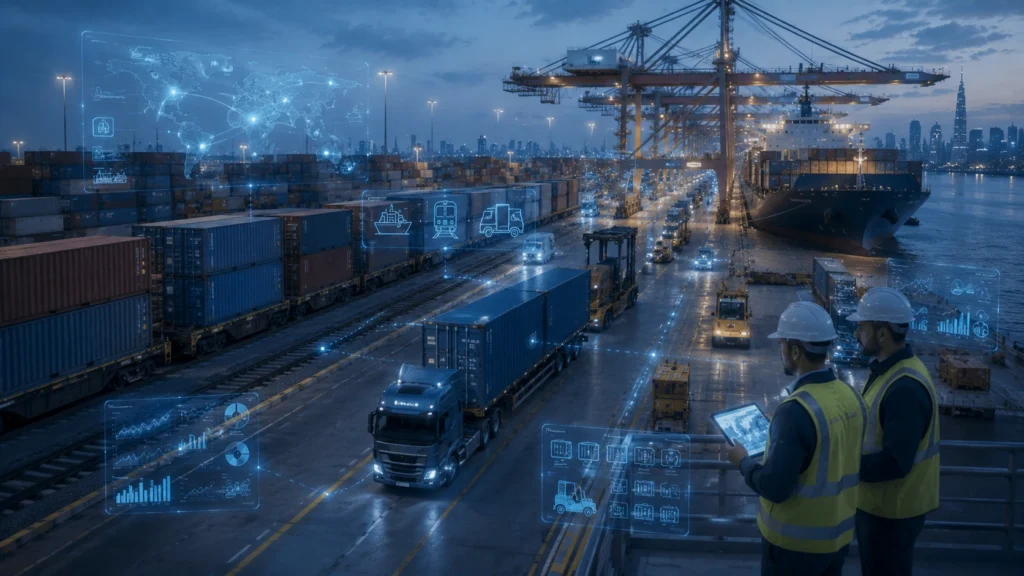
The proposed facility on the Gulf of Oman coast would handle containers and other cargo before goods are moved by road or rail to Dubai, Abu Dhabi and other commercial centres.
Fujairah occupies a critical position outside the Strait of Hormuz. Its deep-water coastline already hosts oil storage terminals, bunkering facilities and crude export infrastructure. The new container port builds on that existing foundation, extending the emirate’s strategic value beyond energy into general trade.
DP World’s planned Fujairah development would provide an alternative gateway rather than replace Jebel Ali. The Dubai port is expected to remain the country’s principal container and logistics centre because of its scale, free-zone infrastructure, industrial clusters and global shipping connections. The eastern facility would instead serve as a strategic backup and absorb cargo during emergencies.
Supporting Long-Term Economic Growth
Initial investment is expected to run into hundreds of millions of dollars, with the first phase potentially completed within 18 months once final approvals and construction arrangements are secured.
The scale of what’s being planned extends beyond a single facility. UAE officials outlined plans in mid-2026 to expand several eastern ports, including Fujairah, Khor Fakkan, and Dibba. The stated goal is to reduce dependency on the Strait of Hormuz to zero.
That’s an ambitious target, but the investment behind it is serious. ADNOC has been directed to fast-track a second oil pipeline to Fujairah, reportedly nearly 50% complete as of May 2026, with a target operational date of 2027. Once online, it would double the UAE’s existing pipeline export capacity from approximately 1.8 million barrels per day.
Building a More Resilient Supply Chain
The real-world impact of the disruption has already been visible at Khor Fakkan, the UAE’s main fully operational container facility outside the strait. Khor Fakkan’s weekly container movements rose from about 8,000 units before the regional conflict to as many as 65,000 after shipping was diverted from Gulf terminals. Its daily trucking capacity increased from roughly 100 vehicles to about 8,500, placing heavy pressure on roads, customs facilities and storage areas.
That surge demonstrated both the demand for east coast routing and the limitations of existing infrastructure to absorb it. The Fujairah port project and the wider expansion plans are designed to build the capacity that would make such a surge manageable — or better yet, planned for in advance.
UAE planners are seeking reliable alternative routes for food, manufactured goods, raw materials, petrochemicals and liquefied natural gas. New roads, railways, pipelines and inland logistics centres are expected to connect eastern ports with industrial and population centres across the country.
Integration With Existing Transport Infrastructure
The port doesn’t stand alone. It connects into a broader logistics network that the UAE has been building out over recent years. Etihad Rail’s growing freight network, highway upgrades and inland logistics centres are all part of an integrated picture where goods arriving on the east coast can move efficiently to Dubai, Abu Dhabi and beyond.
Expansion plans cover Fujairah, Dibba and Khor Fakkan, while feasibility studies are under way for at least one additional harbour on the eastern coastline. The Khor Fakkan expansion alone is significant — the terminal is being developed to handle more than 10 million twenty-foot equivalent units, supported by inland logistics capacity at Sajaa and Al Dhaid, with 17-metre-deep berths and 21 high-performance ship-to-shore cranes.
Boosting Dubai’s Position as a Global Trade Hub
Dubai has positioned itself as one of the world’s leading crypto hubs, with regulatory frameworks designed to attract exchanges, funds, and Web3 companies. A more resilient national infrastructure makes Dubai a more stable base of operations for those firms. The same logic applies across industries — investors and businesses want to operate from jurisdictions whose supply chains can withstand disruption.
The Fujairah port, and the wider east coast strategy it’s part of, reinforces Dubai’s pitch to global business: that the UAE is not just well located but well protected against the kind of geopolitical shocks that can derail trade elsewhere.
Also Read: Where to Watch FIFA World Cup 2026 Semi-Finals in Dubai
What the New Port Could Mean for Regional Trade
If completed as planned, the Fujairah port becomes a genuinely important piece of global trade infrastructure — not just for the UAE, but for the broader network of shipping companies, importers and exporters who route through the Gulf.
The government has set an objective of reducing dependence on Hormuz to zero, regardless of whether the waterway remains open. That framing is significant. This isn’t a contingency plan — it’s a permanent strategic realignment, driven by the recognition that relying on a single chokepoint is a risk the UAE is no longer willing to accept.
The port is moving quickly from proposal to reality. For businesses, shipping companies and investors watching the UAE’s infrastructure trajectory, it represents one of the most consequential logistics developments in the region in years.