

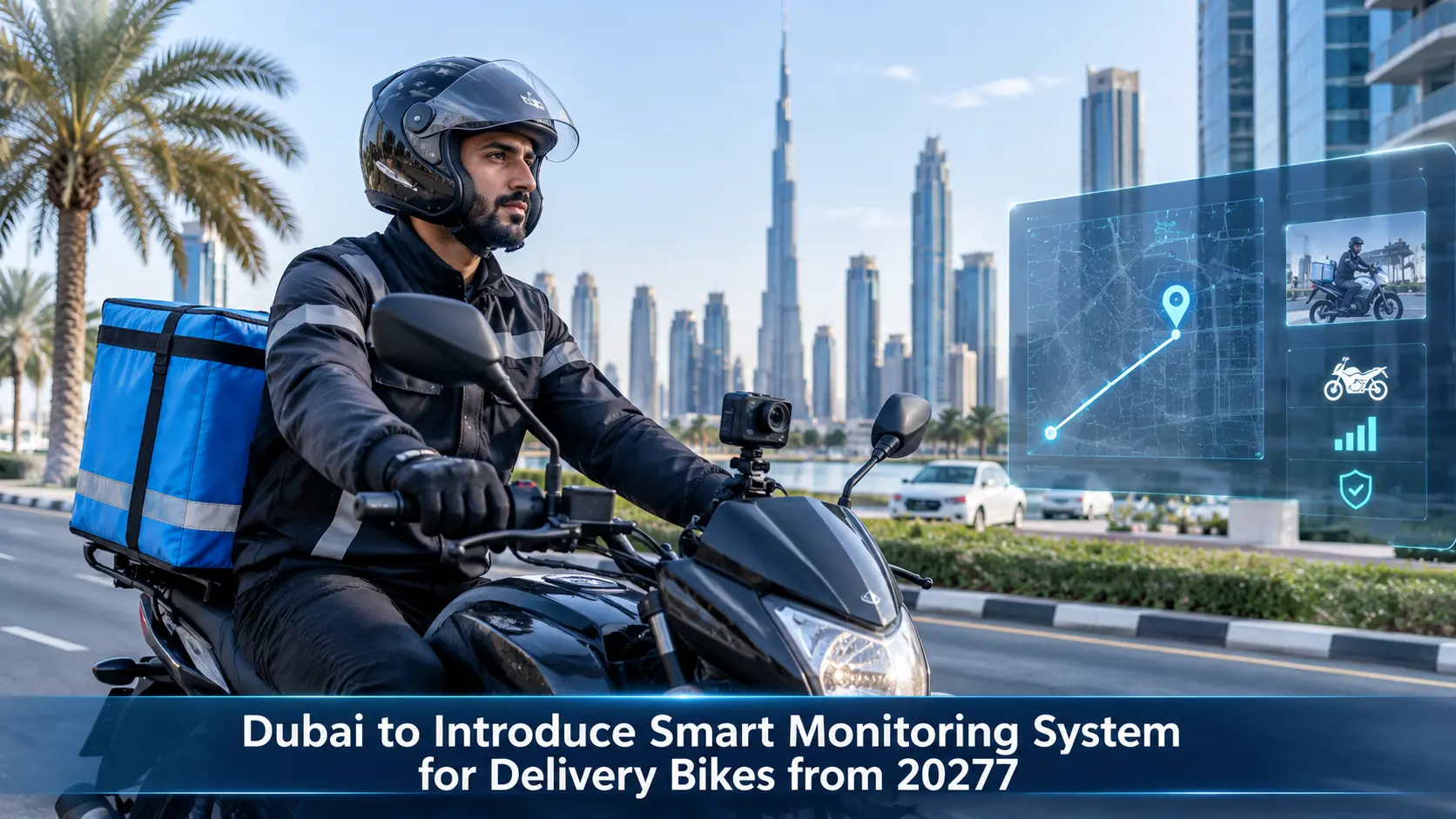
If you live in Dubai, you’ve seen them everywhere. Delivery motorcycles weave through residential streets, business districts and busy roads, bringing food and parcels to your door. Now the city wants a closer look at how they ride.
Dubai’s Roads and Transport Authority (RTA) is bringing in a smart monitoring system for delivery motorcycles. Companies will have to fit tracking devices and connect their fleets to the platform from the second half of 2027. The aim is to improve road safety and bring more order to a delivery sector that has grown quickly.
What Is the Smart Monitoring System?
It’s an integrated setup with three parts: IoT-enabled monitoring devices, advanced cameras fitted to the motorcycles, and a smart digital platform. Together, they will track how riders behave on the road.
The system will collect and study details such as speed, acceleration, braking, driving patterns, and routes. It will pick up risky habits like speeding, sudden acceleration and harsh braking.
The Timeline
Here’s how the rollout works:
- Now until the end of the first half of 2027: installation and connection are optional
- From the second half of 2027: compliance becomes mandatory
The early period gives delivery companies time to get their fleets and systems ready. RTA says it will work with the companies and other relevant bodies during this time to support them.
A Shift Toward Real-Time Oversight
Saeed Al Ramsi, Director of Licensing Activities Monitoring at RTA, called it a step change in how delivery activity is watched. He said the move shows a shift from conventional checks to proactive, data-driven oversight backed by smart analytics.
The platform isn’t only for the authorities. Delivery companies will get real-time information about their own riders. That means they can spot patterns, check performance, and use real evidence to improve training and safety programmes. In Al Ramsi’s words, firms will be able to take early corrective and awareness measures instead of waiting for problems.
Who Helped Build It?
RTA says the system came from ongoing cooperation with Dubai Police General Command and other relevant bodies. The goal is to balance smooth operations with safety and compliance.
The system will also build an operational database. RTA says this could help shape future rules, strengthen field monitoring, and encourage safer, more sustainable practices across the sector.
Why It Matters for Riders and Residents
For riders, it means their driving will be watched more closely, but companies will also have better tools to coach them. For other road users, the hope is fewer risky moves from fast-moving motorcycles. And for residents who rely on deliveries, safer riding should mean fewer accidents and a more reliable service.
Al Ramsi stressed that technology alone won’t be enough. He said regulators, companies, and individual riders all have a role to play.
What We Don’t Know Yet
A few details are still missing. The announcement doesn’t mention penalties for companies that don’t comply. It also doesn’t cover the cost of the devices or who will pay, and it doesn’t explain what the cameras will record. We’ll need to wait for RTA to share more before those questions are answered.
A Quick Tip for Delivery Operators
If you run a fleet, the transition period is useful. Start by talking to RTA about the technical requirements. Then plan how to fit the devices across your motorcycles and train your staff, so you’re ready before the mandatory date arrives.
More Dubai News This Week
Dubai is busy with new ideas right now. If you’re a remote worker who’d like a change of scenery, take a look at the city’s first Work From Park hub, with free outdoor desks and indoor spaces.
And for music fans, Anuv Jain is bringing his Dastakhat world tour to Expo City Dubai on November 20.
Dubai is moving from spot checks to constant, data-based monitoring of its delivery riders. Companies have until mid 2027 to get ready, and after that, the system becomes a requirement. If it works as planned, the roads could get a little safer for everyone.