

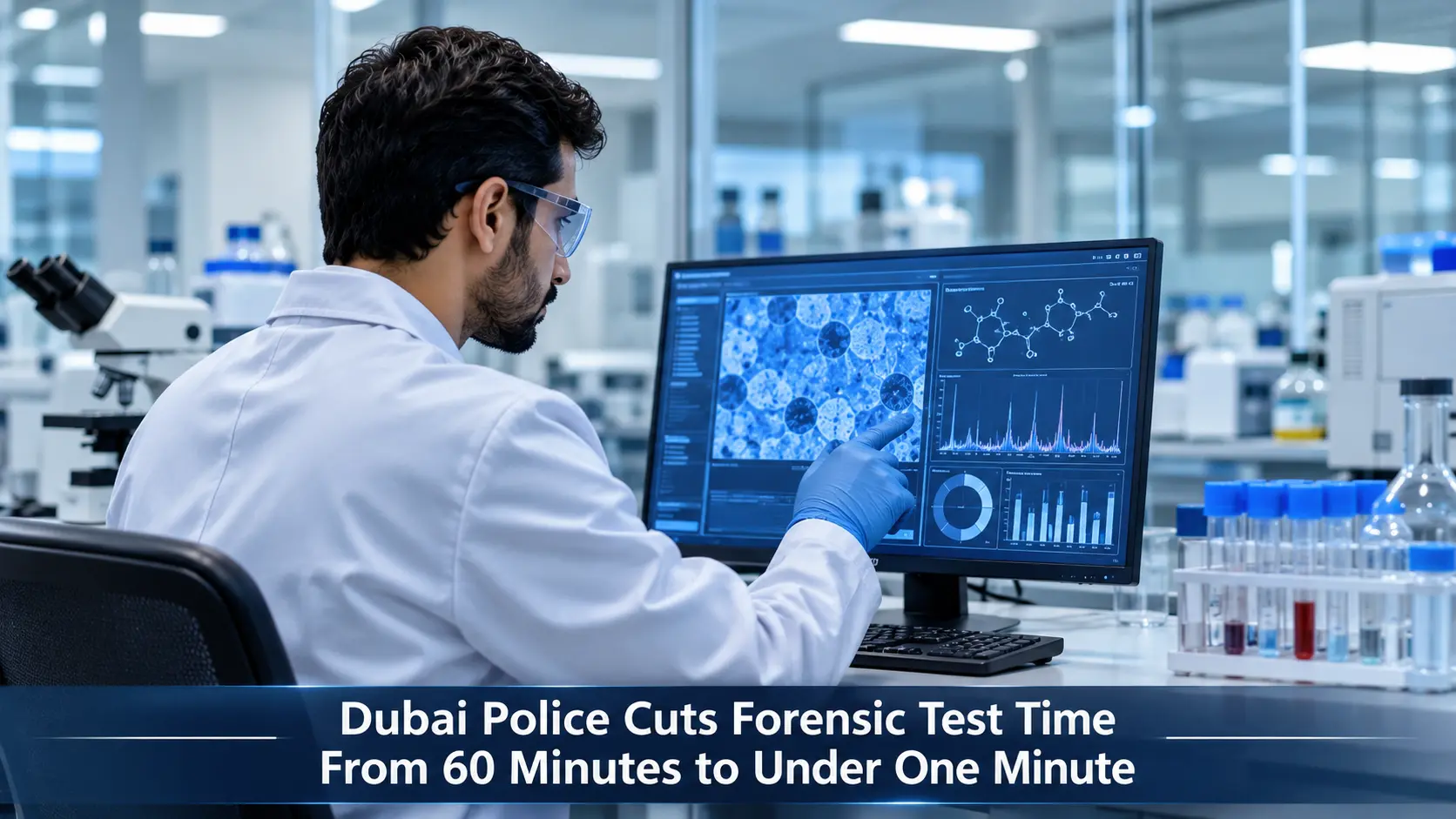
Forensic work is slow for a good reason. Every number has to be right. But a lot of that time goes on routine tasks like copying data and running the same calculations by hand. Dubai Police has now found a way to trim that.
The force has launched a new smart system that cuts forensic toxicology processing from around 60 minutes to less than one minute. It automates lab calculations and data analysis, which speeds up forensic examinations.
Who Built It?
The platform was developed by four Emirati experts from the force’s General Department of Forensic Science and Criminology. The project was led by Lieutenant Colonel Dr Rashid Humaid Al Rumaithi, with Captain Engineer Mohammad Abdul Qader Al Shamsi and forensic toxicology experts Marwa Aqeel Al Janahi and Fatima Ali Al Suwaidi.
What Changed?
Before, specialists had to do several jobs by hand. They moved lab data between files, ran calculations, checked results and compared findings with scientific references. That took time and could also lead to small differences in how people worked.
The new platform puts it all in one place. It reads lab data automatically, does the calculations, links results to scientific references and helps specialists compare and interpret findings. As Dr Al Rumaithi put it, the work moves from a series of separate procedures with files and spreadsheets to one connected digital process.
The Numbers, According to Dubai Police
Here’s what the team reports:
- Results processing: from about 60 minutes to under one minute
- Data processing steps: from 10 to two
- Calculation procedures: from six separate ones to one automated operation
- Preparing outputs: from an average of 30 minutes to one minute
These are the force’s own figures. The announcement doesn’t share outside testing or accuracy rates.
Experts Still Make the Final Call
This is the key point. The system doesn’t replace human judgement. Specialists still review and check the results before they give their final technical opinion.
Captain Al Shamsi described the platform as a smart assistant that supports forensic experts rather than replacing them. He said specialists must still look at each case in context, including the sample, the substance, the circumstances and what the results mean forensically, before they reach a conclusion.
In simple terms, the machine handles the repetitive maths and the people handle the thinking.
Why It Matters
Fatima Al Suwaidi said the changes cut repeated work and let specialists do their jobs more efficiently while keeping accuracy. Marwa Al Janahi said reducing manual work and standardising procedures makes outputs more reliable, which frees experts for complex scientific examinations.
For the public, the benefit is faster case processing. The force says it can speed things up without hurting accuracy or reliability.
What Comes Next
Dubai Police plans to link the platform more closely to laboratory instruments, so there’s less need to enter data by hand. It will also update its scientific databases and reference resources, and add performance indicators and knowledge dashboards to help with planning and decisions.
The team will also look at artificial intelligence and smart assistants to help specialists find relevant scientific information faster. No dates have been given for these upgrades.
Part of a Bigger Push
The project fits Dubai Police’s wider efforts to build innovation and adopt digital tools, improving lab readiness and the quality of its technical services.
Dubai keeps finding ways to make things faster, from policing to travel. If you’re curious about how the city is trying to win over repeat visitors, take a look at the new club that gives repeat visitors a five year visa and Dh2,000 in credit.
Turning an hour of routine work into less than a minute is a big gain, but the most important detail is what hasn’t changed. Human experts still check every result and make the final call. The tool just gives them more time to do what only they can do.