

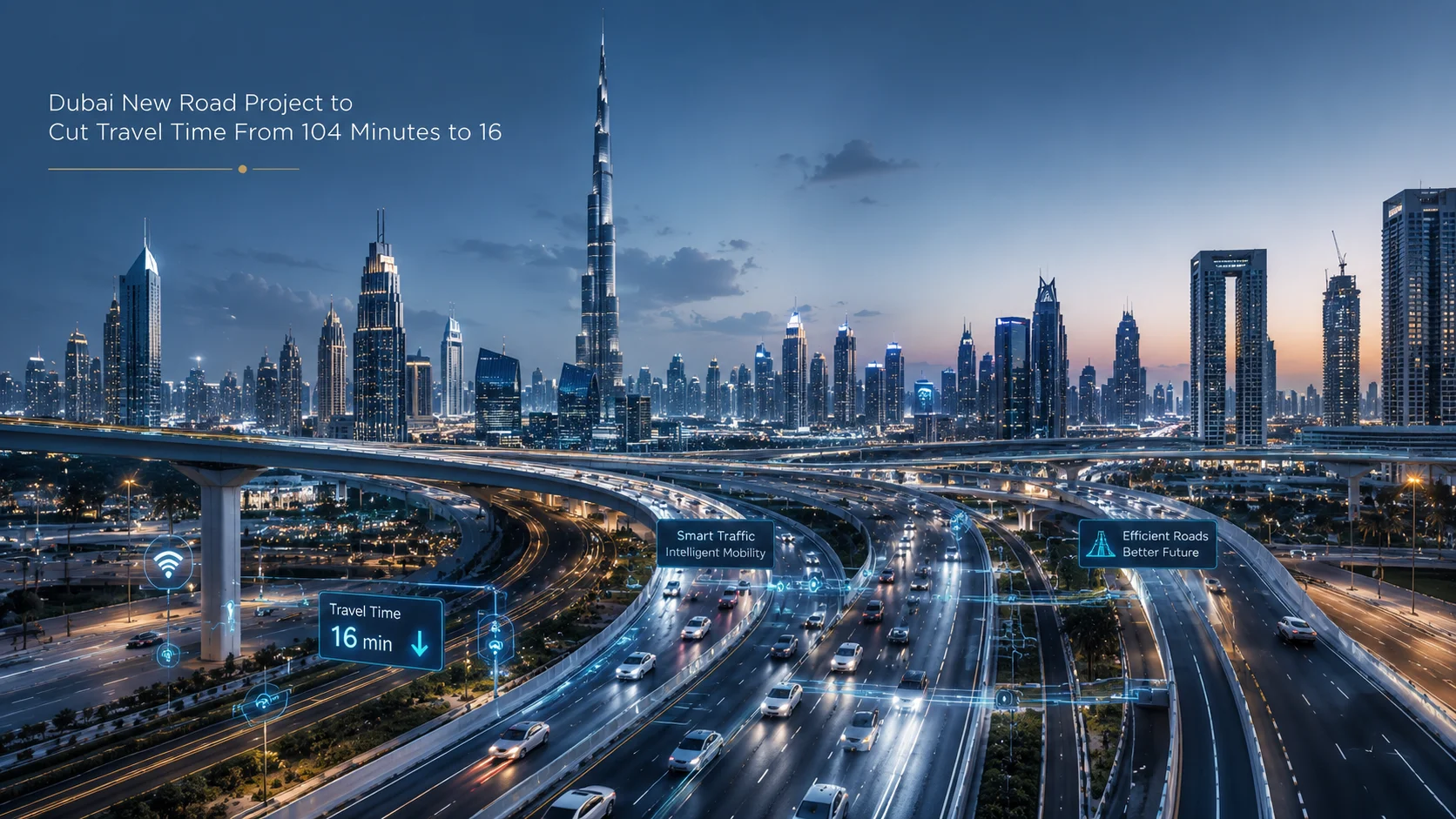
If you’ve ever sat in Dubai traffic watching the minutes tick by, this announcement will feel significant. Dubai has unveiled a new road development project that the Roads and Transport Authority says will bring travel time on certain routes down from 104 minutes to just 16. That’s not a small improvement — it’s the kind of change that genuinely alters how people experience the city daily.
The project is part of Dubai’s ongoing effort to build infrastructure that keeps pace with a rapidly growing population and economy. Better connections between residential areas, commercial districts, and major highways are at the heart of what’s being planned, and the benefits are expected to reach thousands of daily commuters once the work is complete.
Travel Time to Reduce Dramatically
The headline number is striking — a journey that currently eats up more than an hour and a half during peak hours potentially completed in under 20 minutes. Traffic congestion is one of the most persistent frustrations in any growing city, and Dubai has been experiencing exactly the kind of growth that puts pressure on road networks.
The practical implications go beyond the obvious time saving. Less time stuck in traffic means lower fuel consumption, reduced stress, and more productive hours for residents who currently lose significant portions of their day to commuting. For logistics and commercial transport, improved road efficiency translates directly into better business operations.
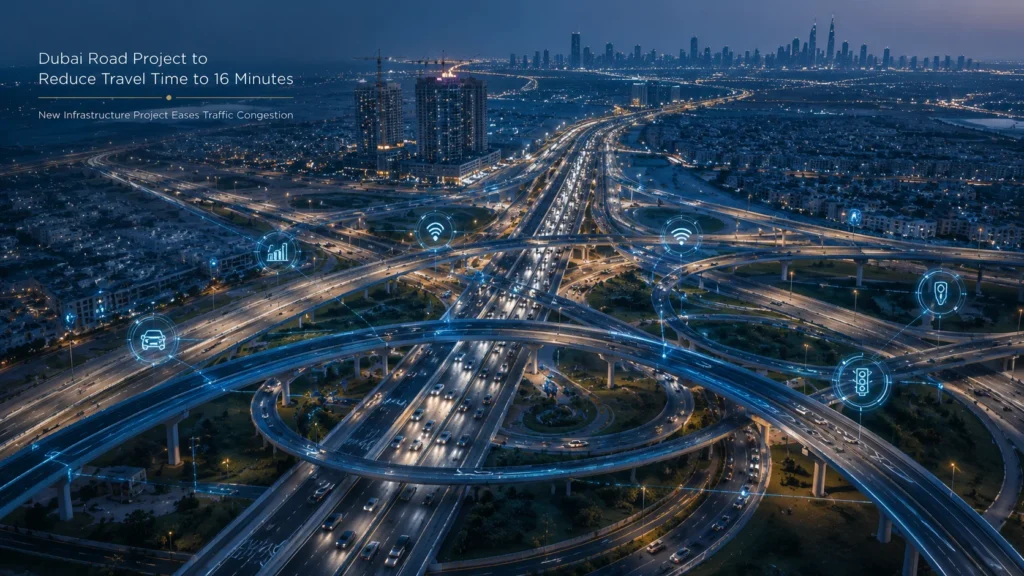
Dubai Continues Expanding Smart Mobility
This road project doesn’t exist in isolation — it’s one piece of a much larger mobility picture that Dubai has been building out for years. AI-powered traffic management, smart bus stations, metro expansion, and the much-discussed air taxi initiative all point to a city that’s thinking carefully about how people will move around in the decades ahead rather than just addressing today’s bottlenecks.
The RTA has been consistent in its approach — physical infrastructure investment paired with digital traffic management systems, working together rather than independently. That combination tends to produce better outcomes than either approach alone.
Project Expected to Support Economic Growth
Better roads don’t just help commuters — they support the broader economy in ways that ripple outward. Improved connectivity makes residential communities more attractive to buyers and renters, supports business activity in commercial zones, and keeps the logistics networks that underpin Dubai’s trade and tourism sectors running efficiently.
Urban development specialists consistently point to transport infrastructure as one of the key factors that drives property demand and investment confidence. In that sense, projects like this one serve multiple purposes simultaneously — solving a traffic problem while also strengthening the conditions for economic growth.
RTA Focuses on Future Urban Planning
What’s notable about how Dubai approaches infrastructure is the time horizon it works with. These projects aren’t designed to fix today’s congestion — they’re designed to accommodate the city Dubai expects to be in 20 or 30 years. That kind of long-term planning requires a different mindset than reactive patch-and-fix approaches.
New residential and commercial districts continue to emerge across the emirate, and keeping those areas properly connected to business hubs and essential services is an ongoing challenge. Road expansion is part of how that challenge gets managed, and the RTA has been building a track record of delivering projects at a meaningful scale.
Also Read: Dubai Launches Middle East’s First Museum of Digital Art at DIFC Zabeel District
Technology Plays a Growing Role in Traffic Management
The physical roads are only part of the story. Smart traffic signals, AI-powered monitoring systems, and data-driven management tools are already deployed across parts of the city and are becoming more integrated into how Dubai manages traffic as a whole.
The ability to respond dynamically to changing conditions — rerouting traffic in real time, adjusting signal timing, anticipating congestion before it fully develops — means the road network can perform more efficiently even before any new tarmac is laid. The combination of expanded physical infrastructure with smarter management systems is where the real gains tend to come from.
Dubai Strengthens Its Global Smart City Image
Projects like this one contribute to something beyond just solving a local transport problem. Dubai’s international reputation as a forward-thinking city is built partly on the visible ambition of its infrastructure — the scale, the pace, and the consistency of delivery.
For residents, the most important measure is simple — does getting around the city feel easier? If this project delivers what’s been promised, the answer for thousands of daily commuters will be a clear yes. And that, more than any smart city ranking or global reputation metric, is what actually matters.