

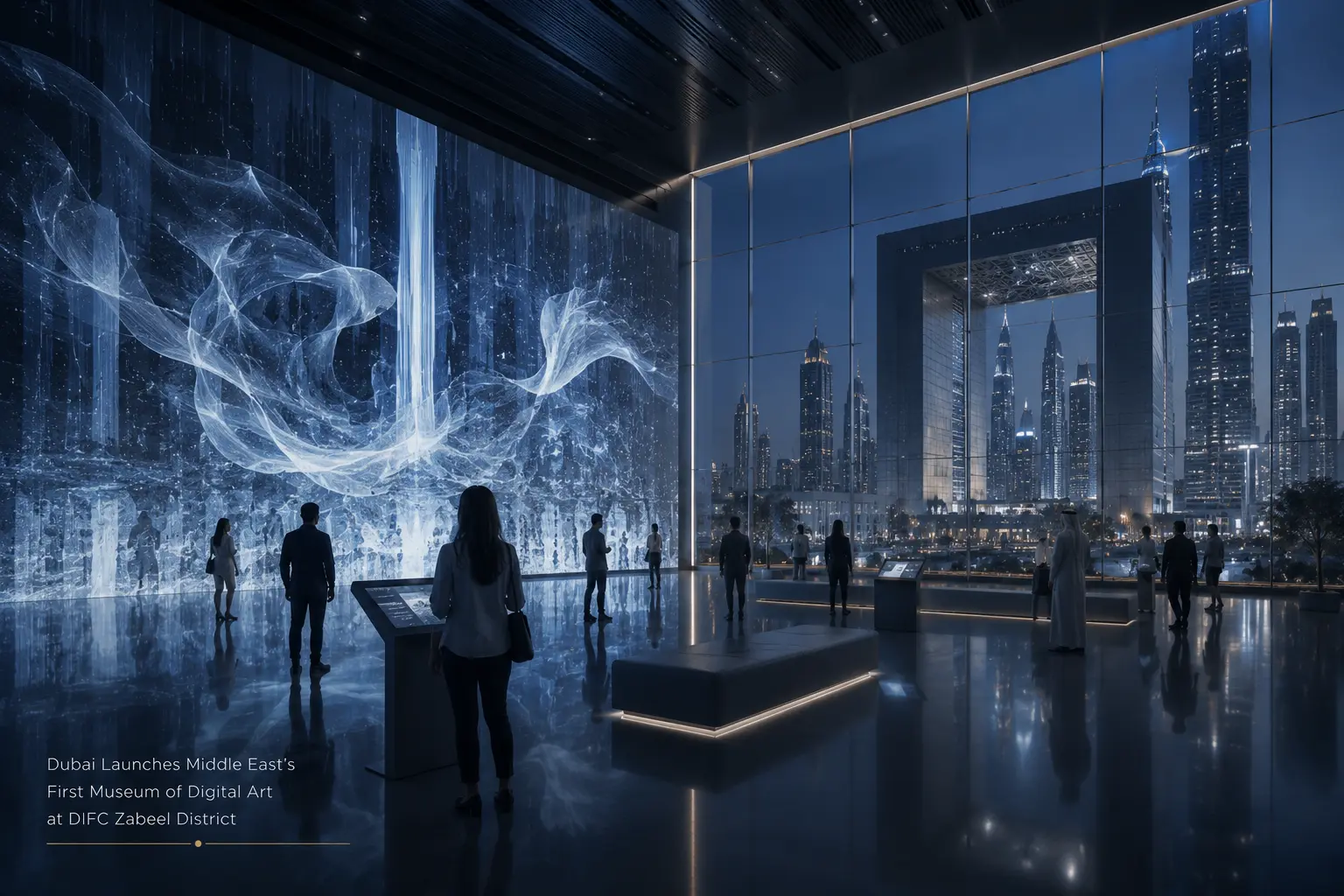
Dubai has a habit of being first at things, and the launch of the Middle East’s first Museum of Digital Art at DIFC’s Zabeel District is the latest example. The new museum takes art viewing somewhere most traditional galleries haven’t gone — into fully interactive, technology-driven experiences where the visitor isn’t just looking at something but actively part of it.
The exhibitions use artificial intelligence, projection mapping, virtual reality, and digital storytelling to create environments that respond to the people moving through them. It’s a different kind of cultural space, and it’s landed in a city that has been building toward exactly this kind of attraction for years.
DIFC Strengthens Dubai’s Creative Economy
DIFC has been quietly expanding its identity beyond finance for some time now. The Zabeel District in particular has grown into one of the more interesting parts of Dubai — modern architecture, premium spaces, and a creative atmosphere that feels distinct from the older parts of the financial centre.
A digital art museum fits naturally into that environment. It brings a different kind of visitor to the area, attracts creative professionals and digital artists alongside the usual business crowd, and adds cultural weight to a district that was already building a strong lifestyle identity.
Industry observers believe the museum could also draw technology-focused events and international creative talent to Dubai in ways that more conventional cultural venues don’t.
Museum Offers Immersive Technology Experiences
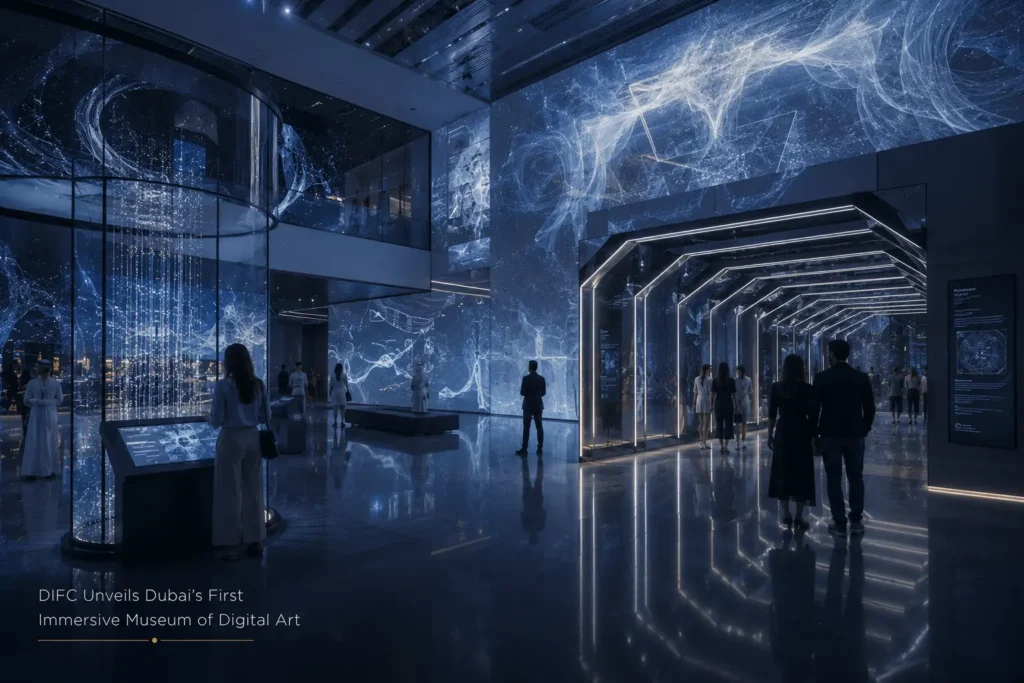
The experience inside is designed around participation rather than passive viewing. Visitors move through AI-generated installations, interact with dynamic projection displays that shift in response to human movement, and find themselves inside visual environments rather than simply in front of them.
This model has already proven enormously popular in cities like Tokyo, Paris, and New York, where immersive art spaces have become among the most visited attractions in their respective cities. Dubai’s version arrives with the benefit of learning from those examples while having the infrastructure to do something genuinely world-class.
Dubai Continues Investing in Smart Entertainment
The Museum of Digital Art isn’t an isolated project — it sits within a consistent pattern of Dubai investing in experiences that sit at the intersection of technology, entertainment, and culture. AI-powered services, virtual reality zones, smart city infrastructure — the city has been building this ecosystem deliberately.
For tourism, the timing is good. Younger travelers increasingly seek interactive experiences over traditional sightseeing, and immersive attractions consistently generate strong social media engagement — which, in 2026, is as important a metric for a cultural venue as footfall.
A New Platform for Digital Artists
Beyond the visitor experience, the museum serves another purpose — it gives digital artists working in the Middle East a proper home. Creators working with AI, augmented reality, animation, and interactive design now have a dedicated venue to show their work at a meaningful scale.
Digital art has evolved dramatically over the past decade, but the infrastructure to support it — physical spaces large enough and technically capable enough to do justice to immersive work — has lagged behind. This museum closes that gap for the region.
Technology and Culture Continue to Merge
What’s happening in Dubai reflects a global shift. Museums and cultural institutions everywhere are rethinking how they present things to audiences who have grown up with interactive digital environments. Static displays on white walls compete badly with experiences that surround you and respond to you.
Holographic visuals, motion tracking, AI-generated content, large-scale projection — these tools are changing what a museum visit can feel like. Dubai’s new museum is built around that reality rather than trying to work around it.
Also Read: Dubai Opera to Host Chanel-Inspired Ballet MODANSE for One Night Only
Dubai’s Tourism Sector Expands Beyond Traditional Attractions
For years, Dubai’s tourism pitch was built heavily on shopping, luxury hospitality, and architectural spectacle. Those remain strengths, but the city has been broadening its offer significantly — arts, culture, immersive technology, live performance, educational experiences.
The Museum of Digital Art adds another dimension to that broader identity. It’s the kind of attraction that draws visitors who wouldn’t necessarily have put Dubai on their itinerary for a beach holiday or a shopping trip, but who will make the journey specifically for this.
Digital Innovation Shapes Dubai’s Future Vision
The museum is expected to host rotating exhibitions, artist collaborations, and technology-driven events throughout the year, which means it won’t be the same place on a second visit that it was on a first. That kind of evolving content keeps audiences coming back and keeps the cultural conversation around the venue active.
For Dubai, it’s another piece of a larger picture — a city that takes its future seriously and keeps building infrastructure to match that ambition.