

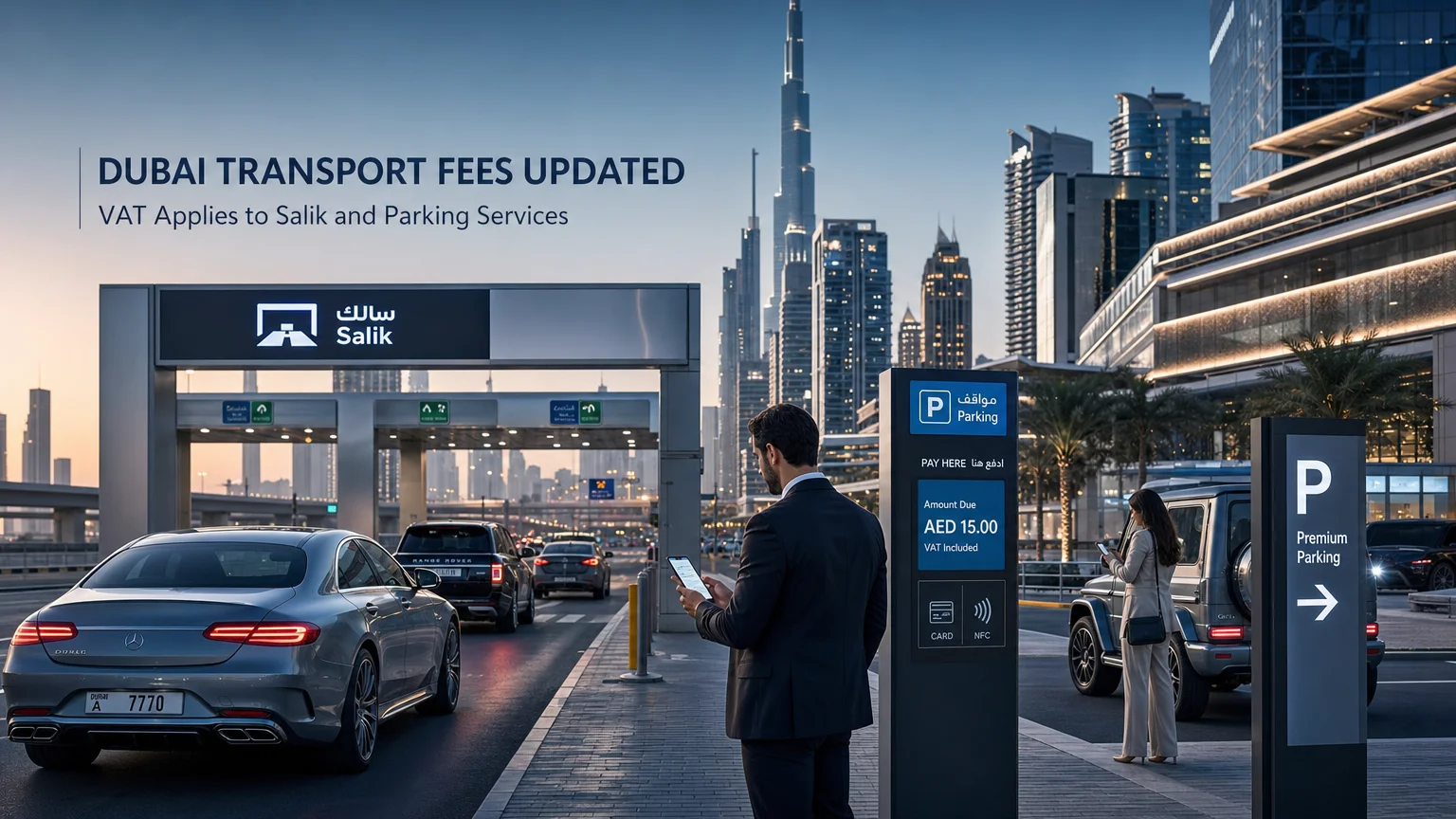
If you drive regularly in Dubai, there’s a small but practical change coming that’s worth being aware of. From June 1, 2026, a 5% VAT will apply to Salik toll charges and Parkin public parking services across the emirate. The change has been confirmed by Parkin PJSC and brings these transport services in line with VAT rules already applied across many other sectors in the UAE.
The update covers a wide range of Parkin services — hourly parking, seasonal permits, subscriptions, and other parking products managed through the company’s platform. Salik toll gates will also reflect the change, meaning each trip through a toll point will carry a slightly higher charge from next month onward.
What the New Charges Mean for Motorists
The practical impact is modest on a per-transaction basis. A standard Salik toll fee of AED 4, for example, becomes AED 4.20 once VAT is added. Parking fees will increase proportionally depending on the zone, duration, and type of service being used.
For the occasional driver, the difference will barely be noticeable. For daily commuters who pass through multiple toll gates and use paid parking regularly, the cumulative effect over a month will be more visible — though still relatively small in the context of overall transport costs.
Residents who use long-term parking permits or subscription-based services should review their pricing when the updated structures go live before June 1.
Parkin Explains Updated Pricing Structure
Parkin has stated that the VAT applies across all its managed public parking services and products. Updated pricing will be reflected in the company’s mobile app, payment machines, and other digital payment channels ahead of the implementation date.
Dubai’s parking infrastructure has become increasingly digital in recent years — app-based payments, smart parking sensors, and automated systems are all part of how the city manages its parking estate now. The VAT rollout is designed to integrate within those existing systems without requiring significant changes for users.
Salik Continues Expanding Dubai’s Smart Mobility System
Salik has been central to how Dubai manages traffic flow across its busiest roads, and the toll network has expanded considerably as the city has grown. The small VAT addition is unlikely to change how most people use the road network, though daily commuters with long routes through multiple toll points will feel it more than others over time.
The bigger picture for Dubai’s transport strategy remains focused on reducing congestion, improving road efficiency, and building out the infrastructure to support a growing population — the VAT adjustment is a relatively minor element within that.
Also Read: Dubai Approves Second Economic Support Package to Protect Jobs and Support Growth
Dubai’s Smart City Vision Continues Growing
The timing of this change sits within Dubai’s broader push toward more digitally managed and financially sustainable urban services. Digital parking management, automated tolling, and AI-powered traffic monitoring are all established parts of how the city operates its transport network.
Integrating VAT into these services is less a dramatic shift and more a normalization — bringing transport services into the same tax framework that applies to most other consumer-facing services in the UAE.
Residents Prepare for Updated Costs
Fleet operators, delivery companies, and businesses with transport-heavy operations will likely want to update their cost models slightly to account for the additional VAT on parking and toll usage. For most individual residents, the adjustment is small enough that it won’t require major changes to daily routines.
The revised pricing structures will be visible across all relevant platforms before the June 1 start date, giving people enough time to familiarize themselves with the updated costs before they take effect.