

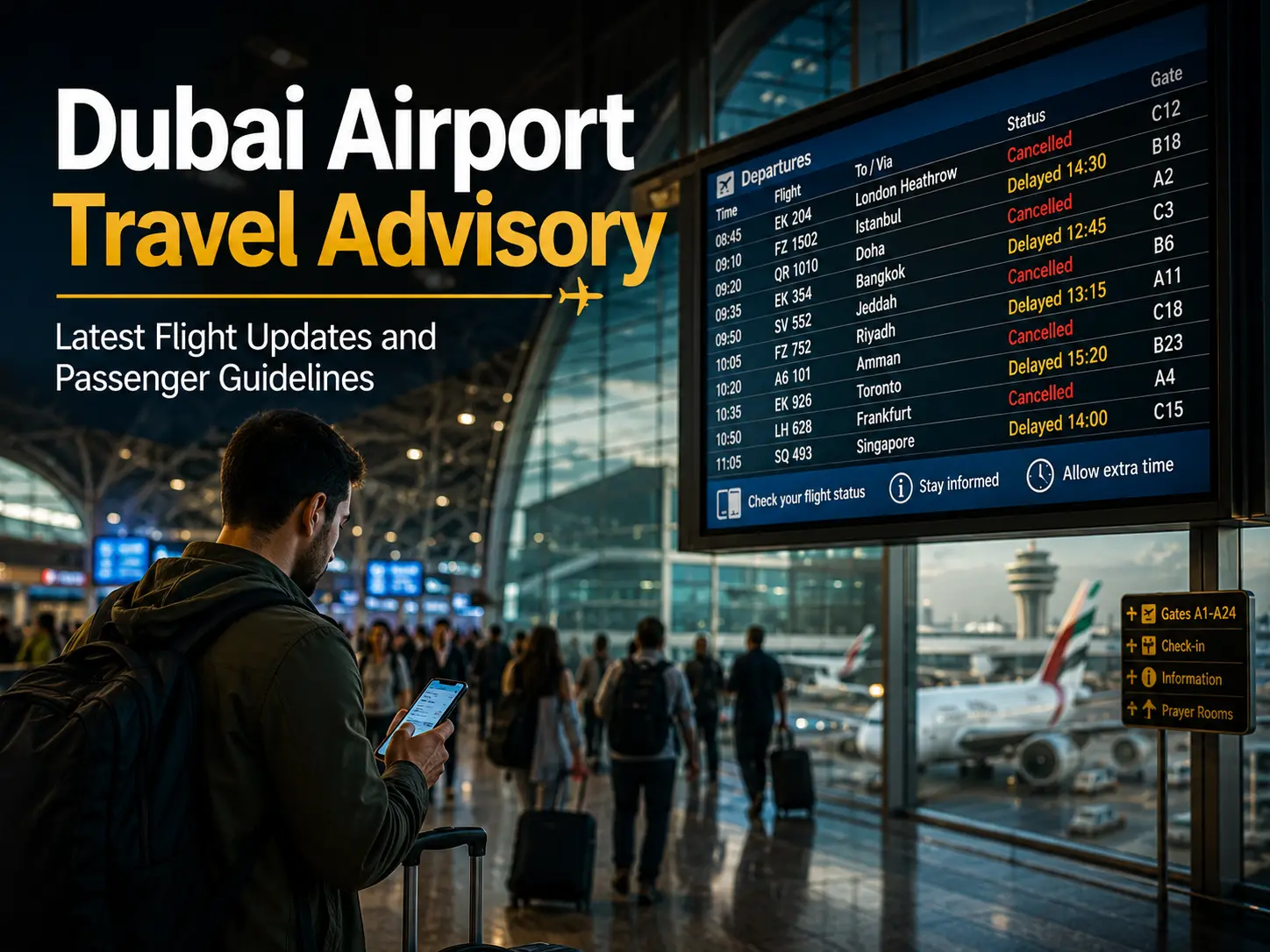
Dubai International Airport is open. Flights are operating. But if you’re travelling through Dubai in the coming weeks, things are not quite back to normal yet — and pretending otherwise wouldn’t be doing you any favors.
Regional tensions linked to the Iran conflict have caused significant disruption to flights in and out of Dubai since earlier this year. Airspace restrictions, security-related measures, and airline schedule changes have all played a role. The good news is that UAE airspace has been restored and Dubai Airports has confirmed that operations are gradually scaling back up.
The less good news is that “gradually” is doing a lot of work in that sentence — airlines are still rebuilding schedules, some routes remain suspended, and things can still change at relatively short notice. If you have a flight through Dubai coming up, this is the moment to pay attention.
Which Airlines Are Affected?
Quite a few, and the list has been shifting.
British Airways, Lufthansa Group, and Cathay Pacific are among the major international carriers that have either reduced services or temporarily suspended selected routes to and from Dubai. Several regional airlines have done the same. Some carriers have paused Dubai flights entirely through at least the end of May.
Indian carriers have also issued their own travel advisories for passengers flying between India and the UAE. IndiGo, for one, has flagged ongoing Middle East tensions as a risk factor for passengers on those routes.
The situation is fluid. A carrier that was operating limited services last week might have restored full schedules by the time you read this — or reduced them further. The only reliable way to know what’s happening with your specific flight is to check directly with your airline, not third-party booking sites.
What to Do Before You Leave for the Airport
This is genuinely important — don’t skip this step.
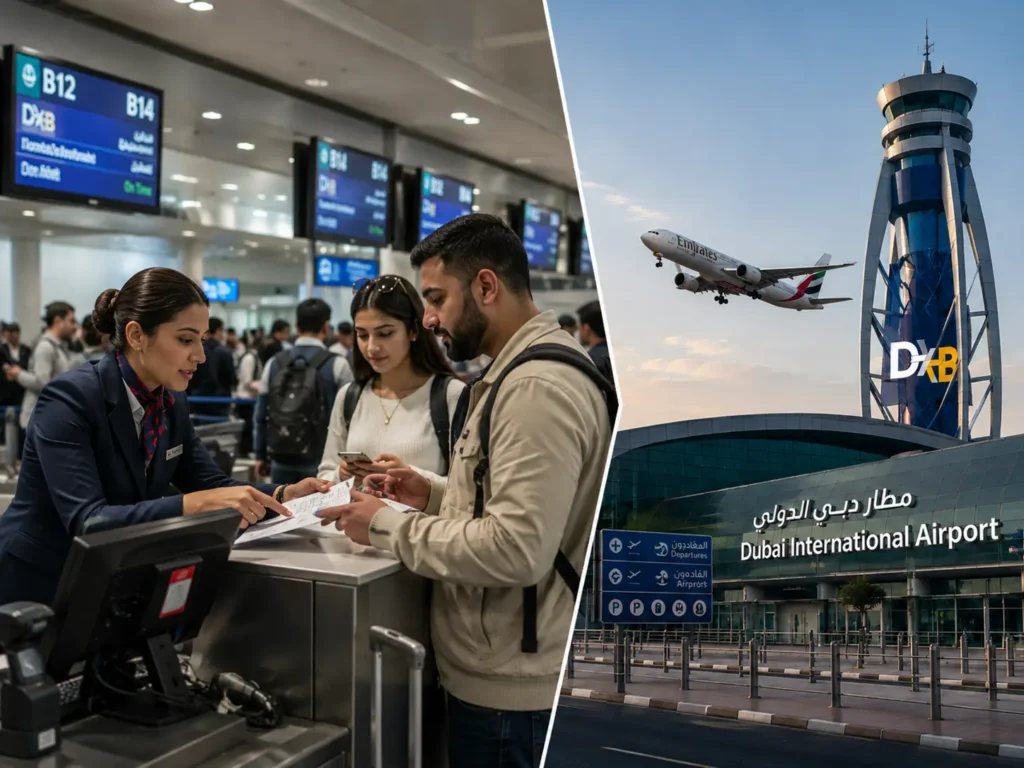
Check your flight status before you leave home. Not the night before. The morning of. Flight timings are changing at short notice, and the gap between “confirmed” and “cancelled” has been unusually narrow during this period.
Sign up for your airline’s real-time notifications if you haven’t already. Most carriers have SMS alerts, app notifications, and email updates that will catch a schedule change faster than you will by checking manually. Turn them on and keep your phone nearby.
Give yourself extra time at the airport. Security procedures and check-in queues can stretch longer during periods of disruption, and you don’t want a delayed check-in to compound an already uncertain travel day.
If you have a connecting flight through Dubai, look carefully at your transit time. Tighter connections that would normally be fine are riskier right now. If your layover is under two hours and your inbound route has been affected by recent disruptions, it’s worth calling your airline to discuss alternatives before you depart.
Your Rights If a Flight Gets Cancelled
The good news here is that Dubai’s aviation authorities have actually tightened passenger protection rules recently, which means you have clearer entitlements than you might have had in a previous disruption.
If your flight is cancelled, you are generally entitled to a full refund or an alternative booking, depending on your preference and the airline’s policy. Most major carriers operating through Dubai have introduced flexible rebooking options for affected passengers — check your airline’s website directly for what applies to your specific ticket.
Keep your booking confirmation, any communications from the airline, and receipts for any additional costs you incur because of a cancellation. If you need to claim compensation or reimbursement, that paper trail matters.
Travel insurance is worth a specific mention here. Standard travel insurance doesn’t always cover disruptions caused by geopolitical events or regional conflict. If you’re buying insurance for an upcoming trip and regional stability is a concern, read the policy carefully and check whether it covers what you actually need.
The Strait of Hormuz Factor
One element that doesn’t get talked about enough in the passenger-focused coverage is what’s been happening with fuel.
The conflict near the Strait of Hormuz has driven up aviation fuel costs and created operational headaches for airlines that weren’t anticipated at the start of the year. This isn’t just a UAE problem — it’s pushed up costs globally and given airlines additional financial incentive to reduce services on routes they see as lower priority.
For passengers, the practical effect is that route suspensions aren’t always about direct safety concerns. Sometimes they’re about an airline deciding that operating a particular service isn’t viable right now when fuel is more expensive and load factors are uncertain. That distinction doesn’t change much from a practical standpoint, but it does explain why some of the suspensions have come from carriers with no obvious safety reason to stop flying.
Also Read: Dubai’s Al Mamzar Beach Reopens After Massive Dh500 Million Facelift
Is It Safe to Travel Through Dubai?
Dubai International Airport is one of the most professionally managed aviation hubs in the world. The airport itself is not a conflict zone, and UAE authorities have been clear that safety remains the top priority throughout the disruption period.
The precautionary measures — airspace restrictions, monitoring systems, coordinated responses with aviation authorities — were all put in place specifically to manage risk carefully. The fact that those restrictions are now being lifted reflects an official assessment that the immediate threat level has reduced.
That said, the region remains unsettled, and the situation can change. Checking your country’s official travel advisory before you go is always sensible during a period like this — not because Dubai is necessarily unsafe, but because being informed is always better than being surprised.
What the Recovery Looks Like From Here
Dubai Airports has been open about the fact that recovery is underway but not complete. Passenger numbers through the airport remained significant even during the worst of the disruptions — a sign of just how central Dubai is to global aviation — but the peak performance levels seen in 2025 haven’t returned yet.
Airlines are restoring routes on a rolling basis as confidence improves. Authorities are working with carriers to rebuild connectivity and encourage bookings. The infrastructure is all there — the runways, the terminals, the ground operations, the connectivity. None of that has gone anywhere.
The realistic timeline for a full return to normal is probably measured in months rather than weeks. But the direction of travel — no pun intended — is clearly toward recovery.