

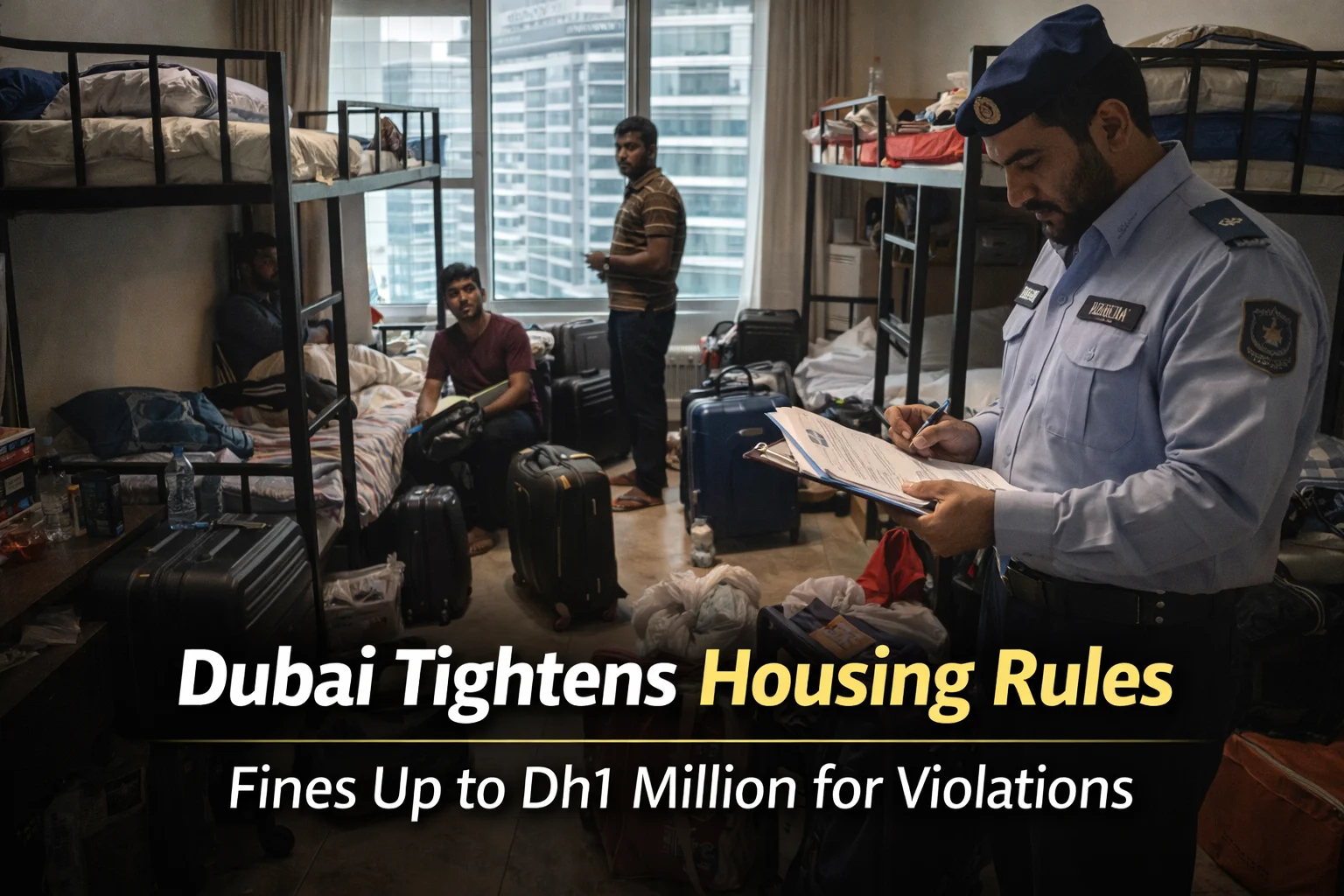
Dubai authorities have introduced new housing regulations aimed at controlling shared apartment arrangements across the city. The move targets illegal subletting, overcrowding, and unsafe living conditions that have become common in some residential buildings.
The new regulation establishes clear rules for landlords, tenants, and companies managing shared housing. Officials say the goal is to improve safety standards and maintain the quality of residential living in Dubai.
Table of Contents
Fines for Violations Could Reach Dh1 Million
Under the new housing law, violations can result in heavy financial penalties. Authorities may impose fines ranging from Dh500 to Dh500,000 depending on the seriousness of the violation.
If the same violation is repeated within one year, the penalties can double and reach a maximum of Dh1 million. This strict enforcement is designed to discourage illegal housing practices in the city.
Why Dubai Is Cracking Down on Shared Apartments
Shared apartments and “bed-space” rentals have become increasingly common in Dubai, especially among expatriate workers looking for affordable housing. However, many of these arrangements operate without official approval or safety checks.
Authorities say such setups can lead to overcrowded living conditions and building safety risks. In some cases, apartments are divided into multiple small partitions to accommodate several tenants in one unit.
The new rules aim to regulate this growing housing trend while ensuring that residents live in safe and healthy environments.
Permit Required for Shared Housing Units
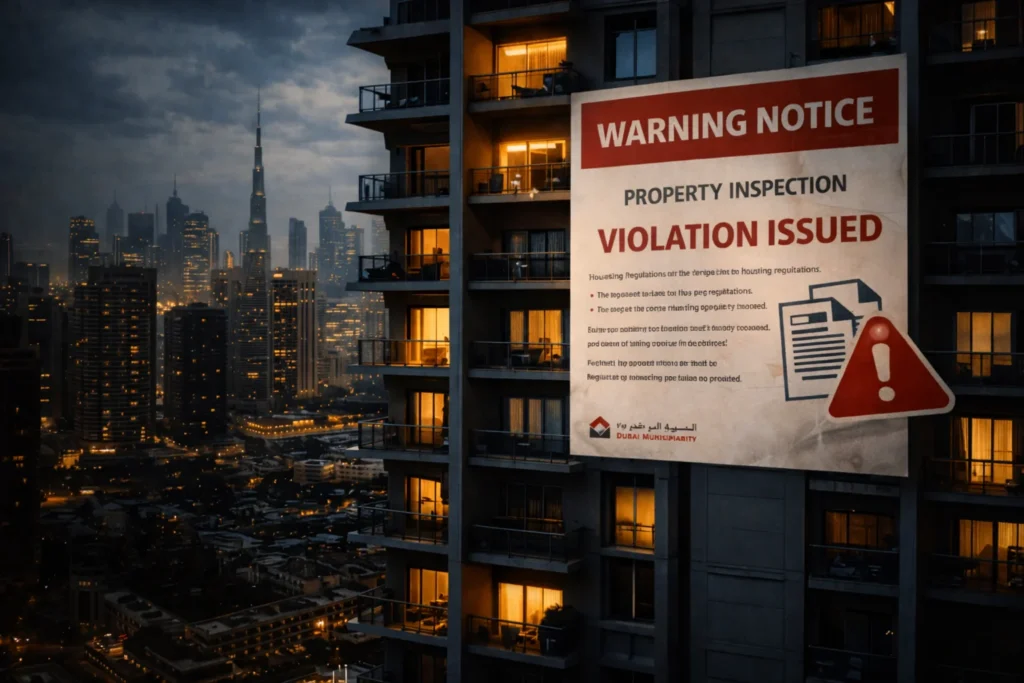
The law clearly states that no property can be used as shared housing without obtaining an official permit. Landlords or companies must receive approval from the relevant authorities before renting units as shared accommodation.
Dubai Municipality will oversee the permit process and monitor compliance across the city. Authorities will also maintain records of approved shared housing units through a digital registry.
Permits are typically valid for one year, although property owners can apply for renewal or longer approval periods depending on the circumstances.
Strict Occupancy and Safety Standards
The regulation introduces specific requirements regarding the number of people allowed to live in shared housing units. Authorities will set maximum occupancy limits and minimum space requirements for each resident.
Buildings used for shared accommodation must also meet health and safety standards. These include proper ventilation, sanitation facilities, fire safety measures, and secure electrical systems.
By enforcing these standards, officials aim to reduce risks associated with overcrowded apartments and illegal room partitions.
Rules for Landlords, Tenants, and Property Companies
The new housing regulation applies to multiple groups involved in the rental market. Property owners who designate units for shared housing must follow permit rules and safety standards.
Companies licensed to manage properties or lease apartments on behalf of owners are also covered by the law. They must ensure that shared housing units comply with legal requirements before renting them out.
The regulation also affects tenants living in shared accommodation. Residents must ensure their housing arrangements are officially approved to avoid penalties or eviction.
Subleasing Rooms Is Not Allowed
One of the most important provisions of the new law is the ban on subleasing by tenants. Individuals renting an apartment are not allowed to sublet rooms or create bed-space arrangements for other residents.
Only property owners or authorized companies are permitted to lease shared housing units. This rule is designed to prevent informal rental arrangements that often lead to overcrowded apartments.
Authorities believe this measure will bring more transparency to Dubai’s rental market and ensure proper regulation of shared housing.
Also Read: Drone Attack Sparks Fire at Dubai Airport: Flights Suspended Amid Middle East Conflict
Additional Penalties Beyond Fines
The law allows authorities to take further action beyond financial penalties in serious cases. Businesses or property owners who repeatedly violate the regulations may face suspension of their activities.
Authorities can also cancel permits, revoke commercial licenses, or disconnect public services until violations are corrected. In some situations, residents may be evicted from housing units that fail to meet legal standards.
These strict measures highlight the government’s commitment to enforcing housing rules and maintaining order in residential areas.
One-Year Compliance Period for Existing Units
Property owners and companies that currently operate shared housing units will be given time to comply with the new regulation. Authorities have provided one year for these properties to meet the required standards.
During this time, owners must obtain the necessary permits and adjust occupancy levels if required. They may also need to upgrade facilities to meet safety and building standards.
The transition period allows the housing sector to adapt gradually while ensuring that the new rules are implemented effectively across Dubai’s residential market.