

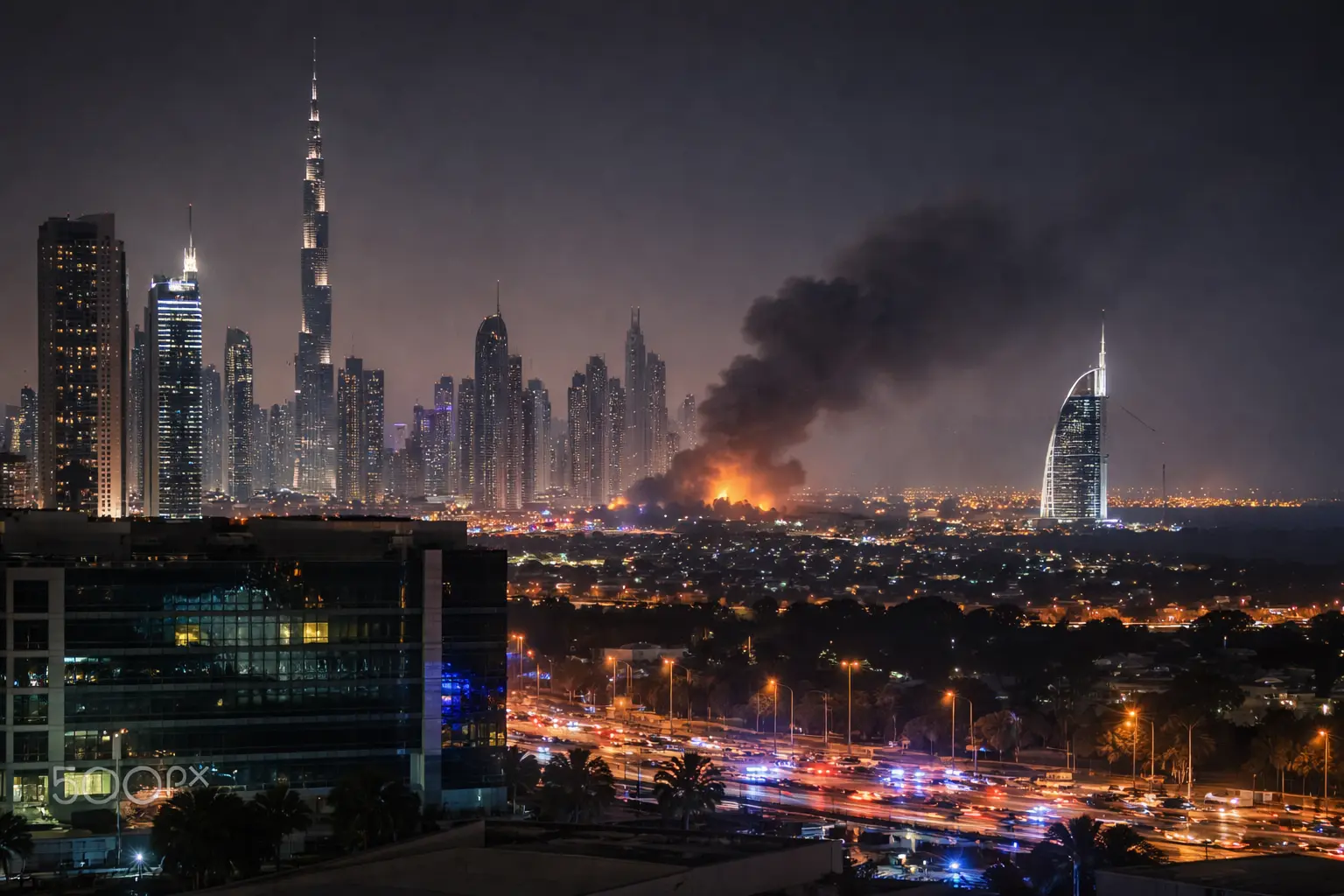
Iran launched retaliatory missile and drone strikes on February 28, 2026, targeting locations in the UAE and other Gulf countries. The attack followed joint US-Israeli military action against Iran. UAE air defense systems intercepted most incoming projectiles, limiting large-scale destruction.
Dubai and Abu Dhabi experienced the main impact from falling debris and intercepted missiles. Authorities acted quickly to secure affected areas and assess damage. Airspace was temporarily closed as a precaution, leading to short-term flight disruptions.
Overview of the February 28 Strikes
The strikes were aimed primarily at US-linked military and strategic sites in the region. Al Dhafra Air Base near Abu Dhabi was reported as one of the intended targets. However, spillover from interceptions affected civilian areas in both Dubai and Abu Dhabi.
Explosions were heard across parts of Dubai, including areas near Sheikh Zayed Road and Palm Jumeirah. Residents reported loud blasts and visible smoke in the skyline. Emergency teams were deployed immediately to contain fires and ensure public safety.
Areas Affected in Dubai
Dubai saw limited structural damage, mostly caused by falling debris from intercepted missiles and drones. Several prominent landmarks were affected but did not suffer major destruction. Authorities confirmed that the situation was brought under control quickly.
Below is a summary of reported damage in Dubai.
| Location | Type of Impact | Casualties | Status |
|---|---|---|---|
| Dubai International Airport | Minor structural damage | 4 staff injured (minor) | Operations resumed after temporary closure |
| Burj Al Arab | Small fire from drone debris | No injuries | The fire was controlled quickly |
| Palm Jumeirah | Fire and blast damage at building | 4 injured | Damage contained |
| Fairmont The Palm | Exterior damage and fire | No confirmed deaths | Fire extinguished |
| Sheikh Zayed Road area | Blasts reported nearby | No confirmed fatalities | Area secured |
Dubai International Airport reported minor structural damage after debris fell within its perimeter. Four airport staff members sustained minor injuries and were treated promptly. Flights were suspended briefly but resumed once safety checks were completed.
The Burj Al Arab experienced a small fire on its outer facade due to falling drone debris. Fire crews responded quickly, and no injuries were reported at the hotel. The iconic landmark remained structurally safe.
On Palm Jumeirah, debris caused a fire at a residential building and impacted the Fairmont The Palm hotel. Emergency services extinguished the flames, and the situation was stabilized within hours.
Areas Affected in Abu Dhabi
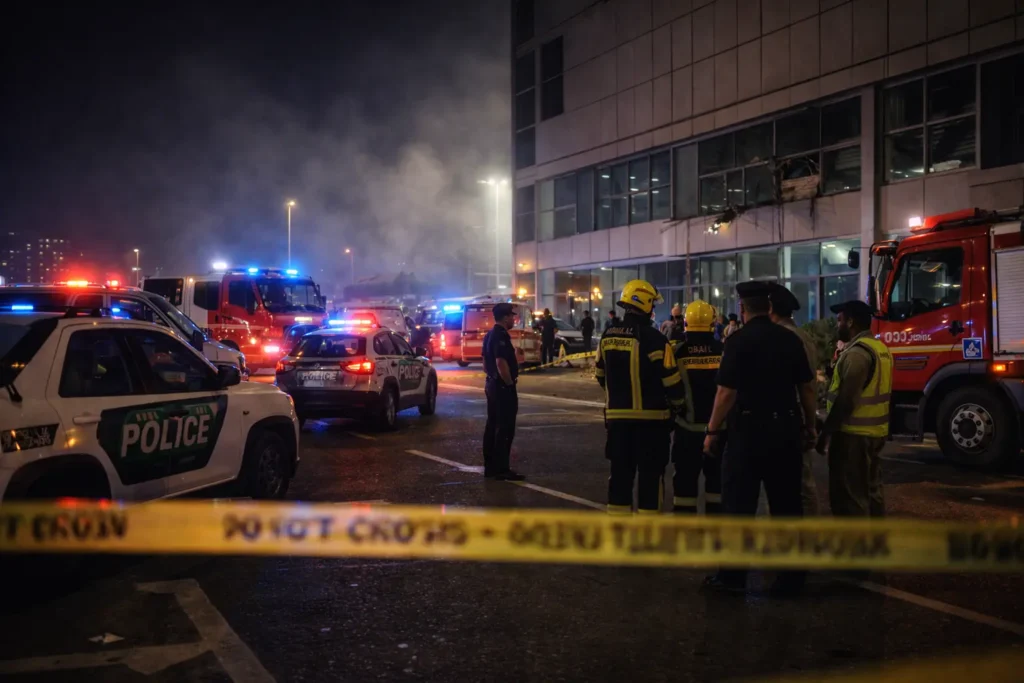
Abu Dhabi also experienced damage primarily from falling debris. One civilian was killed due to falling shrapnel in a residential area. Several other individuals sustained injuries.
Below is a breakdown of key reported incidents in Abu Dhabi.
| Location | Type of Impact | Casualties | Status |
|---|---|---|---|
| Zayed International Airport | Debris-related incident | 1 fatality, 7 injured | Flights suspended temporarily |
| Al Dhafra Air Base | Targeted military site | Not publicly disclosed | Under security control |
| Residential Areas | Falling shrapnel damage | Property damage reported | Repairs ongoing |
Zayed International Airport temporarily halted operations following debris impact. Emergency response teams cleared the site, and authorities confirmed that flight services resumed after safety inspections.
Residential areas near military installations also reported minor structural damage from falling debris. Authorities emphasized that most missiles were intercepted before reaching intended targets.
UAE Air Defense Response
The UAE’s air defense systems intercepted the majority of missiles and drones launched during the attack. Officials stated that rapid interception helped prevent widespread destruction across major cities. The defense systems played a crucial role in limiting civilian casualties.
Authorities described the incident as a “dangerous escalation” in regional tensions. The government reserved the right to respond while emphasizing the importance of stability and security in the Gulf region.
Regional Impact Beyond the UAE
The strikes were not limited to the UAE. Bahrain, Qatar, and Kuwait also reported attempted missile attacks. Most projectiles in those countries were intercepted before causing serious damage.
Airspace closures were reported in multiple Gulf nations as a safety measure. These closures were temporary and lifted once threats were neutralized.
Also Read: Sharjah Approves 400 Iftar Distribution Sites Across the Emirate for Ramadan
Temporary Airspace Closures and Travel Disruptions
Both Dubai and Abu Dhabi temporarily closed their airspace following the attacks. Major airlines delayed or rerouted flights as authorities conducted inspections. Passengers experienced short-term travel disruptions.
Airports reopened after confirming that runways and terminals were secure. Airlines gradually resumed normal operations, and flight schedules were restored within hours.
Emergency Services and Public Safety Measures
Emergency teams across Dubai and Abu Dhabi responded quickly to reported fires and debris impacts. Fire brigades, police, and medical services coordinated efforts to manage the situation. Public advisories were issued urging residents to remain indoors until areas were cleared.
Authorities also evacuated certain buildings, including precautionary evacuations near high-rise landmarks. These steps were taken to ensure public safety during the period of uncertainty.
Current Situation as of March 1, 2026
As of March 1, the situation in Dubai and Abu Dhabi is reported to be stable. No new incidents have been recorded since the initial retaliatory strikes. Repairs are underway in affected areas.
Airspace has reopened fully, and daily life has resumed in most parts of the UAE. Officials continue to monitor regional developments while maintaining heightened security measures.