

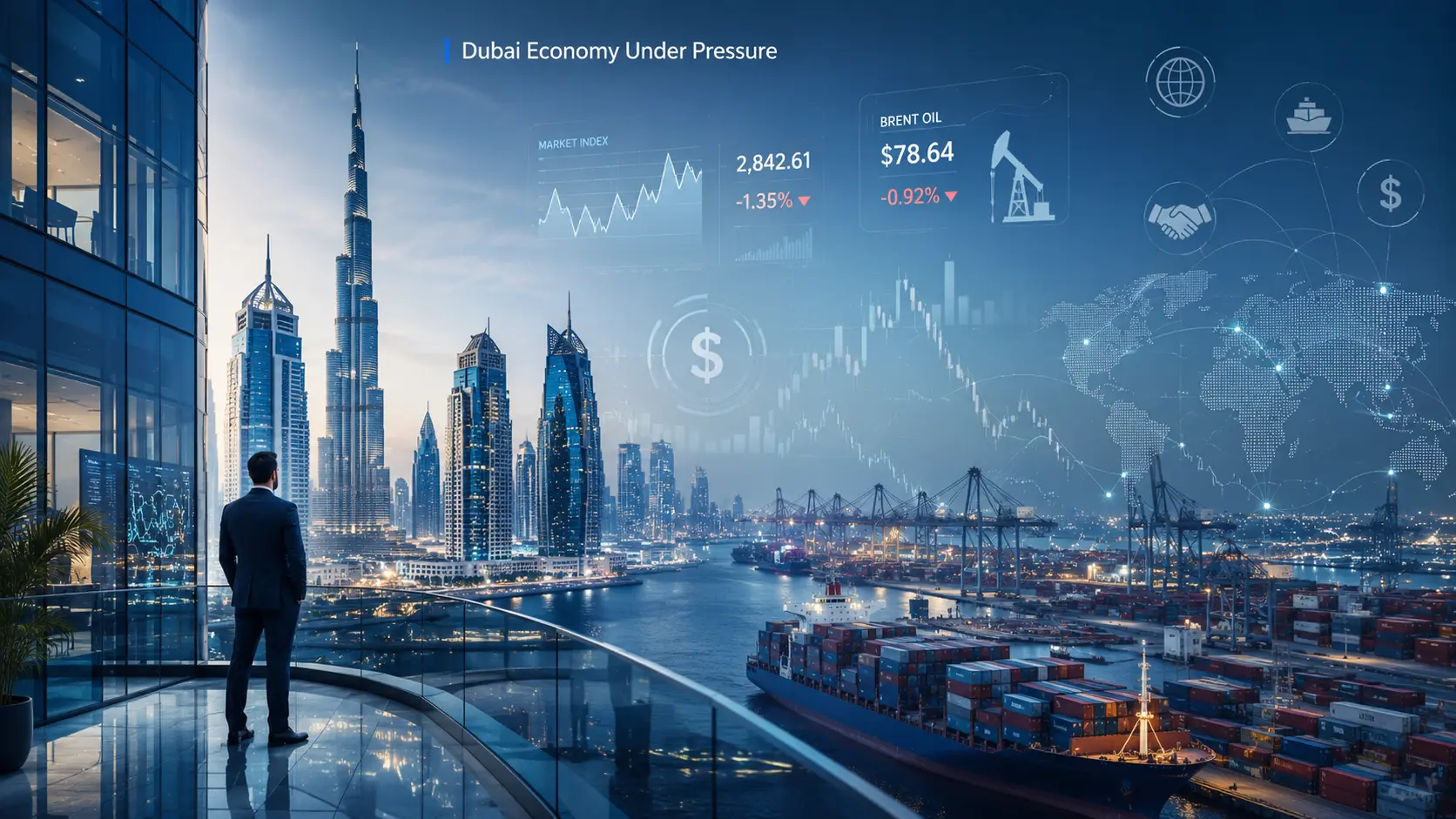
Dubai spent decades building a reputation as the safe, stable, business-friendly corner of a complicated region. That reputation has been one of its most valuable economic assets — attracting investors, expatriates, multinationals, and tourists who wanted access to the Middle East without the instability that comes with it.
The US-Iran conflict is now testing that reputation in ways that feel meaningfully different from previous challenges. The US-Iran conflict is creating genuine economic pressure on Dubai through flight disruptions, softening property demand, trade route uncertainty, and cautious investor sentiment.
Why the US-Iran Conflict Matters to Dubai
This isn’t primarily a military story for Dubai — it’s an economic one. The Gulf sits at the center of global energy supplies, international shipping routes, and regional commerce. When that environment becomes unpredictable, businesses operating across the region feel it directly.
The Strait of Hormuz is the specific pressure point. A significant share of the world’s oil exports pass through it, and uncertainty around maritime security raises shipping costs and insurance premiums for everyone moving goods through the Gulf. Dubai’s economy — built on logistics, aviation, tourism, finance, and real estate rather than oil revenues — is particularly sensitive to disruptions in those flows.
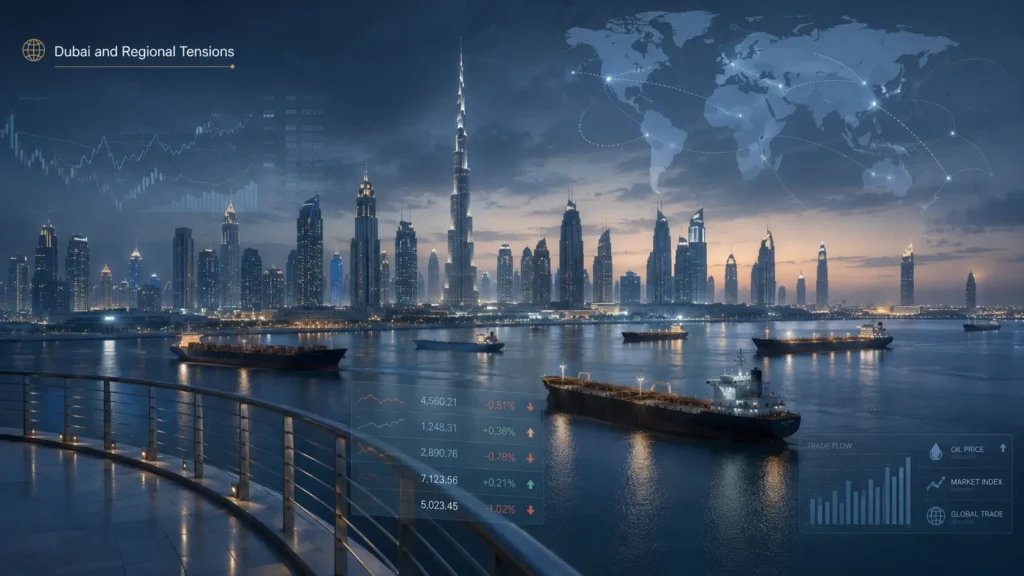
Real Estate Faces New Questions
Property has been one of Dubai’s most consistent growth stories, drawing international buyers on the expectation of long-term demand and capital appreciation. That logic depends on continued confidence in the region’s stability.
The honest picture right now is that some investors and businesses are pausing. Expansion plans are being reconsidered. Expatriate workers who might have been weighing a move to Dubai are waiting to see how the situation develops. None of this has triggered a market collapse, but it’s creating a level of hesitation that wasn’t present twelve months ago.
Dubai’s property sector has recovered from financial crises and a pandemic. But geopolitical instability has a different quality — it directly affects the foundational perception of regional safety that drives demand in the first place.
Tourism and Hospitality Under Pressure
Millions of people visit Dubai every year. The city’s appeal — luxury hotels, world-class shopping, major events — remains real. But travel decisions are sensitive to regional security perceptions even when the specific destination is safe.
Flight disruptions and airspace restrictions earlier in the conflict period directly affected arrival numbers. Major conferences and exhibitions, often planned years in advance, are weighing whether Dubai is the right choice during an extended period of regional uncertainty. Even temporary disruptions to that pipeline have meaningful economic consequences for the hospitality sector.
Trade and Logistics Challenges
Dubai’s ports, free zones, and transport infrastructure make it one of the world’s most important commercial hubs. That status depends on shipping routes being reliable and predictable.
The conflict has renewed concerns about maritime security in the Gulf and pushed up costs for companies moving goods through the region. When businesses have to factor in elevated risk premiums and potential disruptions, some begin evaluating whether to diversify operations or consider alternative locations. That’s a slow process, but the conversation is happening.
Financial Markets React to Regional Developments
Gulf markets have been visibly reactive to conflict developments — retreating on escalation news, recovering on diplomatic signals. The volatility itself creates its own uncertainty for investors trying to make long-term decisions.
Also Read: Dubai Gold Price Falls as Middle East Tensions Flare Up Again
Dubai’s Long-Term Strengths Remain Intact
None of this changes the structural advantages Dubai has built — world-class infrastructure, business-friendly regulation, tax policy, geographic position, and a deep pool of international talent. These are real and durable.
A Critical Test for Dubai’s Economic Model
The current period is genuinely difficult, and acknowledging that honestly is more useful than dismissing it. Dubai has navigated serious challenges before and emerged stronger. Whether it does so again depends partly on how quickly regional stability returns — and partly on how confidently Dubai continues demonstrating that its fundamentals remain worth betting on.