

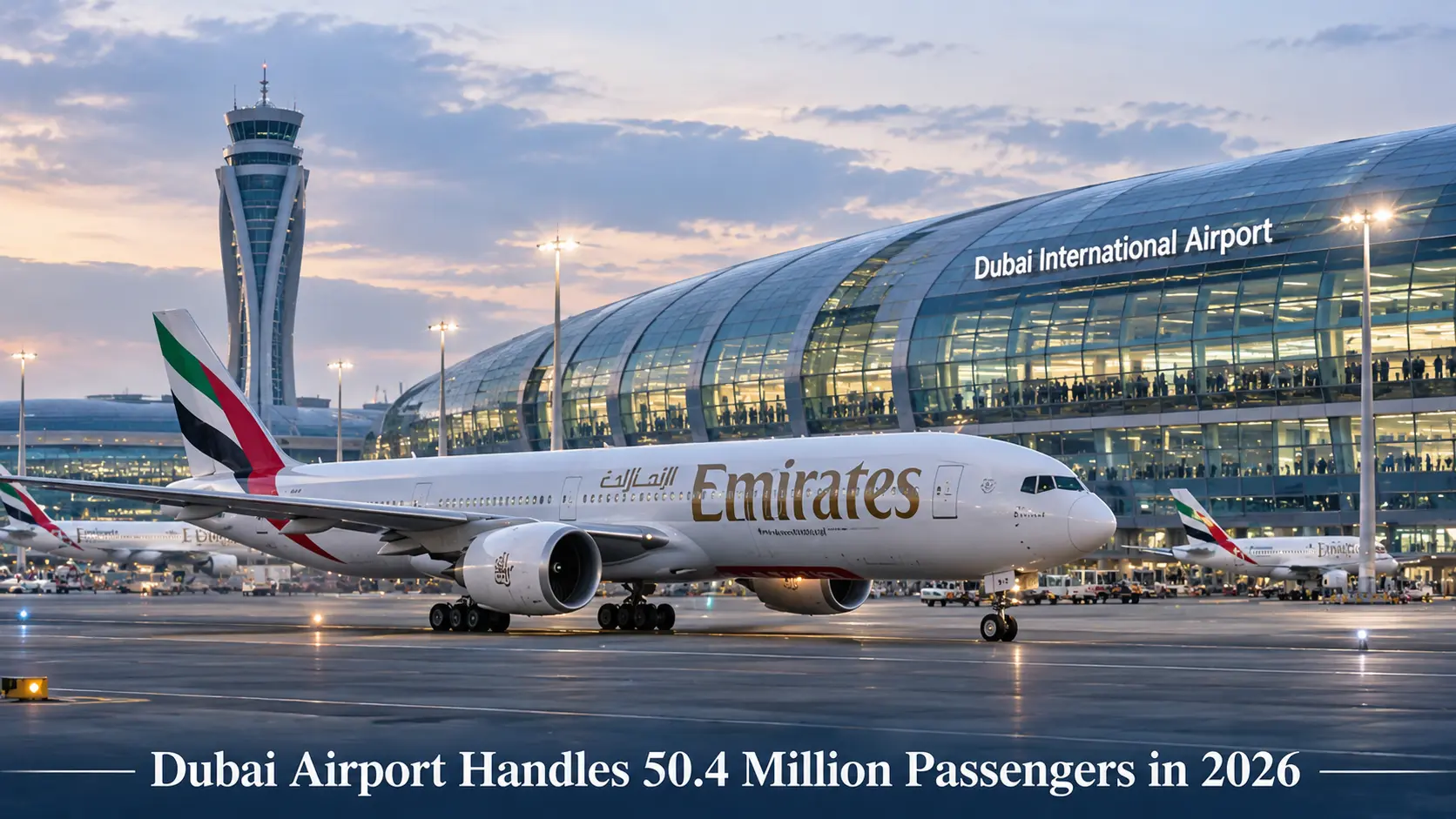
Dubai International Airport has had a hard year, but the latest numbers show it is getting back on its feet. The airport handled 50.4 million passengers in the first nine months of 2026, and India is still its biggest country market. Regional disruption has weighed on air travel, yet the monthly figures tell a story of slow and steady recovery.
A Tough Year With Signs of Recovery
Let us start with the hard part. Between January and September, traffic was 28.1 per cent lower than in the same period of 2025. The third quarter was also down 22.1 percent compared with last year.
Still, the path since spring has been upward. The airport handled 3.5 million passengers in April, 4.5 million in May and 5 million in June. The second quarter closed at 13 million, taking the first half total to 31.5 million. The third quarter then brought in 18.8 million passengers, and August was the busiest month of all at 6.6 million.
Paul Griffiths, chief executive of Dubai Airports, said he expects the airport to welcome more than 70 million guests this year. He added that as more airlines return and the network grows, the focus is on handling future growth while making journeys simpler.
India Stays on Top
Indian travellers remain the airport’s biggest group. India accounted for 2.6 million passengers in the third quarter. Saudi Arabia came next with 1.4 million, followed by the UK with 1.3 million. Pakistan had 800,000 passengers, the US 640,000, and Germany 480,000.
The city list shows a similar story. London was the busiest destination with 784,000 passengers. Mumbai followed with 528,000, just ahead of New Delhi at 525,000. Riyadh had 500,000, and Jeddah had 490,000.
Many of these Indian travellers also come for events, shopping, and family visits. Music fans, for example, are heading in for shows like this one: Sid Sriram is coming to Dubai with one voice, four languages and a night you will not forget.
More Airlines Are Coming Back
The airport now connects Dubai to 235 destinations in 101 countries through 57 airlines. British Airways resumed flights earlier this month. It joins other returning carriers such as Royal Air Maroc, SunExpress and Cebu Pacific.
In September, 49 percent of passengers were travelling directly to or from Dubai, while 51 percent were connecting through the airport. That mix shows how important Dubai still is as a stopover point for people travelling between continents.
Using Technology to Move Faster
Dubai Airports is leaning on technology to manage crowds. It is using artificial intelligence, predictive analytics, and connected systems to track passenger movement and spot possible crowding before it becomes a problem. Data and video feeds from different systems are being brought together so staff can watch passenger flow, airport spaces, and aircraft activity at the same time.
Self-service options and biometric checks are also growing, which should reduce manual steps and speed up immigration and other formalities.
Griffiths explained that the aim is to get more out of what the airport already has. In his words, every process that is simplified and every bottleneck that is removed helps the airport use its facilities better. The idea is to add capacity without making the airport bigger.
A Big Milestone and a Bigger Future
This year, Dubai International also passed a total of 1.5 billion passengers since it opened in 1960. That is a huge number for an airport that started small.
Looking ahead, Dubai is preparing Al Maktoum International Airport to become its main aviation hub. Griffiths said the first major phase should open at the start of the next decade, with room for 150 million passengers each year. The long-term plan is for a capacity of 260 million.
The move from Dubai International will happen slowly, as new buildings and facilities become ready. Flydubai could be among the first to expand there, and it may shift five or six aircraft from the current airport starting next year.
What This Means for Travellers
If you plan to fly soon, the numbers bring good news. More airlines mean more choice, and better technology should mean shorter waits. Still, it is smart to arrive early during busy periods, check your airline’s updates, and keep your documents ready.
A long break is coming up too. The Eid Al Etihad holiday is close, and many people will travel. You can read a fun story linked to the occasion here: how one pilot turned a morning flight into a tribute to the UAE’s 55th year.
If your plans include the capital, you may enjoy some new dining spots too. Take a look at Abu Dhabi’s food scene, with 5 new restaurants to try this November.
The Big Picture
Dubai International is not back to where it was last year, and the numbers are still lower. But the climb from April to August, the return of more airlines, and the push for smarter systems all point in a good direction. With a new mega airport on the horizon, Dubai clearly plans to stay one of the busiest travel hubs in the world.