

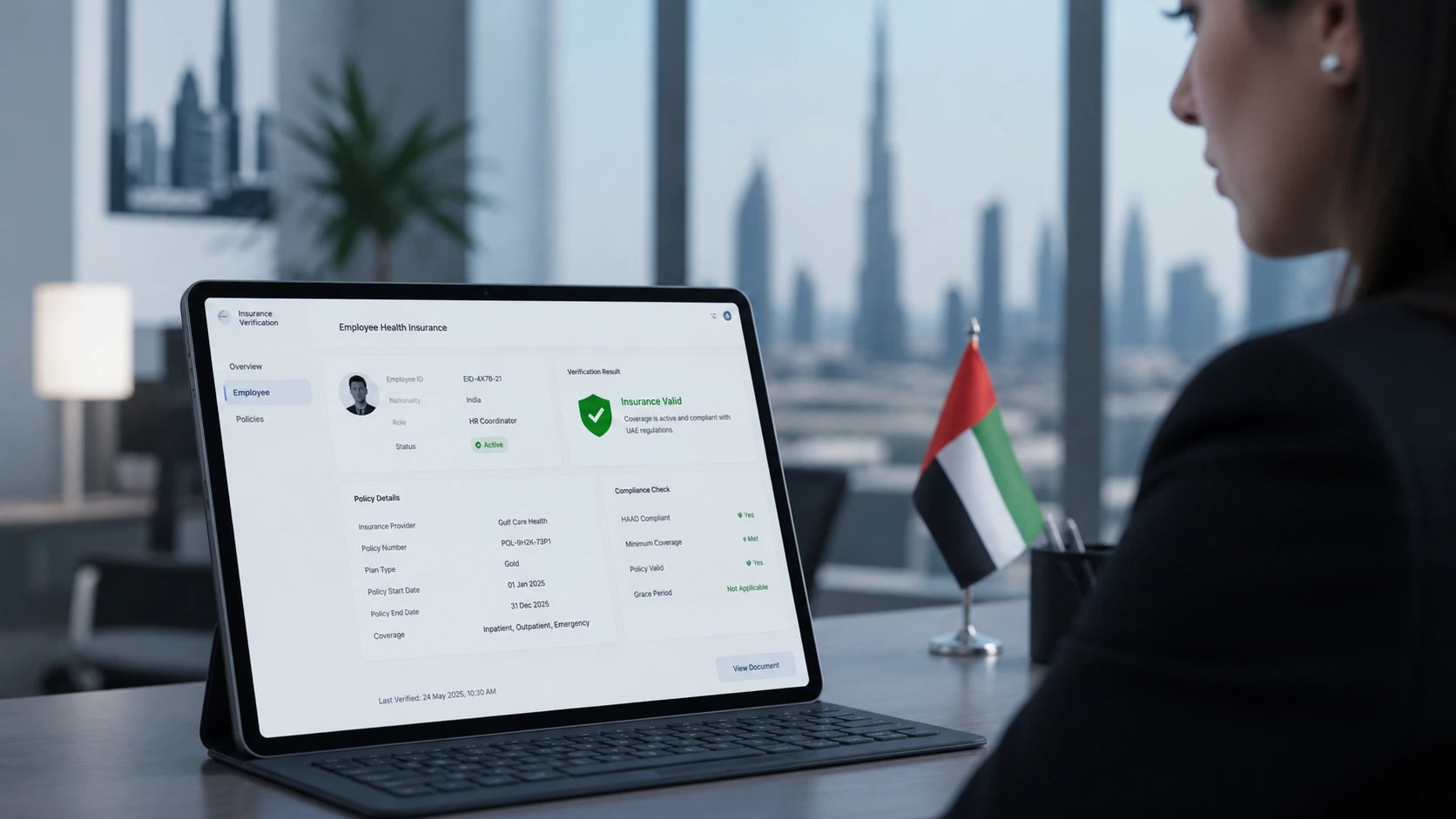
The UAE Ministry of Human Resources and Emiratisation (MoHRE) has flagged six health insurance violations that private-sector employers and domestic worker employers need to steer clear of. These rules exist to make sure workers have proper medical coverage for the entire validity of their work permits.
Health insurance is now closely tied to the work permit process, which makes staying compliant a genuinely important responsibility for employers. Companies that fall short of the requirements could face administrative fines and other measures, including issues with work permit applications or renewals.
The ministry has also made clear that workers should never be made to pay for the cost of subscribing to or renewing their required health insurance policy.
Six health insurance violations employers must avoid
The first violation is failing to enrol a worker in a health insurance policy, or failing to renew that policy when it is due. Employers need to make sure eligible employees have valid coverage in place, rather than letting a policy lapse during employment.
The second violation involves refusing to cover healthcare services or emergency medical treatment for an insured worker when the policy calls for that coverage. Employers need to stick to the terms of the approved insurance arrangement and cannot just refuse required medical support.
A third violation happens when an employer asks a worker to pay all or part of the cost of subscribing to or renewing the required health insurance policy. Under the rules, this cost should not fall on the employee, though applicable medical co-payments under the insurance policy can still apply.

Providing an inadequate insurance policy is also a violation
The fourth violation is providing a health insurance policy that does not meet MoHRE’s basic coverage requirements. Employers need to make sure whatever policy they provide meets the minimum standards the ministry has set.
A policy can technically exist on paper and still fall short of the rules if its coverage is not sufficient. It is worth checking policy requirements carefully when arranging coverage for workers.
The fifth violation is cancelling a worker’s insurance policy while their work permit is still valid, in a way that breaks the continuity of their coverage. Employers cannot cancel coverage simply because a worker is still employed under a valid permit.
The sixth violation is failing to keep health insurance coverage continuous throughout the validity of the worker’s permit. That makes continuity a genuinely important part of employer compliance, rather than treating insurance as a one-and-done requirement.
Health insurance must remain valid with the work permit
MoHRE has laid out several conditions a policy needs to meet before it counts as compliant for work permit issuance or renewal. The insurance needs to meet the ministry’s basic coverage requirements and be valid at the point the permit is issued or renewed.
Coverage also needs to run for the full two-year validity period of the work permit, as well as for the minimum period required under the basic insurance policy. This is meant to prevent any gaps in medical protection for workers.
Another important condition is that the worker should never be the one paying the insurance subscription or renewal cost. That said, this does not remove any applicable co-payment that might be required for medical services under the terms of the insurance policy.
What penalties can employers face?
MoHRE says administrative fines can be handed down to establishments that fail to comply with the specified health insurance requirements. These fines link back to Cabinet Resolution No. 21 of 2020 concerning ministry service fees and fines, as amended.
The ministry can also take further legal or administrative action where needed, which, depending on the circumstances, may include suspending, rejecting, or refusing to renew work permits.
For employers, that means health insurance compliance is not just an employee benefit issue on the side. It can directly affect workforce administration and a company’s ability to complete important employment-related procedures.
Health insurance is linked electronically to work permits
The UAE has also shifted toward a more digital approach for checking worker insurance. Under Ministerial Resolution No. 504 of 2026, health insurance enrolment procedures are now electronically linked with work permit issuance and renewal services.
That lets the system check electronically whether a worker actually has a valid health insurance policy. Employers no longer need to rely on submitting the insurance policy separately as part of the verification process.
This digital system is designed to cut down on paperwork, simplify procedures, and speed up work permit-related services, while also giving authorities a more direct way to check whether required coverage is actually in place.
UAE health insurance system launched in 2025
MoHRE, working alongside the Insurance Pool, launched the health insurance system for workers on January 1, 2025. This system introduced an insurance product built to provide coverage at a competitive cost for eligible workers.
According to the ministry, the product carries an annual premium of no more than Dh320 for workers up to the age of 64. It covers private-sector employees and domestic workers, along with their families, and comes with a range of healthcare benefits and services.
This system fits into the UAE’s broader push to improve worker protection and make health coverage more accessible. It also supports employers by giving them a structured insurance framework tied directly to employment procedures.
MoHRE seeks feedback on worker health insurance
MoHRE is currently running a public consultation to gather feedback from both employers and workers on health insurance. The consultation is meant to understand the needs of different groups and check whether proposed benefits and coverage actually work for them.
The online survey stays open until September 1, 2026. Feedback collected will feed into the ministry’s ongoing work developing the health insurance system and meeting the needs of both employers and employees.
The survey asks participants about priorities like insurance cost, coverage and benefits, healthcare provider networks, and how fast approvals move. Employers are also asked to identify themselves by workforce size, ranging from fewer than 10 workers to 100 or more.
Also Read: Dubai Customs Cuts Airport Clearance From 45 Minutes to Under 5 Minutes
Survey looks at different types of workers
The consultation also asks about which categories of employees should be covered, including senior management, office and administrative employees, field workers, and domestic workers. Participants can also suggest additional categories they think should be included.
Another part of the survey looks at whether businesses need health insurance coverage across multiple locations within the UAE. Employers can indicate whether this applies to them, does not apply, or whether they are unsure.
The ministry is also asking participants about the main challenges they run into with worker health insurance policies. These responses could help shape future improvements to the system and make coverage more practical for different types of businesses.
Health insurance supports worker protection
The UAE treats worker health insurance as an important part of job stability and business continuity. Access to healthcare can protect employees while also supporting productivity and helping create a safer working environment overall.
Federal Decree-Law No. 33 of 2021 on the Regulation of Labour Relations requires establishments to comply with public health, safety, and healthcare-related requirements, and its executive regulations also include provisions covering worker safety and protection.
With insurance enrolment now electronically tied to work permit services, employers have a very clear reason to keep policies active and compliant. Maintaining uninterrupted coverage can help companies steer clear of penalties while making sure workers get the healthcare protection they are entitled to under UAE rules.