

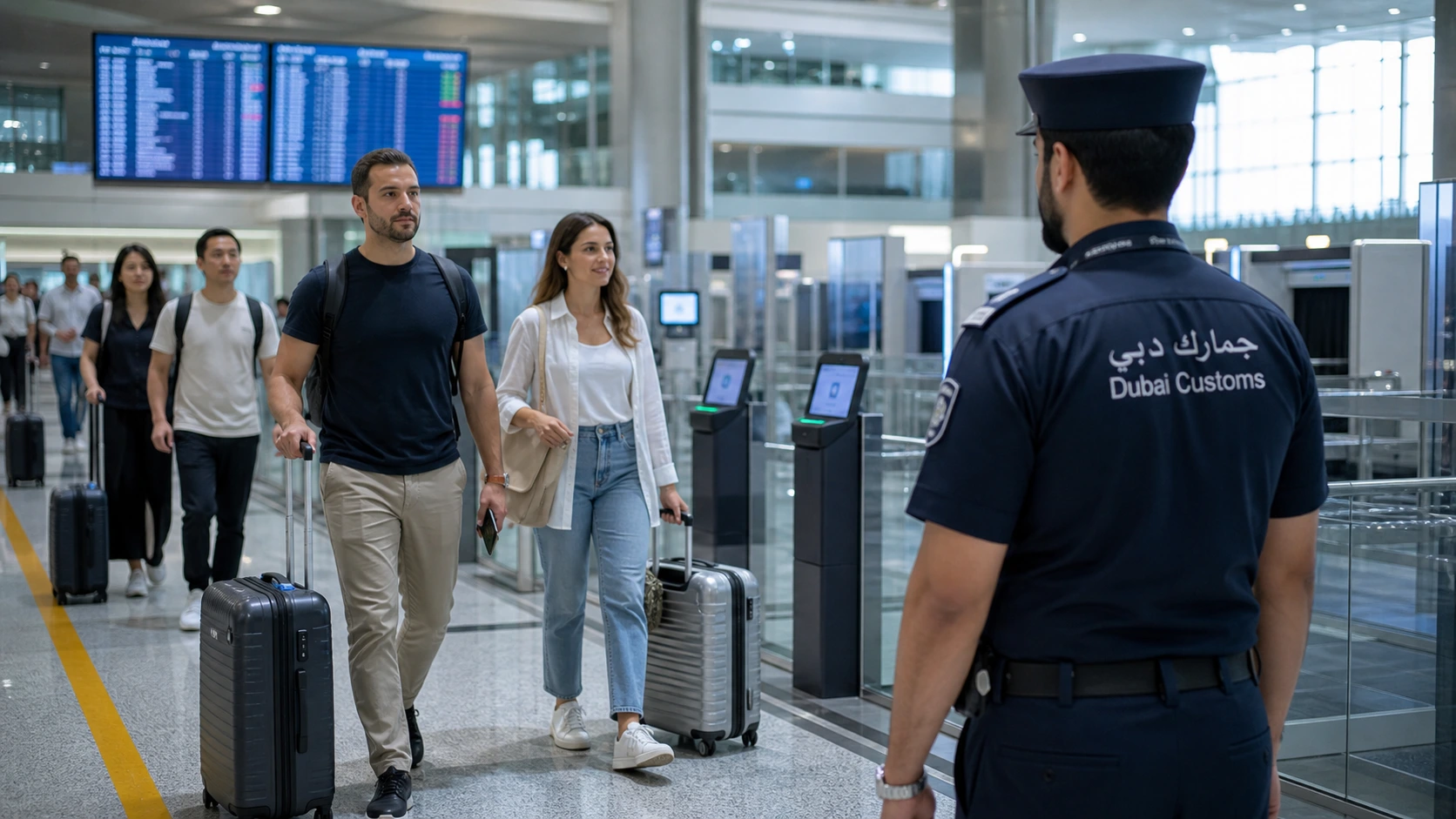
Dubai’s airports are seeing a busy stretch right now, with residents returning to the UAE after the summer break and families getting ready for the new school year. To handle this surge in arriving passengers, Dubai Customs has rolled out a wider operational plan built around faster processing, tighter screening, and smarter use of technology.
The plan includes round-the-clock teams stationed at Dubai’s air entry points, extra staff in busy arrival areas, and flexible deployment based on flight schedules. The whole idea is to keep passenger and baggage movement running smoothly without cutting corners on the security checks required at the border.
For travellers, one of the biggest changes is a stronger push to cut down waiting time. Dubai Customs says its mix of trained officers, screening equipment, and digital services is helping speed up the arrival process without lowering the level of inspection.
Airport customs clearance can now take under five minutes
One of the key digital tools being used during this busy season is Dubai Customs’ smart iDeclare service. Passengers can use it on their smart devices to declare personal belongings and gifts before they even reach the customs area.
This digital declaration process can shrink the time needed for customs procedures through the red channel from around 45 minutes down to under five minutes. That makes a real difference during peak travel periods, when large numbers of passengers land within a short window of each other.
The system also takes pressure off service counters by letting travellers complete part of their declaration before they arrive. That frees up customs teams to focus more attention on cases that genuinely need closer inspection.
Dubai Customs deploys 77 baggage screening machines
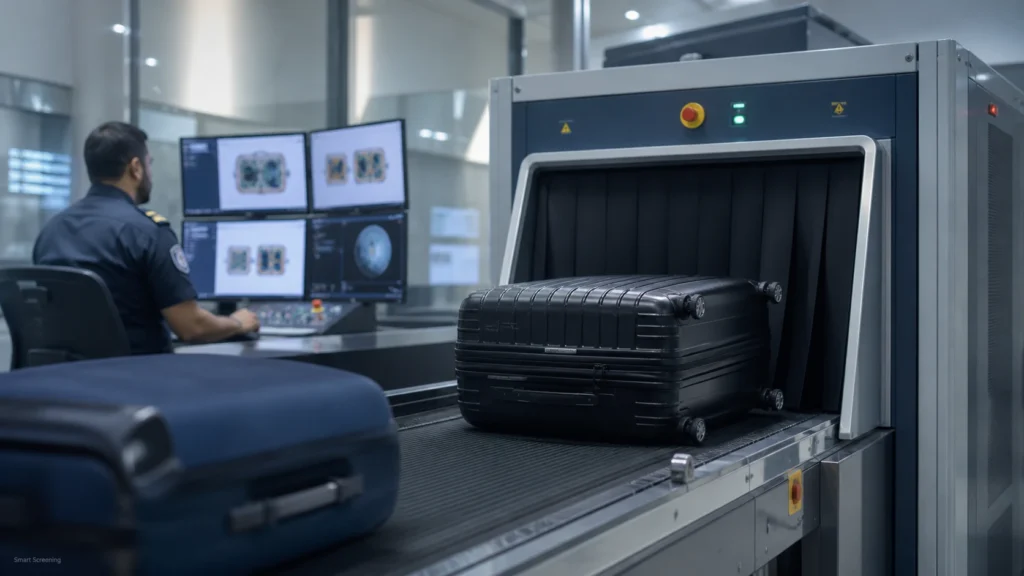
Technology is also playing a big part in baggage checks at Dubai’s air entry points. Dubai Customs currently runs 77 baggage screening machines, including 58 for checked and larger baggage, and another 19 dedicated to carry-on luggage.
These machines help speed up screening while making it easier to flag items that might need a closer look. The technology works alongside customs inspectors, who lean on risk indicators and professional experience to decide when extra checks are needed.
This approach is built to balance two important priorities: moving passengers through the airport quickly, and keeping customs controls genuinely strong. Instead of checking every bag the exact same way, officers can use technology and risk analysis to focus their attention where it actually matters most.
More staff deployed during peak arrival periods
Dubai Customs has also ramped up staffing in arrival halls to prepare for this seasonal spike in passenger numbers. Teams can be shifted between different areas depending on flight schedules, passenger volumes, and how busy individual airport points get.
Busy locations get extra support whenever it is needed, which helps ease the pressure during periods when several flights land close together. The organisation is also working on improving how screening equipment performs, so baggage can move through the process more efficiently.
Khalid Ahmed, Director of Passenger Operations at Dubai Customs, said preparation for this return-season rush starts well in advance. Flight schedules and passenger numbers get studied closely so staff and operational resources can be positioned exactly where they are likely to be needed most.
Digital tools make the arrival process easier
This wider push toward digital services is part of Dubai’s broader effort to make airport procedures more convenient for travellers. The iDeclare service is built to let passengers share information about their belongings and any accompanying gifts before they even reach the customs area.
For passengers who need to go through the red channel, completing declarations ahead of time can save a genuinely meaningful amount of time. It also means customs authorities get information earlier, which supports a much more organised process when airports are handling large passenger volumes.
The focus here is not just about speed either. Dubai Customs says data, technology, and risk analysis are being used to make inspections more targeted, all while continuing to protect the community and maintain border security.
Dubai Customs works with airport partners
Managing a busy travel season like this takes coordination across several organisations. Dubai Customs works closely with Dubai Airports, the General Directorate of Residency and Foreigners Affairs in Dubai, Dubai Police, Emirates, flydubai, and other airport partners.
This kind of cooperation lets different teams respond faster whenever passenger numbers or flight schedules shift. It also helps make sure customs, immigration, security, and airline operations are all working together rather than operating in silos.
This coordinated approach matters a lot during the back-to-Dubai period, when plenty of residents return after summer and families arrive ahead of the new academic year. Dubai Customs is also taking part in the “Back to Dubai” celebration organised by Dubai Airports as part of the welcome for returning residents and families.
Faster processing while maintaining security
Cutting down customs waiting times does not mean skipping important security procedures. Instead, Dubai Customs is leaning on screening machines, inspector expertise, and data-based risk assessment to make checks more focused rather than less thorough.
Customs officers still assess indicators that might call for further inspection, while technology helps process a large volume of baggage far more efficiently. This combination lets the airport handle more passengers without treating speed and security as if they are working against each other.
Dubai Customs says its performance during busy periods gets measured not just by how many passengers get processed, but by how smoothly travellers can get through their procedures. Saving time while keeping border controls solid remains a central part of the strategy.
Planning for Dubai’s growing international traffic
Dubai’s airports serve as major gateways for residents, tourists, and business travellers arriving from all over the world. As international travel keeps growing, airport authorities need systems that can handle higher passenger volumes without creating unnecessary delays.
These latest measures show how Dubai Customs is pairing extra manpower with digital services and advanced screening technology. The organisation says this approach supports Dubai’s wider ambitions to stay a leading global destination for living, working, and tourism.
This seasonal plan also reflects just how important it is to prepare before passenger numbers actually peak. By studying flight schedules, using data, and moving resources to busy areas ahead of time, customs teams can respond much more effectively as airport conditions change.
Also Read: Dubai to Host Women’s T20 Asia Cup 2026: UAE Ready for Historic Cricket Tournament
What passengers can expect during the busy season?
Travellers arriving in Dubai during this return rush can expect customs operations running around the clock, day and night. Passengers who need to make declarations can use the iDeclare service ahead of time, potentially cutting down time spent at the red channel.
That said, passengers should still follow all customs requirements and give accurate information about their belongings and gifts. Digital services can speed things up, but travellers may still get directed for additional inspection whenever customs officers spot a need for a closer look.
Between the 77 screening machines, the extra operational teams, and the digital declarations, the goal is to keep airport arrivals moving efficiently through one of Dubai’s busiest travel periods of the year.