


Digital assets have come a long way from being a niche topic mostly discussed by early investors and blockchain enthusiasts. Today, banks, investment firms, technology companies and governments are all paying much closer attention to how digital assets could fit into the wider financial system.
The bigger challenge, though, is not simply getting people to use digital assets. For institutions, the real question is whether the right infrastructure actually exists to let them hold, trade, settle and manage these assets within a clear regulatory and risk framework.
This is where the UAE is making a notable shift. Rather than focusing purely on digital asset adoption, the country is building out the regulatory, financial and business foundations needed to support more mature institutional participation.
Adoption and Institutional Readiness Are Different
Digital asset adoption and institutional readiness often get talked about as if they are the same thing, but they are not. Adoption shows that individuals and businesses are using digital assets, while institutional readiness looks at whether professional financial organisations can actually participate safely and efficiently.
A large institution needs far more than just access to a trading platform. It needs regulated custody, reliable settlement, banking relationships, liquidity, market oversight, reporting systems and clear rules around risk and compliance.
That means institutionalisation does not make the risks tied to digital assets disappear. What it does instead is create an environment where legal, operational, custody and counterparty risks can be identified, assessed and managed more effectively.
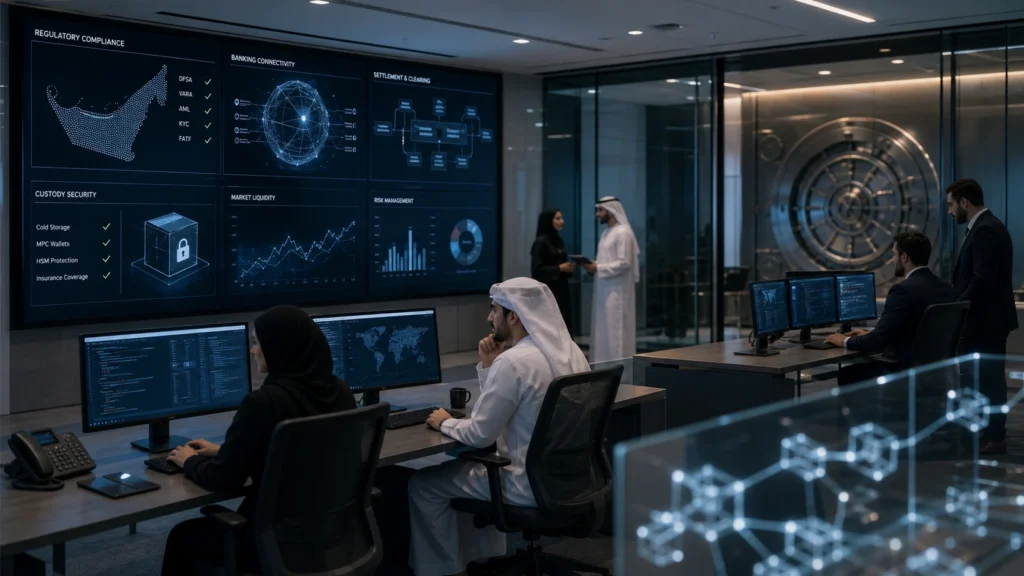
Why Infrastructure Matters to Institutional Investors
Institutional capital does not usually move just because an asset class is attracting attention. Financial institutions need systems and controls that let investment committees, compliance teams and risk managers understand how an asset actually fits within their existing frameworks.
In the early years of digital assets, a lot of these systems were still taking shape. Bitcoin proved that a decentralised digital asset could operate globally, but institutions still had plenty of questions around custody, regulation, liquidity, governance and settlement.
An institution could see the potential in digital assets while still being unable to approve any meaningful exposure. That is why building supporting infrastructure has become such an important part of the sector’s shift from an emerging market to a more established financial ecosystem.
UAE Is Building a More Structured Digital Asset Ecosystem
The UAE has increasingly tied its interest in emerging technology to regulation, financial services, investment and business development. This approach has helped create a more structured environment for companies working across the digital asset sector.
Regulatory authorities, including the Virtual Assets Regulatory Authority (VARA) and the Central Bank of the UAE, have played key roles in developing frameworks that cover relevant virtual asset, financial and payment activities.
The goal here is not simply to encourage innovation for its own sake. Clear regulatory requirements also give businesses and investors a better sense of what activities are permitted, which approvals are needed and how services should operate under regulatory oversight.
Regulation Creates Greater Clarity
For institutional investors, regulatory clarity can matter just as much as technological innovation. Financial institutions need to understand the legal status of their activities before they can build long-term strategies around a new asset class.
The UAE’s evolving regulatory environment provides a framework covering different parts of the digital asset ecosystem, including virtual asset services, custody and areas connected to banking and payments, depending on the activity and the relevant authority.
This kind of structured approach can help reduce uncertainty for companies entering the market. It also draws a clearer line between innovative technology businesses and activities that require specific financial or virtual asset authorisation.
Institutional Participation Is Growing
As the regulatory environment has taken shape, international financial institutions and digital asset companies have expanded their presence in the UAE. The growth of institutional-grade custody, banking and virtual asset services is a strong sign of the market’s increasing maturity.
Institutional participation can look different depending on the company. It might involve regulated custody, licensed financial services, strategic investments or access to digital assets through more traditional financial structures.
These developments suggest the market is moving well beyond simple interest in digital assets. The focus is increasingly on building professional services and infrastructure that let institutions participate within established governance and risk systems.
Custody Is a Critical Part of the Ecosystem
For professional investors, knowing exactly where and how digital assets are stored is a major consideration. Institutional custody demands strong security, clear ownership structures, operational controls and proper governance.
The development of regulated, institutional-grade custody services plays a big role in making digital assets more accessible to professional investors. It gives institutions infrastructure that is much closer to the standards they already expect from traditional financial markets.
That said, custody alone is not enough. Institutions also need dependable liquidity, banking access, settlement systems and risk management tools to build out a complete operating model.
Liquidity and Banking Will Shape the Next Stage
Regulation makes participation possible, and custody provides security. Liquidity is what makes it practical for institutions to actually enter and exit positions efficiently.
As the UAE’s digital asset market keeps developing, deeper liquidity and stronger links with banking and financial infrastructure could become increasingly important. Reliable settlement and risk management systems will also play a big part in determining how effectively larger institutions can operate in the market.
These elements matter a great deal for investors managing significant amounts of capital. A market can have strong technology and solid regulatory support, but institutional participation still comes down to whether transactions can be completed efficiently and risks managed at scale.
The Wider Business Ecosystem Also Matters
Institutional readiness is not built through financial regulation alone. Technology companies, founders, investors and service providers all need a business environment where they can set up operations, find partners and grow.
The UAE’s broader innovation ecosystem supports this side of the equation. Access to commercial networks, international talent and technology-focused opportunities helps companies build and scale services tied to emerging industries.
This wider ecosystem complements the financial infrastructure being built around digital assets. It creates an environment where technology companies and financial businesses can operate side by side while still remaining subject to the appropriate rules.
Business Licences and Financial Authorisation Are Not the Same
One important distinction for companies entering the UAE market is the difference between simply setting up a business and actually receiving permission to conduct regulated financial activities.
A commercial licence allows a company to operate within the activities that licence covers. It does not automatically give the company permission to offer regulated financial or virtual asset services.
Those activities usually require separate approval or licensing from the relevant regulatory authority. Keeping this distinction clear matters because it lets businesses innovate freely while making sure activities involving financial markets, customers and assets stay subject to proper supervision.
Also Read: Top 5 Gyro Spots in Dubai for a Delicious Greek-Style Meal
Building for Different Market Cycles
Digital asset markets can swing quite a bit in sentiment and activity. Institutional readiness, however, gets measured over a much longer stretch of time.
A strong ecosystem needs to hold up through both booming demand and quieter market conditions. Reliable regulation, custody, liquidity, business infrastructure and governance help build a foundation that does not depend on short-term market excitement.
The UAE’s approach increasingly focuses on these underlying foundations. The development of licensed operators, regulatory frameworks, custody services, financial infrastructure and access to global talent provides several of the building blocks institutional participation actually needs.
From Digital Asset Interest to Long-Term Infrastructure
The story of digital assets keeps evolving. The early phase was largely about proving that blockchain technology and decentralised assets could work at scale, while the next phase is increasingly about building systems that let professional investors participate responsibly.
For the UAE, that means growing an ecosystem that connects regulation, financial services, technology companies, investors and business infrastructure, with each part playing a different role in making the market more accessible and structured.
Retail adoption already proved that digital assets could attract a broad market. Institutional readiness now comes down to whether the surrounding infrastructure can support professional participation through clear rules, reliable services, effective governance and the ability to operate at scale.