

Picture this: you step into a small electric pod with no driver, and it takes you straight to your stop without traffic or a bus timetable to worry about. That idea is now being tested in Dubai.
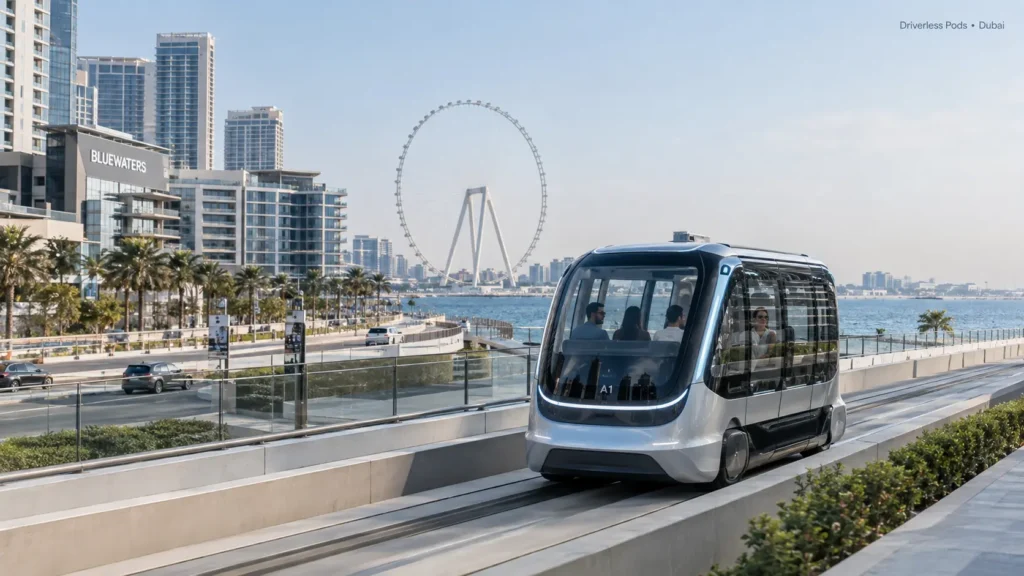
The Roads and Transport Authority (RTA) has started a four-week trial of the Glydways automated transit system at Bluewaters Island. The trial began on October 11, 2026, and it will help decide whether the technology could grow to other parts of the city.
How the Trial Began
Mattar Al Tayer, RTA’s Director General, officially opened the trial by taking a five-minute ride along the Bluewaters route. During the four weeks, RTA will look at how safe and reliable the pods are, how long journeys take, and how easy the system is to use. It will also check the autonomous driving, sensing, communication, and control systems.
The trial is run under a partnership with Dubai Holding, which covers the testing site, infrastructure and operational support. Glydways, a company founded in 2016, builds automated transit networks using electric vehicles on dedicated guideways.
How the Pods Work
These aren’t buses or taxis. The pods run on their own narrow guideways, separate from normal traffic, so journeys could be quicker and more predictable. The guideways can be built at ground level or raised above the street.
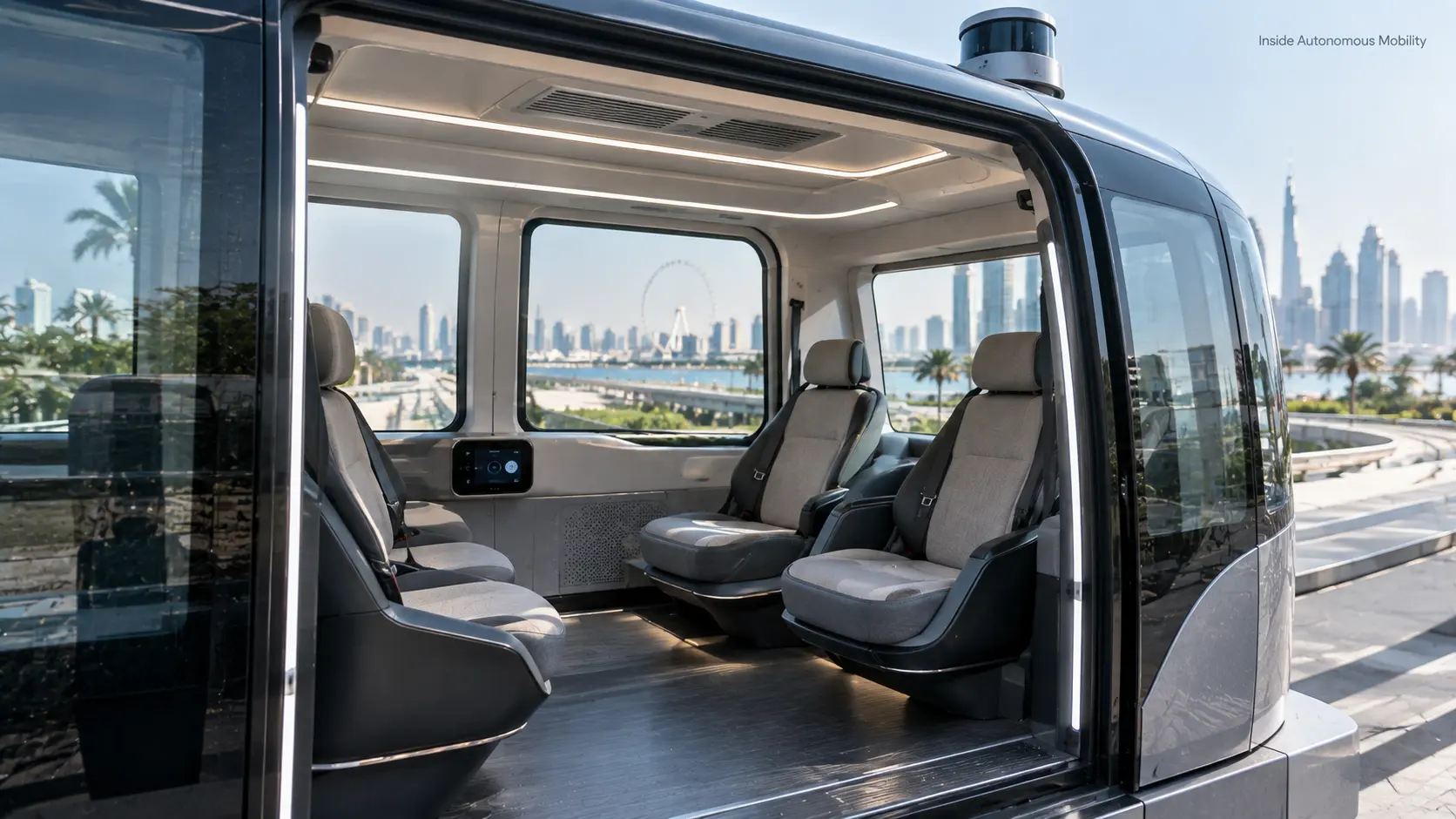
Each pod carries four to six passengers and can reach 50 km/h. On one battery charge, it can go up to 250 km. To see where it’s going, each vehicle uses 20 high resolution LiDAR sensors, radar and HD cameras, along with artificial intelligence. Passengers can also adjust the temperature and entertainment inside.
The system is built to run round the clock and on demand, so you travel directly from where you start to where you want to go. RTA says it can coordinate more than 10 vehicles close behind each other, with gaps of under a second, and carry over 20,000 passengers an hour in both directions.
Where Could It Go Next?
The big idea is to connect Dubai Metro stations with nearby homes, offices, shopping areas and tourist spots. RTA is studying a 2.8 km link between National Paints Metro Station and Bluewaters. Other areas on the list include Jumeirah Village Circle, Dubai Festival City, Business Bay and Mohammed Bin Rashid City.
These are proposals for now. Any expansion depends on how the trial goes and on further assessments.
What About the Cost Claims?
RTA says the technology could cut building costs by up to 90 per cent and running costs by up to 70 per cent compared with similar transport options, partly because the lightweight guideways are cheaper to build. Those are RTA’s figures. The announcement didn’t explain how they were worked out or share results from the Bluewaters trial, so it’s smart to treat them as goals until real data comes in.
What We Still Don’t Know
A few answers are missing. There’s no word on fares, no confirmation that the public can ride during the trial, and no date for wider commercial use. We’ll know more once the four weeks are over and RTA reviews the results.
Part of a Bigger Smart Transport Push
This trial fits with a string of changes making Dubai easier to move around. Residents and tourists can already skip paper tickets, as we covered when Dubai Metro, Tram and bus riders could start travelling with just QR code tickets on their phones.
Finding your way is getting smarter too. If you’ve ever wondered what the road signs mean, our explainer on what Dubai’s street sign colours really mean is worth a read, especially with new signs and QR codes on the way.
If the trial goes well, the last stretch of your journey could soon be a short ride in a driverless pod.