

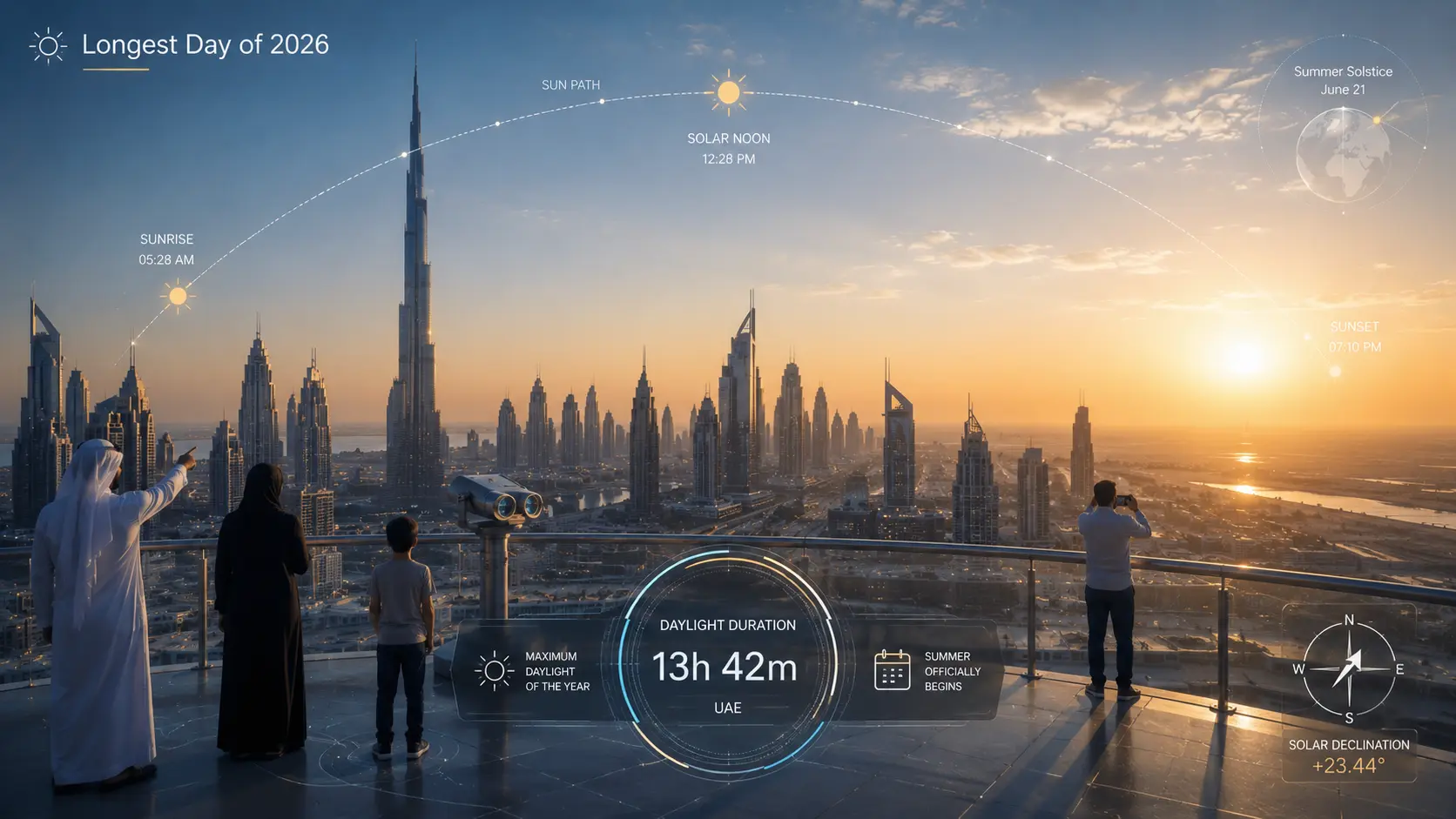
This Sunday, June 21, the UAE will experience its longest day of the year as the summer solstice arrives across the Northern Hemisphere. It’s the kind of astronomical milestone that quietly happens every year without much fanfare, but it marks something genuinely significant — the official start of summer and the peak of daylight hours for 2026.
People naturally associate summer with heat, but the solstice itself is really about geometry rather than temperature. It’s tied to how the Earth is tilted as it makes its way around the Sun, and on this particular day, the Northern Hemisphere is angled most directly toward sunlight, stretching daylight out longer than on any other day of the year.
What Is the Summer Solstice?
The solstice happens when the Sun reaches its northernmost point in the sky — an event that occurs once annually and effectively kicks off summer for the Northern Hemisphere, the UAE included.
Because the Earth tilts at roughly 23.5 degrees, sunlight distribution shifts throughout the year depending on where you are. During the summer solstice, the Northern Hemisphere gets its longest stretch of daylight, while the Southern Hemisphere is simultaneously experiencing its shortest day. It’s the same event, opposite experience, depending on which half of the planet you’re standing on.

How Long Will the Day Be in the UAE?
Expect around 13 hours and 42 minutes of daylight in the UAE on June 21. The sun comes up earlier and goes down later than on most other days of the year, giving residents a bit more time for outdoor activity if they’re inclined to use it.
The shift from the days right before and after the solstice is subtle, but June 21 marks the actual peak. After that, daylight hours begin a gradual decline — though the change is so slow at first that you won’t really notice it for a few weeks.
Why the Longest Day Does Not Mean the Hottest Day
Here’s something that trips a lot of people up: the longest day isn’t usually the hottest one. That’s because land, oceans, and the atmosphere keep absorbing and holding onto heat well after the solstice passes. Meteorologists call this seasonal lag, and it’s the reason temperatures in the UAE typically keep climbing through July and August, even as daylight hours are technically shrinking by then.
What Residents Can Expect This Summer
The months ahead will bring the usual UAE summer combination — intense heat, strong sun, and rising humidity, particularly along the coast. The standard advice applies here too: stay hydrated, avoid being outside during the hottest part of the afternoon, and pay attention to heat safety guidance as the season builds.
Humidity tends to make things feel considerably hotter than the actual temperature suggests, and that effect becomes especially noticeable in the evenings as moisture levels rise across much of the country.
An Important Event for Astronomy Enthusiasts
The solstice has held meaning for civilizations going back thousands of years, often used historically to track agricultural cycles and mark important points in the calendar. That tradition continues today among people who follow astronomical events closely — it’s a reminder of the Earth’s orbit and the natural rhythms that shape weather and seasons everywhere.
Also Read: Top 7 Watch Brands Most People in the UAE Prefer to Wear
A Seasonal Milestone Across the Northern Hemisphere
From Europe to North America to the Middle East, the solstice gets marked in different ways — festivals, gatherings, cultural traditions tied to the turning of the seasons. In the UAE specifically, it mostly signals that the hottest stretch of the year is about to begin, with long daylight hours meeting desert conditions to produce the intense summer climate residents know well.
What Happens After June 21?
From here, daylight hours will slowly shorten as the Earth continues along its orbit. The next notable marker on the astronomical calendar is the autumn equinox in September, when day and night even out to roughly equal length.
For now, June 21 stands as a small but genuinely interesting moment for anyone curious about the science behind the seasons — the longest day of the year, and the official start of summer across the UAE.