

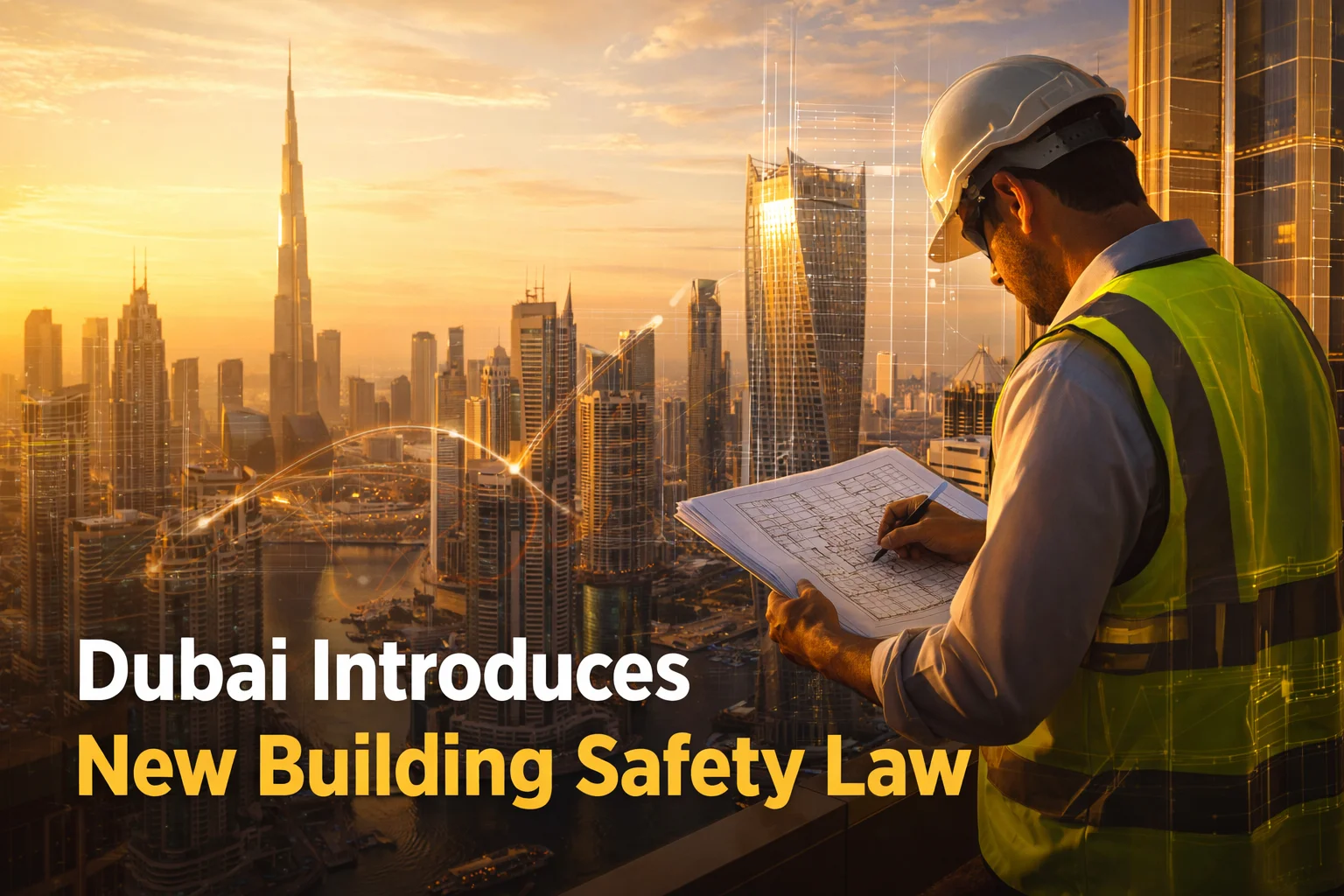
Dubai has taken a major step toward strengthening the safety and quality of buildings across the emirate. His Highness Sheikh Mohammed bin Rashid Al Maktoum has issued Law No. (3) of 2026, a regulation designed to improve building standards, ensure regular maintenance, and protect residents and property.
The law reflects Dubai’s ongoing efforts to maintain world-class infrastructure while keeping residents safe. With rapid urban development and a growing population, authorities are focusing on long-term structural safety and sustainability across residential and commercial buildings.
What the New Law Covers
The new legislation applies to all buildings across Dubai, including properties located in private development zones and free zones. This means the regulations will affect both newly constructed buildings and existing structures across the emirate.
The main goal of the law is to ensure that buildings maintain strong structural integrity and operate safely over time. It also aims to improve occupant comfort, reduce accidents, and protect lives and property.
Officials say the regulation will also help preserve Dubai’s architectural identity and ensure that the city’s skyline continues to reflect high standards of design and engineering.

Key Role of Dubai Municipality
Under the new law, Dubai Municipality will play a central role in enforcing building safety standards. The authority will develop a digital management system to monitor building conditions and maintain a unified database of structures across the city.
The municipality will also conduct periodic inspections and assessments to ensure buildings meet safety and quality standards. Authorities will oversee maintenance procedures, investigate structural incidents, and introduce corrective measures when necessary.
In addition, the municipality will regulate construction materials, promote modern building technologies, and manage a digital building portal that helps track safety information for properties across the emirate.
Mandatory Quality and Safety Certificates
One of the most important aspects of the new law is the introduction of a Quality and Safety Certificate for buildings. This certificate confirms that a property meets the required structural and technical standards.
Before receiving this certificate, buildings must undergo a comprehensive inspection carried out by licensed engineering firms or consultants. These professionals evaluate the structural condition of the property and ensure that all safety requirements are met.
Once the inspection is complete, the certificate will confirm that the building is safe for use and compliant with the regulations established under the new law.
Responsibilities of Building Owners
The law also places significant responsibility on property owners and developers. Building owners must hire licensed engineering offices to conduct detailed assessments and prepare technical reports required for safety certification.
If inspections identify structural defects or safety concerns, owners must address these issues promptly. Repairs and improvements must be carried out to eliminate any risks to occupants or surrounding buildings.
Owners are also required to allow government authorities to conduct inspections and ensure that maintenance procedures continue even after the building receives its safety certificate.

Maintenance and Inspection Requirements
Regular maintenance is a central element of the new regulation. Buildings that are less than 20 years old must undergo periodic maintenance checks to ensure their structural condition remains stable.
For older buildings, inspections become even more important. Authorities will evaluate aging structures more closely to ensure they continue to meet safety standards.
The law also sets the duration of safety certificates. Buildings less than 40 years old will typically receive certificates valid for ten years, while older buildings may receive certificates valid for shorter periods.
These certificates can be renewed after additional inspections confirm that the property continues to meet safety standards.
Improving Safety for Residents and Communities
Dubai’s leadership has consistently emphasized the importance of creating a safe and high-quality living environment. With millions of residents and visitors using residential towers, hotels, offices, and commercial buildings every day, maintaining strict safety standards is essential.
The new law aims to reduce potential risks by ensuring buildings are regularly inspected and maintained. It also ensures that any defects or structural issues are identified early before they become serious hazards.
By improving safety standards across the city, authorities hope to enhance public confidence in Dubai’s built environment.
Also Read: Why UAE is Feeling the Impact of the US–Israel War on Iran
Supporting Dubai’s Rapid Urban Growth
Dubai has experienced rapid development over the past two decades, with new skyscrapers, residential communities, and business districts transforming the city’s skyline. As urban growth continues, regulations must evolve to ensure long-term sustainability and safety.
The new law supports Dubai’s strategy of maintaining high construction standards while encouraging responsible development. By strengthening oversight and introducing modern monitoring systems, the emirate aims to manage its expanding infrastructure more effectively.
These measures also align with Dubai’s broader goal of becoming one of the world’s safest and most advanced urban environments.
A Step Toward Sustainable and Smart Buildings
Another important objective of the law is promoting sustainability in building management. Authorities will introduce standards that encourage energy efficiency, environmentally responsible construction materials, and modern building technologies.
By integrating digital systems and regular inspections, Dubai can better monitor building performance and improve maintenance efficiency. This approach reflects the emirate’s growing focus on smart city technologies and sustainable urban planning.
As Dubai continues to grow into a global city, initiatives such as the new building safety law underscore the government’s commitment to protecting residents while maintaining the highest standards of construction and infrastructure.