

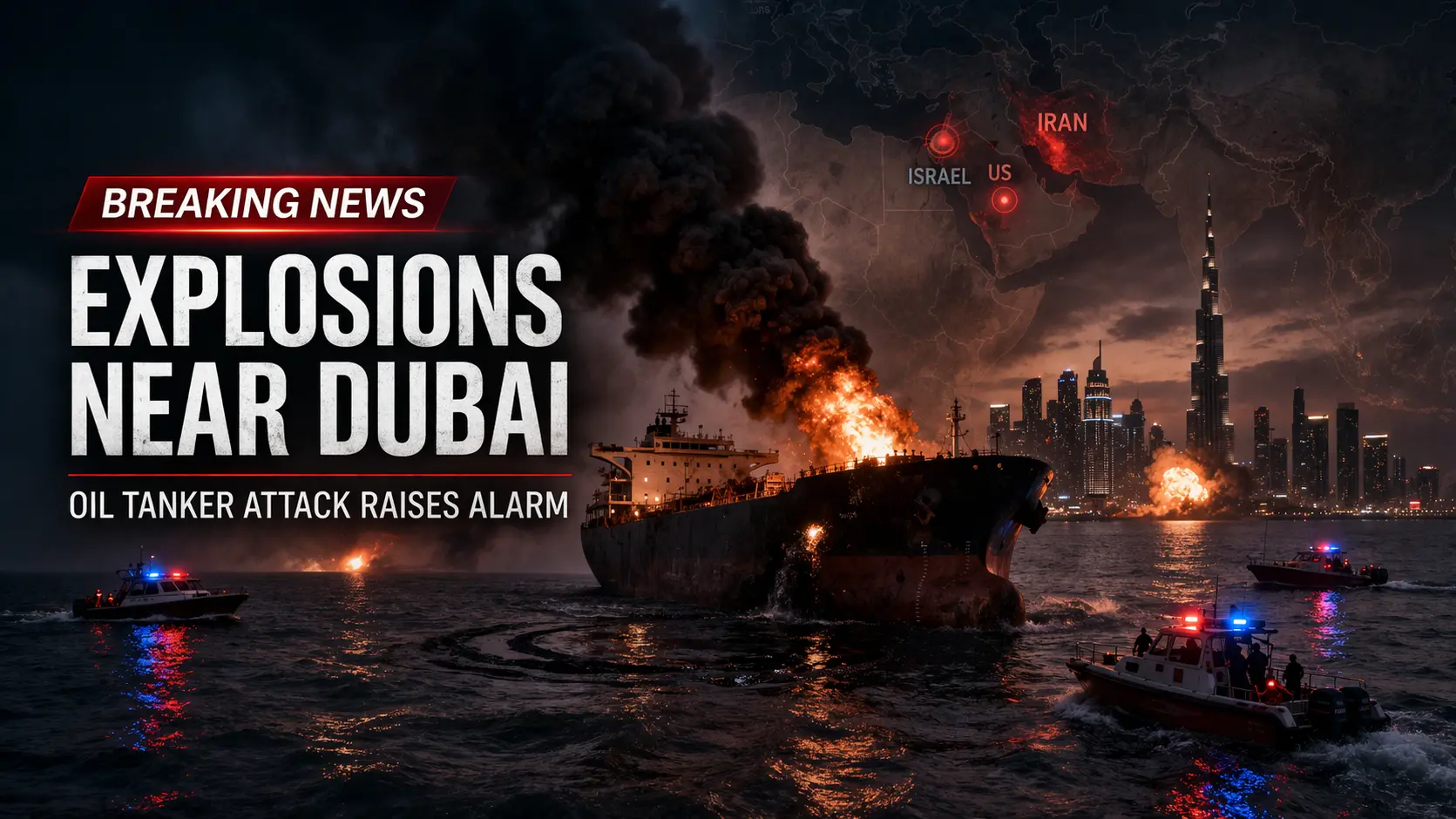
Tensions in the Middle East have intensified as reports of explosions near Dubai have raised fresh concerns. The developments are linked to the ongoing Iran-US-Israel conflict, which continues to expand across the region.
Residents reported loud blasts and unusual activity, creating panic and uncertainty. While authorities worked quickly to assess the situation, the incident highlighted the growing reach of the conflict.
Table of Contents
Oil Tanker Attack Near Dubai Port
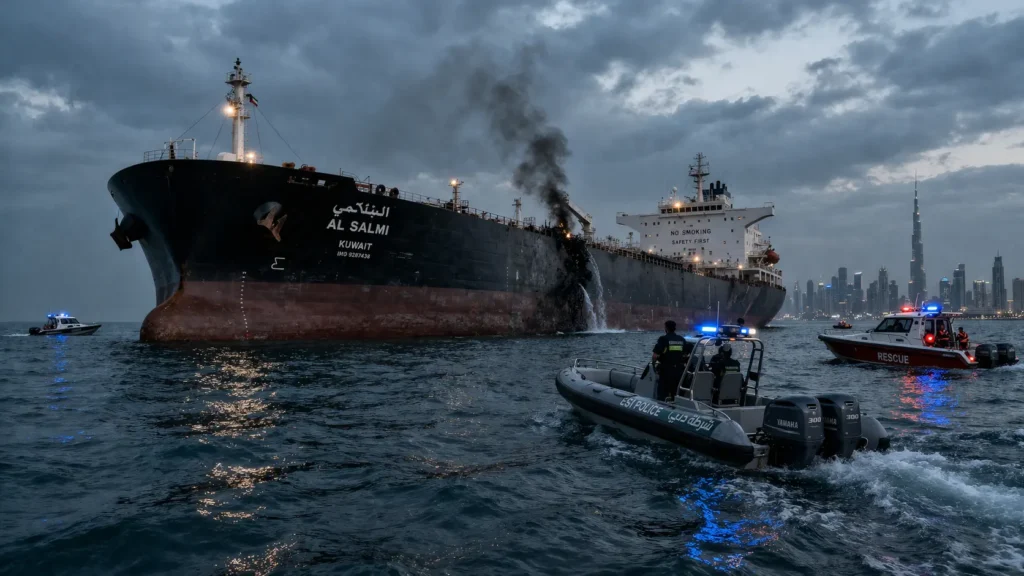
One of the most significant developments has been the reported attack on a fully loaded oil tanker near Dubai. The vessel, linked to Kuwait, was targeted amid rising hostilities in the region.
The attack has raised fears of an oil spill and environmental damage. It also highlights the vulnerability of critical shipping routes near the UAE.
Strategic Importance of Dubai Waters
Dubai’s location near major global shipping routes makes it a key hub for oil transport and international trade. Any disruption in these waters can have far-reaching consequences.
The attack on the tanker has increased concerns about maritime security. It shows how conflicts in the region can directly impact global supply chains.
US Strikes and Iran’s Response
The situation escalated further after the United States carried out strikes on Iranian nuclear facilities. In response, Iran has increased its military activity across strategic locations in the region.
These actions have intensified the conflict, creating a cycle of retaliation. The impact is being felt not just in war zones but also in neighboring countries like the UAE.
Impact on Regional Security
The UAE has long been seen as a stable and secure region, but recent developments have tested that perception. Incidents near Dubai have raised concerns among residents and international observers.
Security agencies are on high alert, focusing on protecting infrastructure and ensuring public safety. Even isolated incidents can have a strong psychological impact.
Oil Markets React to Rising Tensions
Global oil markets have reacted sharply to the escalating conflict. Any threat to oil transport routes, especially near the Gulf, can lead to price spikes.
The attack on the tanker has added to market uncertainty, pushing oil prices higher. This has a direct impact on fuel costs and global economic stability.
Shipping and Trade Disruptions
The Gulf region plays a critical role in international shipping, especially for energy supplies. Disruptions in this area can affect trade flows across multiple continents.
Shipping companies may face delays, increased insurance costs, and route changes. These factors can lead to higher costs for businesses and consumers worldwide.
Also Read: UAE Announces Petrol and Diesel Prices for April 2026
Fear of Environmental Damage
The possibility of an oil spill near Dubai has also raised environmental concerns. Such incidents can damage marine life and coastal ecosystems.
Authorities are closely monitoring the situation to prevent further damage. Environmental risks add another layer of complexity to an already tense situation.
Investor and Market Sentiment Under Pressure
Geopolitical instability often leads to uncertainty in financial markets. Investors tend to become cautious, especially in regions directly affected by conflict.
Dubai’s position as a global business hub means that any disruption can influence investor confidence. Real estate, tourism, and trade sectors may feel the pressure.
Growing Global Attention on the Gulf Region
The ongoing conflict has drawn global attention to the Gulf region. Governments, businesses, and analysts are closely monitoring developments.
The situation continues to evolve rapidly, with each new event shaping the regional and global outlook. The focus remains on how the conflict will impact stability, trade, and economic growth in the coming weeks.