

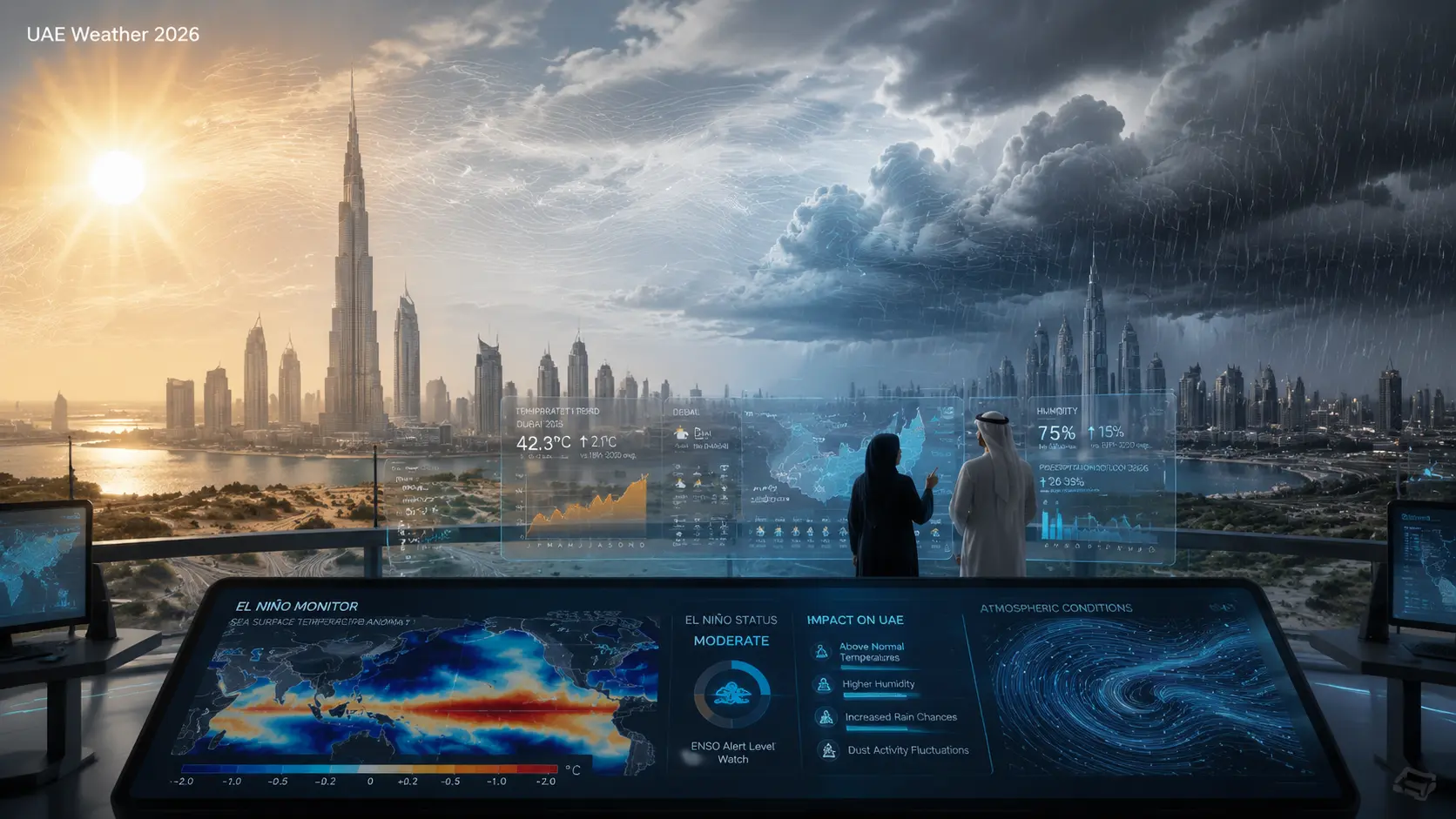
If this summer already felt hotter than usual, you weren’t imagining it. The UAE’s National Centre of Meteorology is tracking a developing El Niño pattern in the Pacific Ocean that could shape the country’s weather through the rest of 2026 — and the numbers behind the forecast are worth paying attention to.
The NCM puts the probability of El Niño conditions persisting between July and November 2026 at 98 percent. That’s about as close to certain as weather forecasting gets, and it points toward temperatures and rainfall remaining at or above seasonal averages through that window.
What Is El Niño?
El Niño happens when sea surface temperatures in the central and eastern Pacific run warmer than usual, which weakens trade winds and shifts atmospheric circulation in ways that ripple outward across the globe. It occurs every two to seven years and is known for triggering significant shifts in rainfall, temperature, and storm activity in different regions.
The UAE sits a long way from the Pacific, but global weather systems are more interconnected than geography might suggest. Even from this distance, El Niño’s influence can show up in Gulf weather patterns.

Why Are Experts Paying Close Attention in 2026?
What’s making meteorologists sit up this year is the strength of the developing pattern. Several climate models are pointing toward sea surface temperature anomalies that could exceed 3°C later in the year — territory that gets described as a “Super El Niño” when it happens.
The World Meteorological Organization has flagged a high probability of the pattern strengthening through late 2026 and potentially carrying into 2027. Forecasts at this range can still shift, but the consistency across multiple models is what’s drawing attention.
Hotter Temperatures Could Be Ahead
The most immediate concern for anyone living in the UAE is simply more heat. Summer arrived earlier than usual this year, with temperatures climbing faster than typical seasonal patterns in several parts of the country.
El Niño doesn’t directly cause heatwaves in the UAE, but it can amplify warming trends that are already in motion. Combined with regional weather systems, that amplification could mean longer stretches of extreme heat through the Gulf this year.
Increased Humidity Across Coastal Areas
Coastal cities — Dubai, Abu Dhabi, Sharjah — could see rising humidity as part of this pattern. Higher humidity makes heat feel considerably more intense than the actual temperature reading suggests, which translates into more uncomfortable conditions outdoors, especially during evenings when people typically expect some relief from the day’s heat.
Could the UAE Receive More Rainfall?
Rainfall predictions are less certain than temperature forecasts, but there’s reasonable indication that El Niño could increase the odds of above-average rainfall during parts of the second half of 2026. Historically, some El Niño events have improved rainfall prospects across the Arabian Peninsula.
UAE rainfall tends to arrive in short, intense bursts rather than sustained periods of rain, so if conditions align, autumn could bring more thunderstorms and unsettled weather days than usual.
Possibility of More Active Storm Systems
The Arabian Sea is another area meteorologists are watching closely. Previous El Niño events have at times coincided with increased tropical storm activity in the region during autumn months.
Cyclone formation depends on a complex mix of factors, but El Niño can create atmospheric conditions that support stronger weather systems developing. That raises the possibility, though not certainty, of storm activity affecting Oman, Yemen, and occasionally areas closer to the wider Gulf.
Also Read: Dubai Municipality Now Has an AI Spokesperson Named Saeed and He Speaks in Four Languages
What the Forecast Means for Residents
None of this guarantees extreme weather outright. What El Niño does is shift the probabilities — toward warmer temperatures, higher humidity, and a somewhat more active weather pattern overall.
The UAE has invested significantly in weather monitoring and climate adaptation infrastructure over the years, which helps the country respond to whatever the season actually brings. As forecasting models refine over the coming months, meteorologists will have a much clearer sense of exactly how strongly this El Niño event plays out through late 2026 and into 2027.