
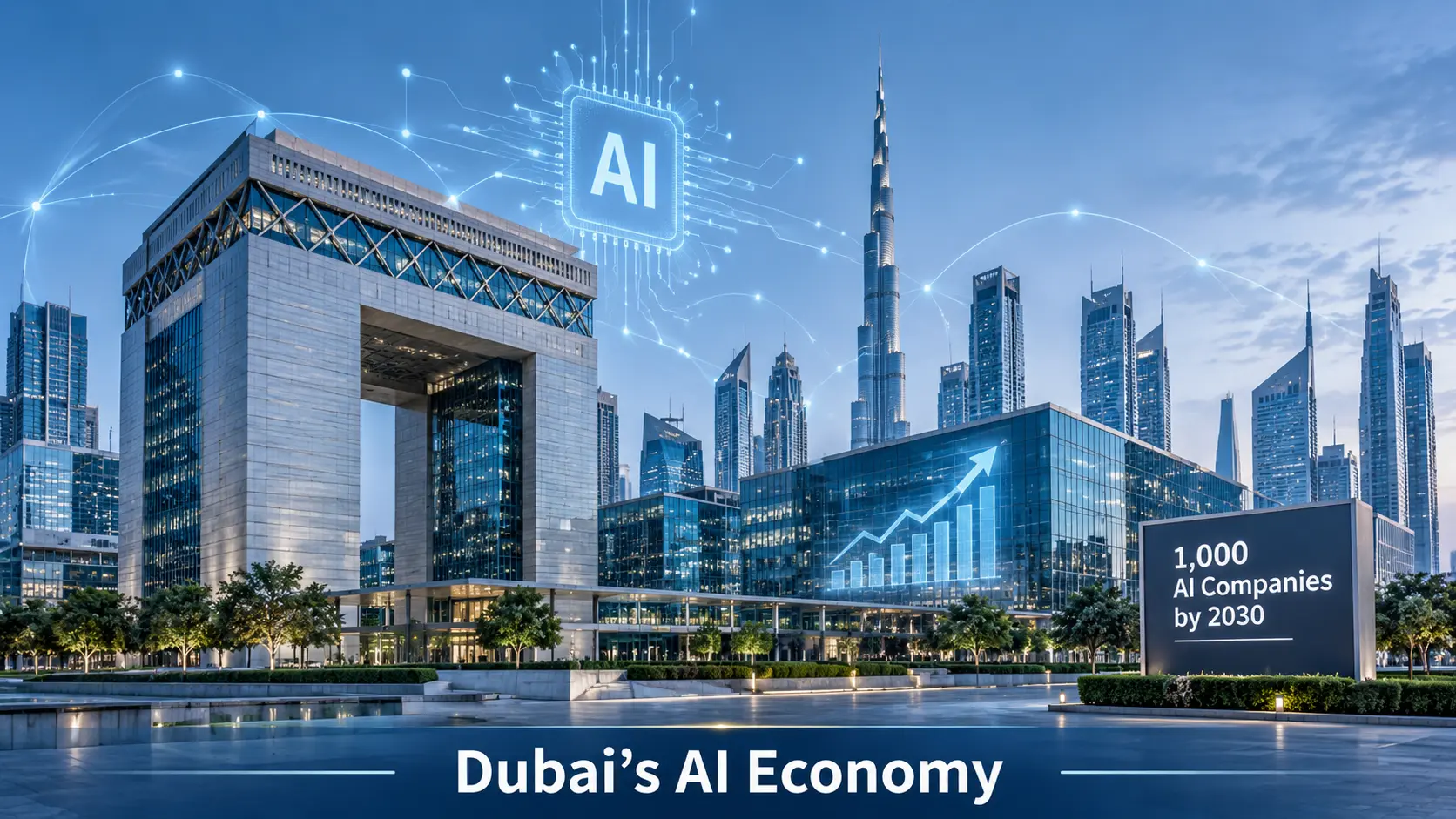
Dubai is working hard to become a global centre for artificial intelligence. The Dubai AI Campus is growing, new support programmes are starting, and companies in many fields are beginning to use AI in daily work. For businesses thinking about the UAE market, the chances go well beyond building software. Cloud services, cybersecurity, data management, recruitment, consulting, and marketing can all gain as AI spending rises.
Dubai AI Campus Sets Big Targets for 2030
The Dubai AI Campus sits at the Dubai International Financial Centre (DIFC). It opened in May 2024, and the numbers since then look strong. The government approved new growth targets in October 2026.
| Measure | Achieved so far | Goal for 2030 |
|---|---|---|
| AI companies | More than 500 | More than 1,000 |
| Investment | Over AED 1 billion | Not stated |
| Specialised jobs | More than 2,000 | Over 5,000 |
The campus reached its first goal of 500 companies two years early. Now it wants to double that number.
There is also a plan for a purpose-built facility of 100,000 square feet in the DIFC Zabeel District expansion. It will have GPU-ready infrastructure, secure AI development zones, digital twin environments, and special labs. Companies and government bodies can use these to build, test, and check AI tools before they launch them widely.
Global Money Is Flowing Into AI
Dubai is growing at the same time as the world is spending big on AI. Stanford University’s AI Index Report 2026 says global AI investment reached about US$581.7 billion in 2025, more than double the year before. Private investment made up around US$344.7 billion of that.
The same report found that 88% of surveyed organisations used AI in 2025, and 70% used generative AI in at least one business function. The UAE also showed 64% population-level adoption of generative AI in the second half of 2025, which puts it among the leaders.
As companies move from testing AI to using it every day, they will need more cloud services, data systems, and security tools. That demand is one reason Dubai is building its own AI base.
Startups and Service Providers Can Both Benefit
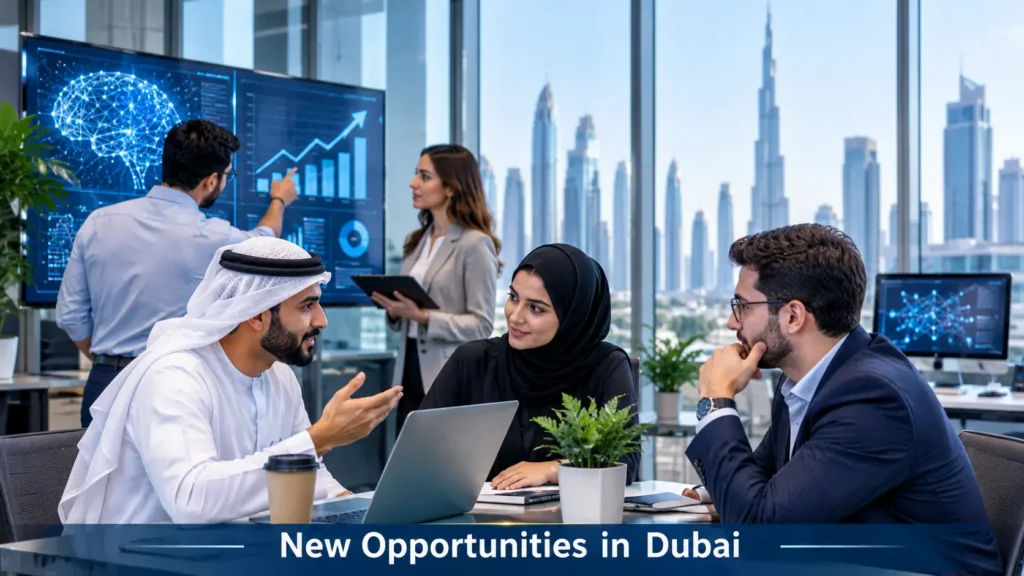
The expansion suits startups working on generative AI, machine learning, predictive analytics, and business automation. They get access to investors, industry networks, and specialised infrastructure, which can make building and scaling a product easier.
But you do not have to build AI models to find work. Firms that offer software integration, cloud setup, cybersecurity and technical advice may find new clients too. Many businesses will need help linking new AI tools with the systems they already use, without disturbing daily operations. International startups can also use Dubai as a base to reach customers across the Middle East, Africa, and South Asia.
Traditional Industries Are Joining In
AI is no longer only for tech firms. Banks can use it for fraud checks, risk review, and customer support. Hospitals can use it for data analysis and paperwork. In real estate, it can help with property valuation, building maintenance, and customer service. Logistics firms can plan stock and delivery better, and hotels can use it for smart bookings and demand forecasts.
For startups, these industries are real customers with clear problems to solve. The result will depend on whether the tools truly improve productivity, customer experience, and costs.
Agentic AI Could Speed Up Automation
In May 2026, Dubai began a two-year effort to push Agentic AI across the private sector. It includes training for business councils, incubators for Agentic AI firms, and special funding.
Normal AI tools mostly answer one instruction at a time. Agentic AI can handle several steps and manage a whole workflow, with different levels of human checking. A business might use it to handle customer questions, support sales or manage office tasks. For small and medium companies, this could bring strong automation without a large tech team. It could also create work for developers, consultants, and integration firms.
The AI Sandbox Helps Startups Reach the Market
Many young tech companies struggle to move from an idea to a real launch. Rules, data access, and compliance worries can slow them down. In October 2026, the Dubai Future Foundation answered this with the AI Sandbox, run through Sandbox Dubai.
It lets startups, SMEs, big tech firms and government bodies test AI native products in real settings. Participants get technical, policy and commercial advice, plus guidance on regulations. The areas include healthcare, education, transport, logistics, tourism, media and government services. Applicants need a minimum viable product or something more advanced, and they must show they can make money from it. Applications for the current round close on 18 December 2026.
Talent and Skills Will Matter
Money and buildings are not enough. Companies also need skilled people. PwC’s Global AI Jobs Barometer 2025 looked at nearly one billion job ads across six continents. It found that industries most exposed to AI had three times higher growth in revenue per employee. Workers with AI skills also earned an average pay premium of 56% in 2024.
So Dubai may need more machine learning engineers, data scientists, developers, and cybersecurity experts. Recruiters, training schools, and consultants could gain too, because many firms will want help to train staff and use AI responsibly.
Marketing Is a Quiet Opportunity
As more AI firms arrive, competition for customers and investors will grow. Building a product is only half the job. Startups must explain what they do and earn trust. That opens work for digital marketing agencies, PR teams, and content writers. SEO, industry articles, press releases, and targeted campaigns can all help. Companies such as Shreyas Webmedia Solutions can support this demand with business content, digital marketing, and media visibility services.
What 2027 Could Look Like
Dubai is moving toward an AI economy that is built around business results. Startups may gain from investors and better infrastructure, while older companies can modernize and find new income. Service providers should see more demand too.
Still, anyone entering this market must think about data protection, regulations, costs, and finding skilled staff. Firms that solve a clear problem will likely do better than those that use AI only to follow a trend.
Life in Dubai Keeps Moving
While you plan your business moves, daily life in the city is also changing. Drivers can read about the free Esaad cards Dubai Police is giving away through a road safety quiz. Parents should check how child seat rules are changing in the UAE. And if you often visit Downtown, the new 110 metre bridge linking Dubai Mall Metro Station to Coca-Cola Arena should make your walk easier.
The Bigger Picture
Dubai’s goal of more than 1,000 AI companies and over 5,000 specialized jobs by 2030 shows how long-term its plans are. The chance is not only for people who build AI. There is room for anyone who can supply tools, talent, advice, or a strong story. Businesses that combine technical skill with smart commercial planning will be best placed for the next stage of Dubai’s growth.