

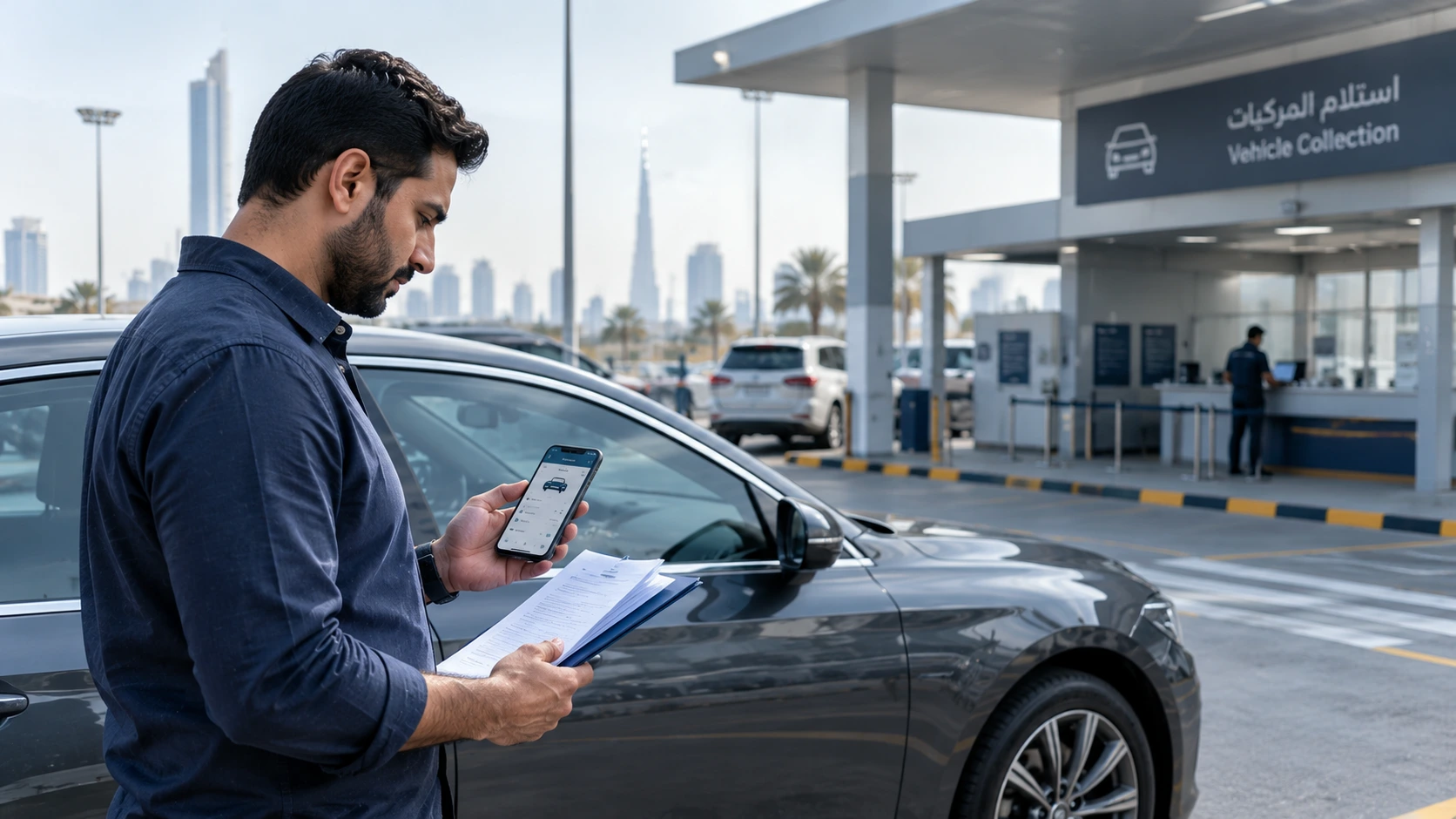
A traffic offence in Dubai can cost you far more than a fine and black points. Some violations also mean your car gets impounded, and the fee to get it back can reach Dh100,000.
Dubai Police recently reported that in the first nine months of 2026, they issued 7,735 fines and impounded 1,630 vehicles for excessive noise and unauthorised modifications. So this isn’t just a rule on paper.
Which Offences Lead to Impoundment?
Under Dubai’s Decree No. 30 of 2023, certain serious violations carry mandatory impoundment. Depending on the offence, owners pay between Dh10,000 and Dh100,000 to release the vehicle, on top of other penalties.
Dh100,000 release fee
- Taking part in a road race without a Dubai Police permit
Dh50,000 release fee
- Riding a recreational motorcycle on a paved road
- Driving recklessly or putting lives, property or road safety at risk
- Jumping a red light
- Using fake, forged, counterfeit or hidden number plates, or using plates against traffic laws
- Deliberately crashing into or damaging a police vehicle
- Driving under the age of 18
Dh10,000 release fee
- Major modifications that raise speed or cause excessive noise
- Running from police officers
- Driving without number plates
- Gathering to watch illegal road races, joining related disturbances or doing stunts on public roads
- Going over the window tint limit, or tinting the front windscreen without a permit
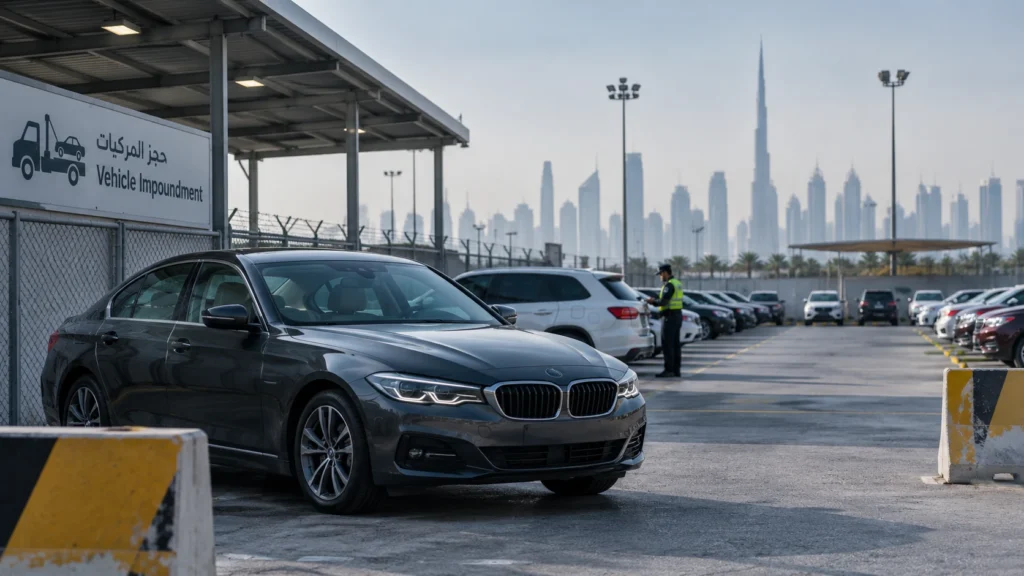
Can Unpaid Fines Get Your Car Impounded?
Yes. If a vehicle builds up more than Dh6,000 in traffic fines, Dubai Police can impound it. To get it back, the owner must pay the outstanding fines.
How to Release an Impounded Vehicle
The process depends on the violation, and on whether the impoundment is mandatory or at the police’s discretion. Where police have discretion, owners generally need to:
- Complete the impoundment period, or pay an early release fee if Dubai Police approves it
- Pay all outstanding traffic fines linked to the vehicle
- Fix or resolve the violation
- Meet any extra requirements set by Dubai Police
Don’t Leave It Sitting There
Once the impoundment period ends, you must collect your vehicle. If you don’t, an extra Dh50 is charged for every day it stays in the impoundment area. A small delay can add up quickly.
What Happens If You’re Impounded Twice?
Repeat offences get much tougher penalties. If your vehicle is impounded again within one year of the incident that caused the last impoundment:
- Impoundment period: where police decide the length, it doubles, up to a maximum of 90 days
- Release fee: for offences with Dh10,000, Dh50,000 or Dh100,000 fees, the amount doubles, up to a maximum of Dh200,000
That Dh200,000 figure is the top of the scale, and it applies only to repeat cases.
Can Jumping a Red Light Lead to Deportation?
In specific cases, yes. Non UAE national drivers of heavy vehicles who jump a red light face administrative deportation from the UAE, along with other traffic penalties. The rule is aimed at heavy vehicle drivers, so it doesn’t apply to every driver.
How to Stay on the Safe Side
Most of these offences are avoidable. Check that your number plates are clear and legal. Don’t modify your car’s engine or exhaust in ways that raise speed or noise. Keep your window tint within the limit, and never tint the front windscreen without a permit. And keep an eye on your fines so they don’t pile up past Dh6,000.
If you drive in Abu Dhabi as well, a few apps can help you stay on top of parking and tolls. Our list of 11 apps every Abu Dhabi resident should have covers some useful options.
Impoundment in Dubai is a separate penalty with its own fees, and it can be expensive, from Dh10,000 up to Dh100,000, and double that for repeat cases. Knowing the rules before you drive is the easiest way to avoid a very costly surprise.