

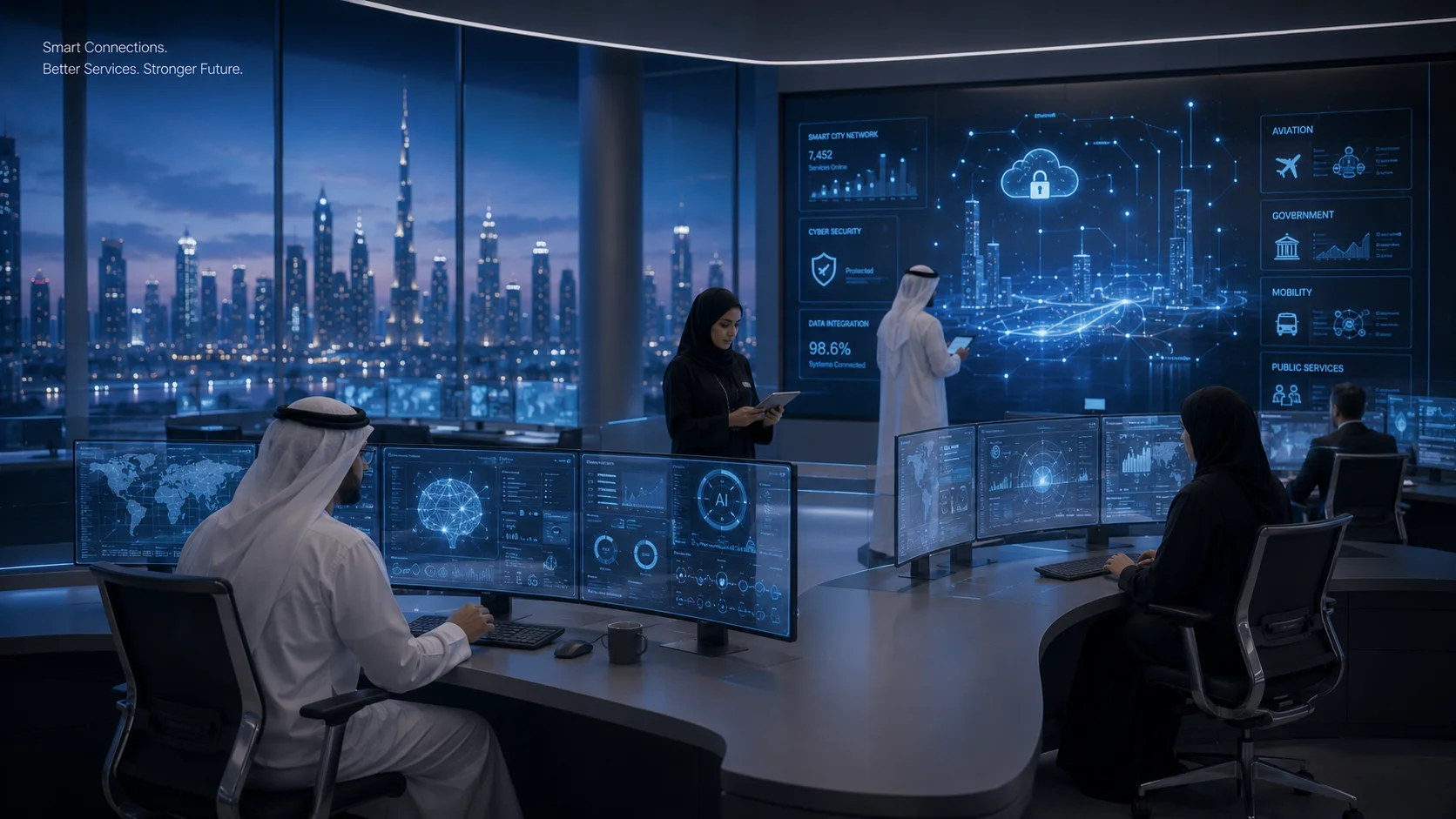
Digital Dubai and the Emirates Group have expanded their partnership in a move that signals how seriously Dubai is approaching its smart city ambitions. The renewed collaboration centres on developing shared digital platforms — infrastructure that improves public services, cuts operational duplication and creates a more connected digital environment across both government and aviation.
The logic behind the partnership is straightforward. When two major organisations — one shaping Dubai’s digital government infrastructure, the other running one of the world’s most recognized airline and travel groups — build toward shared platforms rather than separate systems, the results tend to be faster, smarter, and more useful for the people actually using the services.
What the New Partnership Means
At its core, the collaboration is about integration. Digital Dubai and the Emirates Group will work together on digital infrastructure, data sharing, artificial intelligence, cloud technologies, and advanced service delivery. The focus is on avoiding the fragmentation that comes when organizations build independently — where users end up dealing with multiple disconnected platforms that don’t talk to each other.
The goal is a connected digital ecosystem where services are accessible through integrated systems rather than a patchwork of standalone apps and portals. For residents, visitors, and travellers, that means fewer repetitive processes and a more coherent digital experience across touchpoints.
Building Smarter Digital Platforms
One of the partnership’s central objectives is creating modern digital platforms that can serve multiple organizations rather than being built for one purpose and then siloed. Shared technology infrastructure reduces costs, speeds up deployment, and makes it considerably easier to roll out new services when circumstances change.
That last point matters more than it might seem. The ability to respond quickly to shifting customer needs or new technological possibilities is a real competitive advantage — and shared platforms create the foundations that make rapid deployment possible.

Improving Customer Experience
The people who stand to benefit most directly are the end users — residents, tourists, business travellers and Emirates Group customers navigating everything from government services to airport experiences. As the partnership develops and platform integration deepens, the expectation is that interactions become smoother, more personalized, and less frustrating.
For Emirates passengers specifically, future digital enhancements could contribute to more seamless journeys — reduced friction at key touchpoints, better accessibility to services across different stages of travel, and more responsive support when things don’t go to plan.
Supporting Secure Data Sharing
Better integration only works if the underlying data sharing is done responsibly. Both organizations are placing significant emphasis on secure and privacy-respecting data exchange — maintaining strong cybersecurity standards and governance frameworks while enabling the kind of information flow that allows intelligent services to function properly.
When data can move securely between systems, organizations can automate more effectively, make better-informed decisions, and deliver services that feel responsive and relevant rather than generic and slow.
Artificial Intelligence and Emerging Technologies
AI sits at the heart of where both organizations see this collaboration heading. Intelligent automation can handle routine tasks at scale, advanced analytics can identify where services need improvement, and AI-powered customer support can respond to queries faster than traditional approaches allow.
Cloud computing, intelligent automation, and advanced analytics are expected to become increasingly central as the partnership evolves. These aren’t technologies being explored for their own sake — they’re tools with specific applications in improving how services are delivered and experienced at a practical level.
Supporting Dubai’s Digital Economy
The agreement slots into Dubai’s broader digital economy strategy — a deliberate effort to position the emirate as a global hub for technology investment, digital innovation, and smart business. Shared platforms contribute to that by creating infrastructure that multiple sectors can build on, rather than requiring every organization to develop its own foundation from scratch.
The benefits extend across industries. Aviation and tourism are the obvious beneficiaries given the Emirates Group’s involvement, but the digital standards, platforms, and data governance frameworks developed here can inform how finance, healthcare, logistics, and government services continue to evolve.
Encouraging Collaboration Across Sectors
What makes this partnership worth paying attention to beyond the headline announcement is the emphasis on genuine collaboration rather than parallel development. Shared platforms encourage organizations to adopt common standards, exchange expertise, and build technology that scales — rather than investing heavily in systems that can’t connect with anything outside their own walls.
That collaborative approach is also what makes innovation sustainable. When technology investments are designed to deliver value across multiple organizations and use cases, the return on those investments compounds over time rather than being limited to a single application.
Also Read: Dubai 5-Year Multiple-Entry Tourist Visa: Eligibility, Documents, Fees and How to Apply
Supporting Dubai’s Smart City Vision
Dubai’s smart city ambitions require exactly this kind of partnership — major government entities and leading private organizations working from shared foundations rather than competing visions. The expanded collaboration between Digital Dubai and the Emirates Group is a practical demonstration of what that looks like in practice.
Combining Digital Dubai’s infrastructure expertise with the Emirates Group’s scale, customer reach and operational sophistication creates something more than either could build independently. It’s the kind of integrated digital ecosystem that the UAE’s long-term development plans have consistently pointed toward — and this partnership moves it meaningfully closer to reality.