

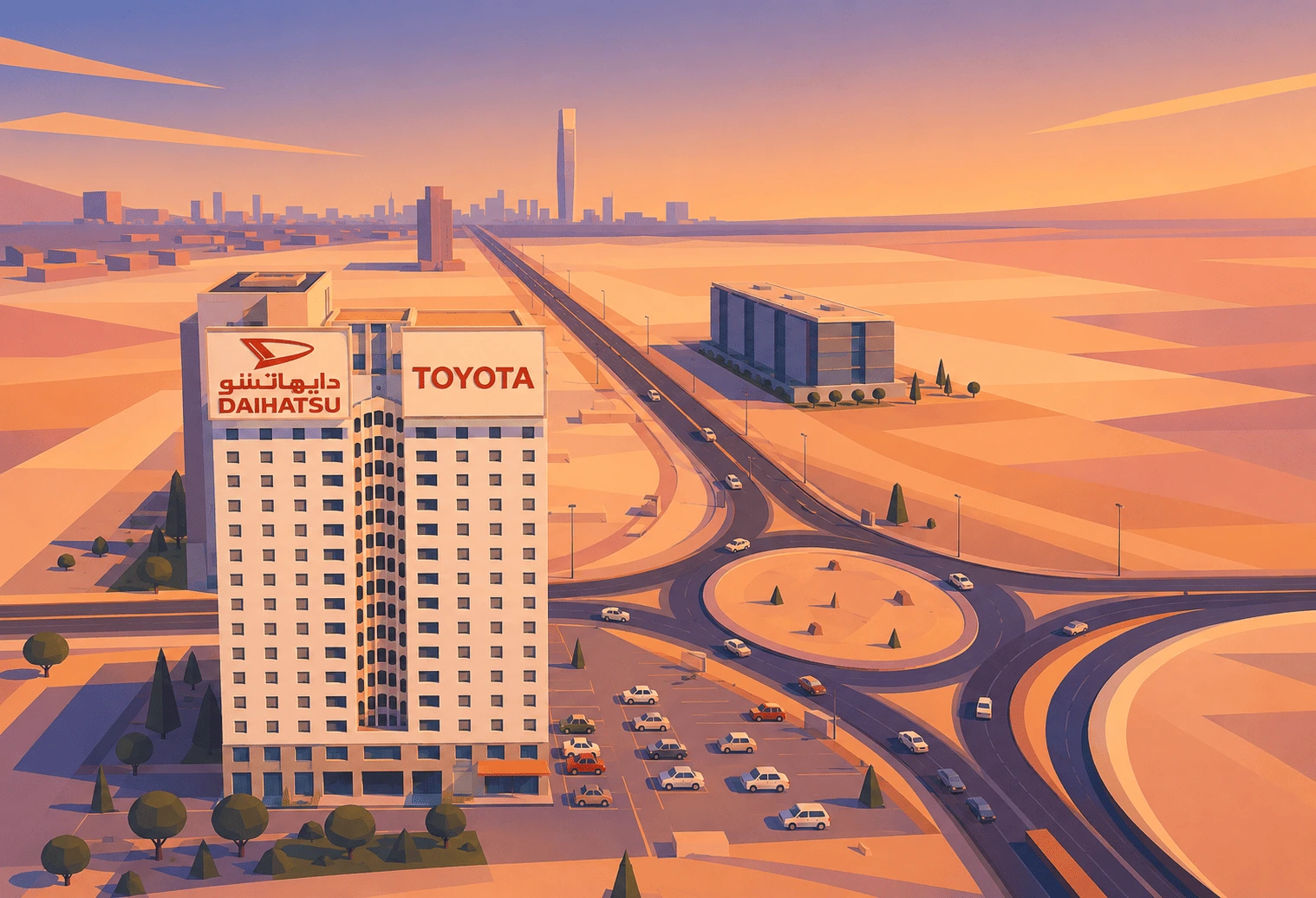
Dubai’s iconic Toyota Building on Sheikh Zayed Road is entering its final chapter. The 15-storey Nasser Rashid Lootah Building, a familiar part of Dubai’s landscape for more than five decades now, is being gradually emptied ahead of its planned demolition.
The building earned its fame from the large red Toyota sign sitting on its rooftop. Over the years, it stopped being just another residential property and turned into a genuine landmark for anyone driving along Sheikh Zayed Road.
The move-out process has thrown up a few issues along the way, including overcrowding, illegally partitioned apartments, utility connections, and outstanding fines. While building management has said tenants with valid contracts were allowed to stay until December 2026, the evacuation has sped up following electricity disruptions and action taken over some affected apartments.
Why is Dubai demolishing the Toyota Building?
The Toyota Building, officially the Nasser Rashid Lootah Building, was completed in 1974. Reports suggest the demolition decision comes down to the condition of the ageing structure and Dubai Municipality refusing to approve any further maintenance work.
Building management has confirmed the property will eventually come down, with demolition planned for 2027. That said, an exact date or detailed timeline has not been announced yet.
More than 50 years on, the building now sits in a completely different Dubai than the one it was built in. Sheikh Zayed Road has grown into one of the city’s most recognisable high-rise corridors, making this old residential building stand out even more against the modern skyline around it.
How did the building get its Toyota name?
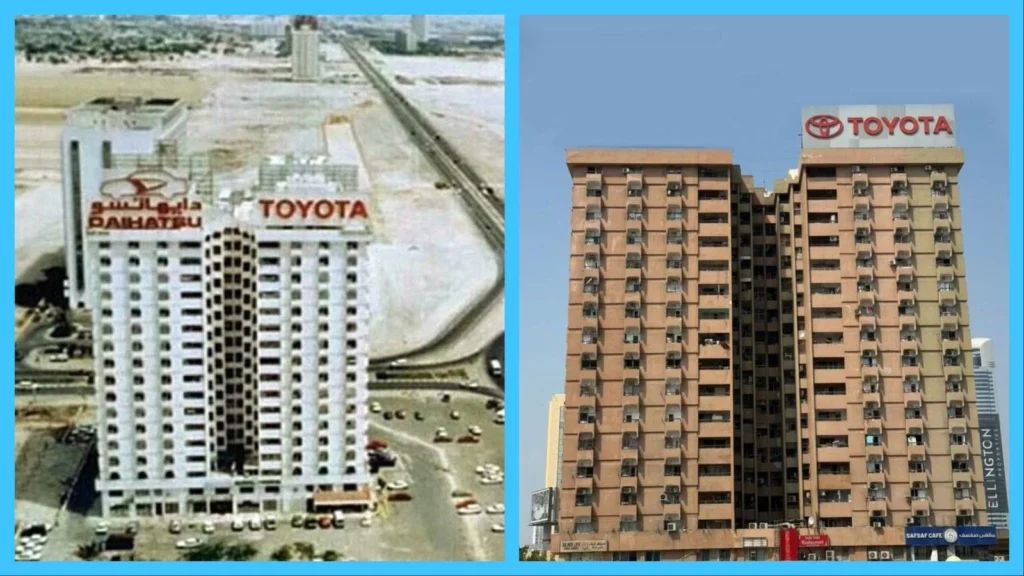
The property started out as the Nasser Rashid Lootah Building, but its identity shifted after a giant Toyota sign went up on the rooftop in 1981. That illuminated red logo made the building instantly recognisable from Sheikh Zayed Road.
The original sign came down in 2018 once the advertising contract expired. Toyota UAE brought the familiar logo back in June 2022, restoring a feature that had been closely tied to the building for decades.
That Toyota sign is really what turned an ordinary residential building into a Dubai landmark. Its planned demolition means losing not just an old structure, but a familiar piece of the city’s visual history too.
Around 70 per cent of tenants have already left
The building’s evacuation has been happening in stages. Management has said around 70 per cent of the property has already been vacated, while other reports point to a sharp drop in the number of remaining occupied apartments.
Management told Gulf News that tenants were not directly told to leave by the building’s own staff, and that many residents moved out after disruptions to the electricity supply. Residents with valid rental contracts had earlier been told they could stay until December 2026.
Residents living in partitioned accommodation were among the first asked to leave. Other occupants were later instructed to vacate as the process continued.
What happened with the illegally partitioned apartments?
One of the bigger issues around this evacuation is the discovery of apartments that had been illegally divided into smaller spaces. Authorities found overcrowding tied to these partitions, with reports of some apartments housing as many as 15 people in partitioned rooms.
Dubai Municipality has previously warned that unauthorised partitioning of residential properties breaks the rules, and that these kinds of changes can also raise safety concerns, particularly if overcrowding makes it harder for people to get out quickly in an emergency.
Building management said Dubai Municipality has been dealing directly with tenants over the violations found inside individual apartments. Tenants who received fines have had to settle those penalties as part of the move-out process.
Why didn’t the building management know about the partitions?
This whole situation has raised questions about how so much partitioning could happen without management even knowing. According to the building’s real estate department, management cannot simply walk into a rented apartment and inspect whatever a tenant has changed inside.
Management explained that once a property has been handed over to a tenant, entry requires permission. If a tenant refuses access, police and the relevant authorities may need to step in before anyone can enter the property.
Because of these restrictions, management says it genuinely did not know how many partitions existed inside individual apartments, or how many people were actually living in them. The full scale of the overcrowding only became clear once authorities got involved.
What do Toyota Building tenants need to do before leaving?
For some residents, leaving the Toyota Building involves a lot more than just packing up and handing back the keys. Tenants affected by violations need to settle outstanding Dubai Municipality fines and complete the required clearances.
They also need to clear their relevant Dubai Electricity and Water Authority (DEWA) dues and finish the necessary procedures for their apartment. Once all of that is sorted, tenants can go to the building’s real estate department for their final clearance certificate.
Electricity and water connections to apartments that have already been vacated are also being disconnected as the process moves along. Residents dealing with outstanding issues have been reaching out to Dubai Municipality and DEWA directly to resolve matters tied to their homes and utility accounts.
Management says the process was not a forceful eviction
Building management has been firm that it did not carry out a forceful eviction by entering occupied apartments and removing residents. Its legal department reached out to the relevant authorities to get clarity on the action and procedures involved.
Management also said it simply cannot enter rented apartments on its own without the required permission, which is why the evacuation of affected units has been handled through the relevant authorities and established procedures rather than directly by the building itself.
That distinction matters, since residents have been leaving under quite different circumstances. Some apartments were caught up in action over overcrowding and partitioning, while other tenants with valid contracts were told they could stay until the end of 2026.
Electricity cuts accelerate the move-out process
Electricity disruptions have become another big part of the building’s final months. Management said it did not know exactly why the electricity supply had been disconnected, while reports have linked the disruption to action taken by authorities.
This power issue has pushed more residents to leave the property. As apartments empty out, utility connections are also getting disconnected, which reduces the number of occupied units even further.
The situation has created real challenges for residents who expected to stay in the building under their existing rental arrangements. For those who have lived there for years, this sudden change also means having to find another affordable home in such a central Dubai location.
Why illegally partitioned flats are a safety concern
Unauthorised partitions can create genuinely serious safety concerns in residential buildings. Splitting an apartment into multiple smaller spaces can push up the number of occupants and affect ventilation, access, and emergency escape routes.
Dubai Municipality has warned that these kinds of changes can raise fire risks and make evacuation harder. Overcrowding can also put extra pressure on a building’s facilities and shared services.
The Toyota Building’s evacuation has brought these concerns into much sharper focus. Reports of heavily partitioned apartments and large numbers of occupants became a key factor behind the authorities stepping in.
Residents remember an affordable central Dubai home
For a lot of residents, the Toyota Building has been more than just an old building. Its spot on Sheikh Zayed Road gave people access to a genuinely central part of Dubai, while its older apartments were seen as relatively affordable compared to some of the newer properties nearby.
Residents have been sharing memories of living there as they get ready to move. Some have talked about how hard it will be to find another home that offers a similar mix of location and affordability.
The building’s slow emptying is also affecting the businesses that operate within it. Restaurants and shops that served residents have been preparing to close as occupant numbers drop and the building moves toward its final stage.
Also Read: Dubai School Fees: KHDA Rules on Deposits, Refunds and Charges Parents Should Know
A landmark that witnessed Dubai’s transformation
When the Nasser Rashid Lootah Building was completed in 1974, Dubai’s skyline looked nothing like it does today. This 15-storey structure became one of the earliest recognisable buildings along what would later grow into the city’s famous Sheikh Zayed Road corridor.
The Toyota sign added another layer to its identity starting in 1981. For generations of residents and drivers alike, that red rooftop logo became a familiar landmark while travelling through the city.
Now, more than five decades after it was built, the building is being cleared out ahead of its planned demolition in 2027. Its disappearance will close out one of the older, more recognisable chapters of Sheikh Zayed Road’s built history.