

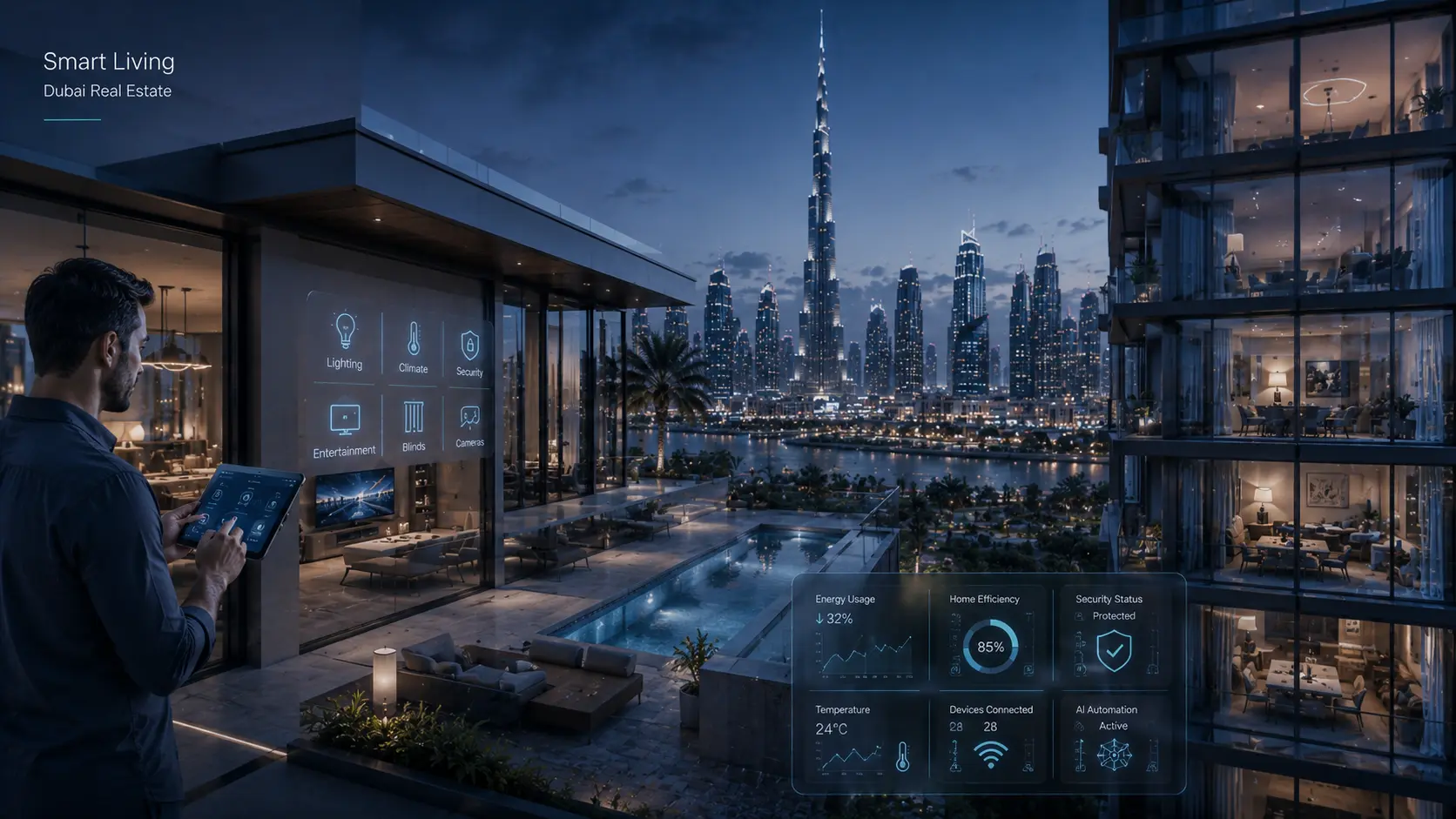
Dubai has never been shy about embracing what’s next, and the real estate sector is making that point clearly right now. Developers across the city are embedding smart home technology into residential projects at a pace that has moved the conversation well beyond novelty — connected living is fast becoming an expectation rather than a selling point.
From luxury apartments in Downtown Dubai to family villas in newer communities further out, buyers are actively seeking homes with intelligent automation built in. That demand shift is pushing developers to treat smart technology as standard rather than optional, and it’s doing something tangible to property values in the process.
What Makes a Home Smart?
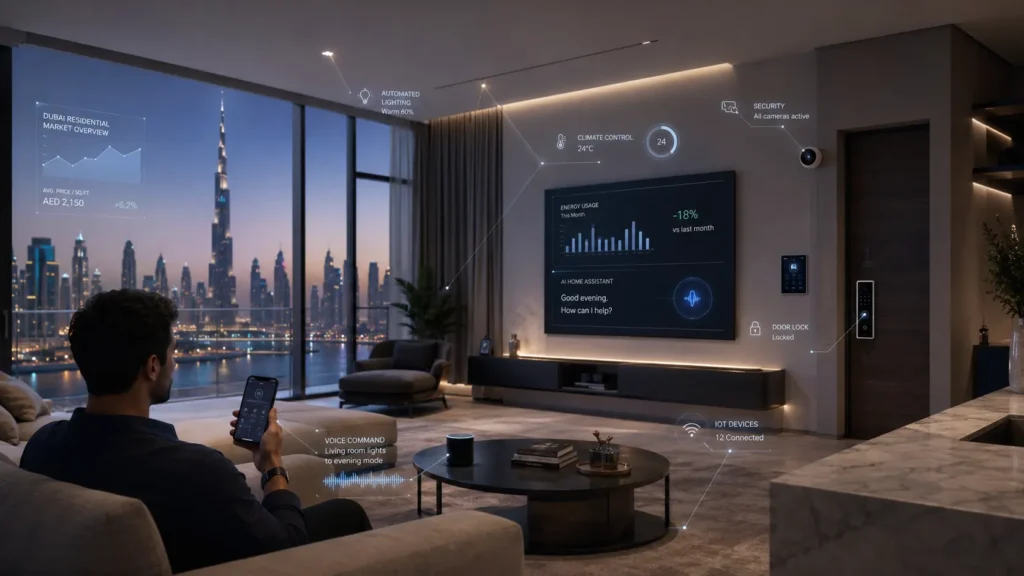
A smart home is essentially a home where different systems talk to each other and to you. Lighting, air conditioning, security cameras, door locks, curtains, entertainment systems, household appliances — all of it manageable remotely through a smartphone or a voice assistant.
More advanced setups use AI-powered automation to go a step further, learning daily routines and adjusting lighting, temperature and other settings without any input at all. The result is a home that’s more comfortable, more secure and cheaper to run — and buyers are noticing.
Smart Features Are Increasing Property Values
The financial case is becoming harder to ignore. Industry experts broadly agree that properties with advanced smart technology command higher prices than comparable homes without it — and buyers are demonstrating, through their purchasing decisions, that they’re willing to pay that premium.
For developers operating in Dubai’s competitive market, that creates a clear incentive. Smart automation differentiates a project in a city full of high-quality developments, and in the luxury segment especially, innovation has always been a significant part of the value proposition.
The shift in buyer expectations also means smart features are increasingly viewed as long-term investments that protect and enhance resale value rather than expensive additions that depreciate over time.
Energy Efficiency Is a Major Advantage
In a city where air conditioning runs for most of the year, energy costs are a genuine concern for homeowners and tenants alike. Smart climate control systems that adjust cooling based on who’s actually in the building — rather than running at full capacity regardless — make a meaningful difference to monthly utility bills.
Add intelligent lighting that switches off in empty rooms, and the savings across a year add up to something substantial. Lower running costs make smart homes financially attractive in a practical, everyday sense, not just as a premium feature to admire.
The energy efficiency angle also connects to Dubai’s broader sustainability agenda and green building targets, giving smart homes relevance beyond individual property value.
Improved Security Builds Buyer Confidence
Modern smart security goes considerably further than a traditional alarm system. Homeowners can monitor CCTV cameras from anywhere in the world, receive real-time security alerts, control door locks remotely and see and speak with visitors through smart video doorbells — all from a phone.
For people who travel frequently, own multiple properties or simply want the reassurance of knowing what’s happening at home while they’re away, these features address a genuine concern rather than a theoretical one. Enhanced security has become one of the most consistently cited reasons buyers prioritise technology-enabled homes when searching the Dubai market.
For families, the ability to keep an eye on things remotely adds a layer of peace of mind that’s hard to put a price on.
Investors Prefer Future-Ready Properties
Dubai’s appeal to international investors hasn’t diminished, and smart homes speak directly to what sophisticated investors are looking for. Properties equipped with the latest technology attract higher-quality tenants, tend to achieve stronger rental yields than conventional alternatives, and are simply easier to market in a world where digital living is increasingly the baseline expectation.
The investor argument is straightforward: a future-ready property commands better returns today and holds its value more reliably tomorrow. As the gap between smart and non-smart homes widens in buyer perception, that marketability advantage only becomes more pronounced.
Also Read: Dubai Taxi Completes $395 Million Acquisition of National Taxi to Expand Fleet
Developers Are Integrating Technology From the Start
The approach has shifted in a meaningful way. Rather than adding automation as an afterthought or an optional extra, developers are designing smart technology into the fabric of new residential projects from the very beginning. That produces a more seamless result — systems that feel like part of the home rather than technology bolted onto it.
The scope has also expanded beyond individual units. New developments increasingly include smart parking access, digital visitor management, app-controlled building services, energy monitoring across entire communities and integrated platforms that manage the whole residential experience. It’s not just a smart flat inside a conventional building — it’s a smart building operating as a connected whole.
Smart Living Supports Dubai’s Vision for the Future
There’s a bigger context here that matters. Dubai’s ambition to become one of the world’s leading smart cities isn’t a background aspiration — it actively shapes policy, infrastructure investment and development incentives. Government initiatives around digital transformation, AI adoption, sustainability and smart infrastructure create an environment where developers who embrace connected technology are building in the same direction as the city itself.
Smart homes fit naturally within that vision. They improve quality of life for residents, reduce resource consumption at scale and support the kind of data-driven urban management that makes cities work better. As more communities adopt connected technologies across Dubai, intelligent living is moving from premium differentiator to expected standard — and the property market is adjusting its pricing to reflect exactly that.