

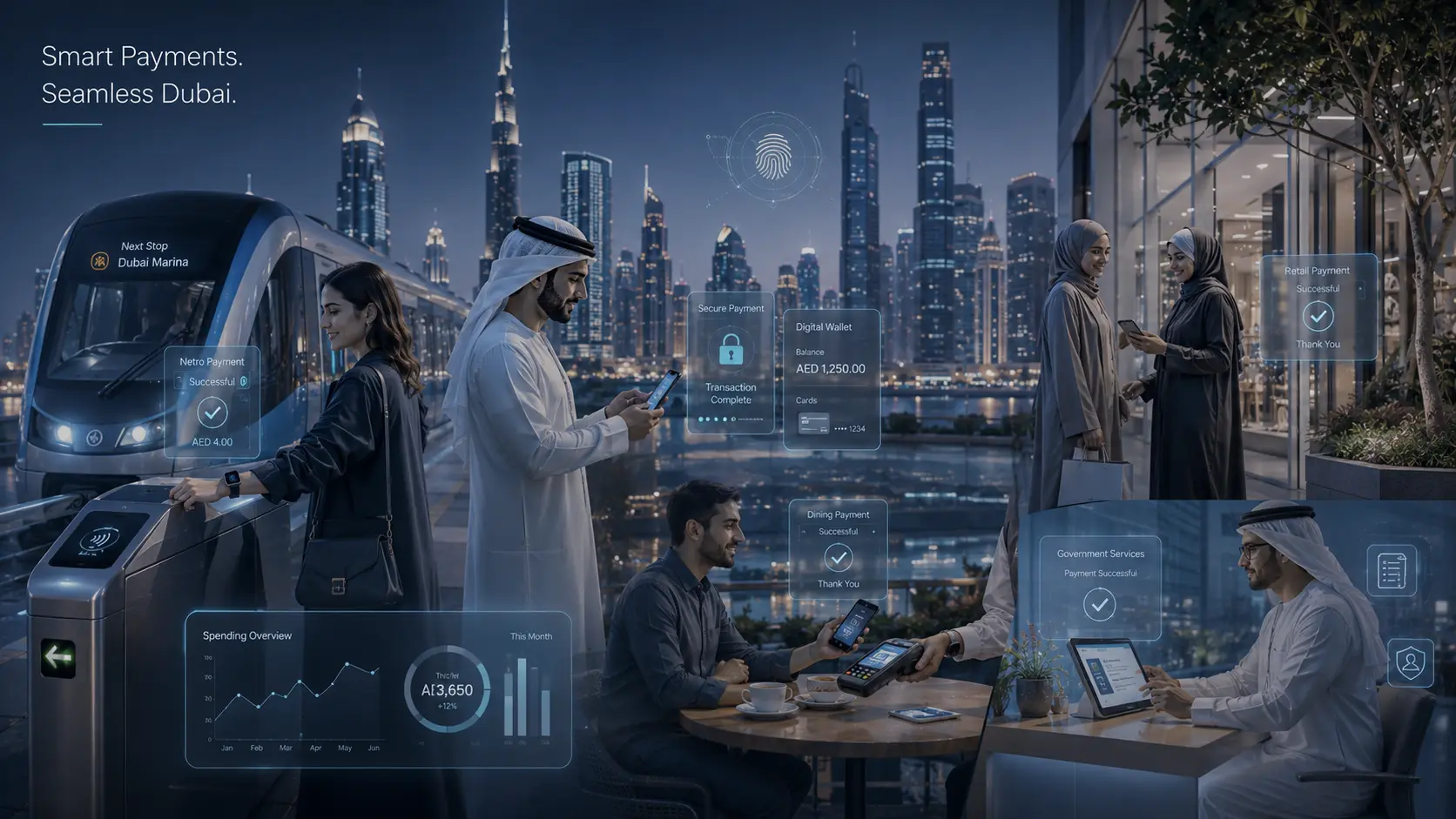
Dubai has set itself a specific and ambitious target: 90% of all transactions across both the public and private sectors completed digitally by the end of 2026. That number, sitting at the heart of the Dubai Cashless Strategy, signals just how seriously the emirate is treating this shift — not as a gradual preference for digital payments, but as a fundamental change to how the city operates economically.
The strategy fits within Dubai’s broader drive to cement its position as a global technology and financial hub. The argument from authorities is straightforward — more digital payments means more convenience, more transparency and stronger long-term economic foundations.
What Is the Dubai Cashless Strategy?
Launched by Dubai Finance under the Government of Dubai, the Cashless Strategy is essentially a city-wide push to make secure digital payments the default across everyday life. Shopping, transport, restaurants, government services, entertainment — the expectation is that residents and visitors will increasingly complete all of these through contactless cards, smartphones, QR codes and digital wallets rather than cash.
The economic case behind it is significant. Officials estimate that broader adoption of digital payments could contribute around AED 8 billion annually to Dubai’s economy — through efficiency gains, fintech innovation and the reduced cost of handling physical cash. That’s not a marginal benefit. It’s a structural one.
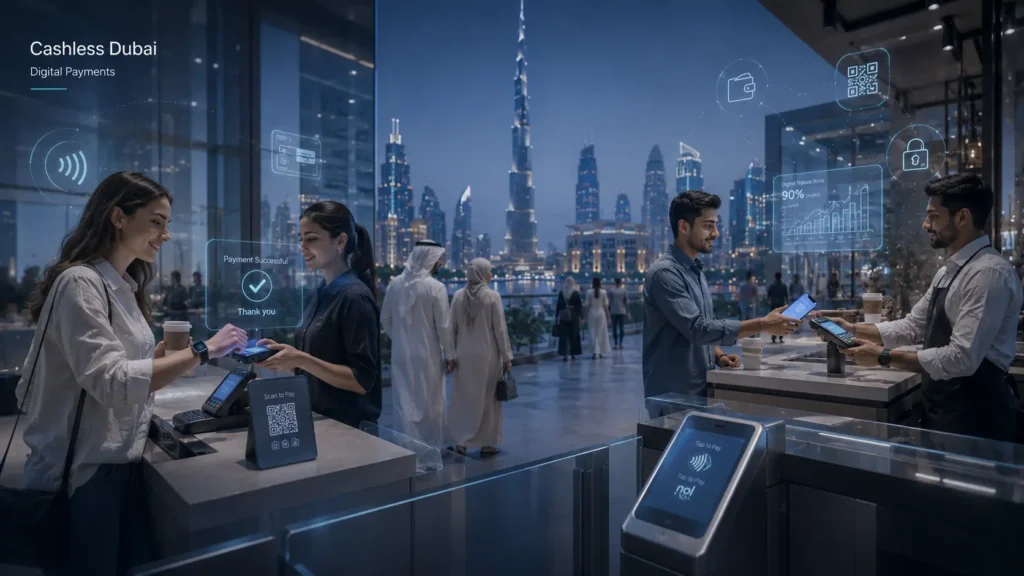
How Daily Life Will Change
For most people already living in Dubai, the honest answer is that the day-to-day shift will feel relatively gentle. Digital payments are already widely accepted across the city — supermarkets, restaurants, taxis, malls, healthcare providers and government departments have been moving in this direction for years.
What changes is the default. Digital payment options will become the expected norm across a much wider range of services, and cash will become the exception rather than the parallel option it currently is. It won’t disappear entirely, but for most everyday transactions, the assumption will be that you’re paying digitally.
Public Services Are Already Going Digital
Dubai hasn’t waited for 2026 to start. Public parking has largely shifted to app-based and digital payment systems. Transport services have been expanding contactless payment options steadily. The upgraded nol payment platform, digital government services and smart mobility initiatives are all part of the same direction of travel.
Each of these changes is incremental on its own, but together they’re building a city where reaching for your phone to pay is more natural than reaching for your wallet — and where the infrastructure to support that is already largely in place.
Benefits for Residents and Tourists
For residents, the practical advantages are real. Faster checkouts, no need to carry cash or worry about having the right change, encrypted payment systems that are more secure than physical money, and the ability to track spending digitally with far less effort than managing receipts and notes.
For international visitors, the shift makes Dubai an easier city to navigate. Most hotels, attractions, restaurants, taxis and retailers already accept widely used global payment methods, which means arriving without large amounts of local currency isn’t the problem it might be in other destinations. As the cashless infrastructure becomes even more pervasive, that ease of access only improves.
Businesses Will Continue Expanding Digital Payment Options
Businesses across Dubai are already adapting. Small retailers, restaurants, service providers, and larger enterprises have been investing in contactless terminals, QR code payment systems, and integrated digital checkout solutions — partly because customers expect it and partly because it genuinely makes operations smoother.
The city’s growing fintech ecosystem is also driving innovation in payment processing, fraud prevention, and customer experience that goes beyond simply accepting tap-and-go transactions. For businesses that embrace it fully, the cashless shift opens up better data, greater efficiency, and stronger customer relationships.
Also Read: Dubai Loop Construction Begins: High-Speed Underground Tunnel Network Aims to Slash Traffic
Supporting Dubai’s Digital Economy
The Cashless Strategy is bigger than payments. It’s part of a longer-term economic vision to build a globally competitive digital economy underpinned by financial technology, artificial intelligence and smart government services.
More digital transactions mean more financial transparency, which attracts investment. They generate more data, which drives smarter services. And they create a more hospitable environment for the fintech sector to grow — which in turn creates more innovation and more economic activity. The cashless push is both a practical initiative and a deliberate economic strategy.
A New Era of Payments for Dubai
By the end of 2026, the goal is a city where nine in ten transactions happen digitally — from tapping your phone at a Metro gate to paying a hospital bill online to settling a restaurant tab by QR code. From public transport and parking to retail, healthcare, hospitality and government services, digital transactions are becoming the backbone of daily economic life.
It’s one of the more tangible expressions of Dubai’s wider ambition — to build not just a modern city, but a genuinely smart one, where the systems that underpin everyday life are as advanced as the skyline that defines it.