

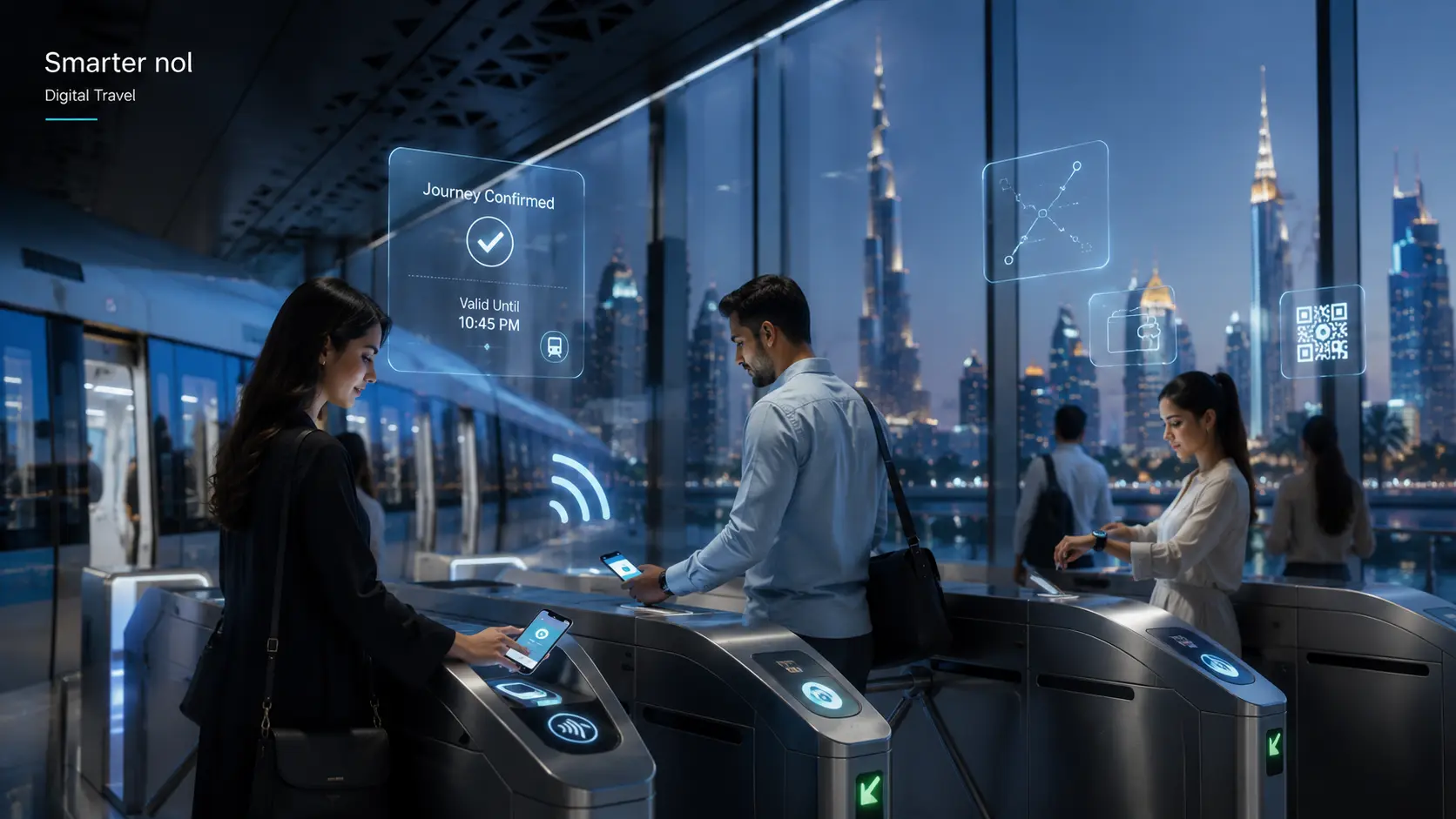
The nol card has been part of daily life in Dubai for over fifteen years — the small blue card that gets you on the Metro, the bus, the tram, the water bus and a growing list of other services. It’s familiar, it works, and millions of people use it every day without thinking much about it.
That’s about to change in a significant way. The Roads and Transport Authority has announced the most comprehensive upgrade to the nol system since the Dubai Metro first opened in 2009. The physical card isn’t disappearing, but the ecosystem around it is being completely reimagined — moving toward a fully digital, contactless and mobile-first platform that reflects how people actually pay for things today.
Moving Beyond the Traditional nol Card
The nol card started as a Metro ticket and quietly grew into something much broader — retail payments, public parks, museums, government facilities. It became a genuinely useful part of daily life in Dubai, not just a transport token.
The next version of nol takes that further. The idea is to move from a physical smart card to an integrated digital platform where your phone, your smartwatch or your contactless bank card can do everything the physical card does today — and more. For regular commuters, that means one less card to carry. For the city’s transport system, it means a payment infrastructure built for the next decade rather than the last one.
Contactless Payments Take Centre Stage
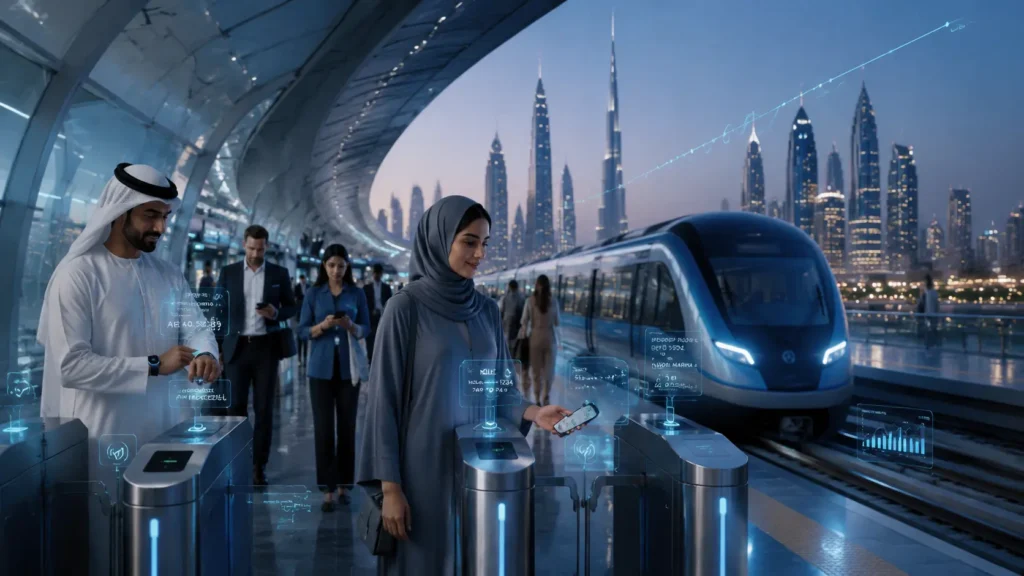
The headline change in the upgraded nol system is open-loop, contactless payments — the ability to tap a compatible bank card, smartphone or wearable directly at Metro stations and on public transport without needing a dedicated nol card at all.
This is a bigger deal than it might first appear. It removes the barrier for tourists and occasional users who currently have to buy and manage a nol card just to take a single Metro trip. It reduces queues at ticket machines. And it brings Dubai’s transport payment experience into line with the best systems in the world — London’s Oyster, Singapore’s EZ-Link, New York’s OMNY — where your everyday bank card is all you need.
Smarter Digital Wallet Integration
The upgraded platform will also work seamlessly with digital wallets and mobile applications. Managing your nol balance, recharging, reviewing your travel history, tracking your spending — all of it moves onto your phone.
That means fewer trips to top-up machines, no more running out of credit unexpectedly and a cleaner, more transparent view of how you’re using transport across the city. Transaction processing will also be faster, and the shift to modern payment technology brings stronger security alongside the convenience.
Built for Dubai’s Growing Population
Dubai’s transport network isn’t standing still. New Metro lines are coming, new residential communities are growing, and passenger numbers keep rising. The payment infrastructure needs to keep pace with all of that — handling larger volumes, supporting new transport modes and remaining reliable as demand increases.
The upgraded nol system is being built with that growth in mind. It’s designed to scale, to support the kind of integrated, multimodal transport experience that a city of Dubai’s ambition requires, and to stay relevant as the network around it continues to expand.
More Than Just Public Transport
The longer-term vision for nol goes well beyond getting from A to B. Authorities are planning to expand the platform’s reach across retail, parking, entertainment venues, public attractions and government services — essentially creating a single digital payment solution that covers a significant portion of everyday transactions in the city.
That’s an ambitious goal, but nol has already proven it can extend beyond transport. The next phase is about taking that expansion much further and making the platform genuinely useful in a wider range of daily situations — so that whether you’re parking your car, visiting a museum or grabbing lunch, the same digital solution covers it.
Also Read: Indian Missions in UAE Launch New Passport Appointment Booking Portal
Supporting Dubai’s Cashless Economy
The nol upgrade fits neatly into Dubai’s push to become one of the world’s leading cashless cities. Digital and contactless payments have been growing rapidly across the UAE for years, and consumer expectations have shifted accordingly. People expect to pay with their phone or their watch — not just in a coffee shop but on the bus.
By modernising its transport payment infrastructure to meet those expectations, Dubai is also reinforcing something broader: that its public services keep up with how its residents actually live rather than lagging behind them.
A New Era for Smart Mobility
Put it all together and the nol upgrade represents a meaningful shift in how Dubai’s transport system will feel to use. Tap your phone at the gate, check your balance while you wait on the platform, and pay for parking when you arrive — all from the same platform, all without fumbling for a physical card.
For a city that has consistently invested in world-class infrastructure, this is the next logical step. The nol card helped define how Dubai moves for the last fifteen years. The platform replacing it looks set to do the same for the next fifteen years.